
House scrambles to keep spy powers alive with short-term fix after GOP infighting
A last-minute split among Republicans killed a long-term deal, forcing a 10-day extension to avoid a lapse in surveillance authority
At a glance
What matters most
- The House approved a 10-day extension of FISA Section 702, which allows warrantless surveillance of foreign targets, after a last-minute deal collapsed.
- A group of conservative Republicans opposed the longer five-year renewal over privacy concerns, particularly around the government's ability to collect Americans' data without a warrant.
- The short-term fix avoids an immediate lapse in intelligence powers but kicks the debate to the end of the month, increasing pressure on leadership.
- Senate leaders have signaled they won't act until the House passes a clear bill, leaving little time for negotiation.
Across the spectrum
What people are saying
A quick look at how the same story is being framed from different angles.
On the Left
The GOP's internal fight shows how far the party has drifted from civil liberties principles. For years, progressives have warned that Section 702 enables mass surveillance of Americans without proper oversight. The fact that a small group of conservatives finally stood up to stop unchecked spy powers is a rare win for privacy - but it shouldn't have taken last-minute brinkmanship to get here.
In the Center
The collapse of the long-term deal reflects legitimate concerns on both sides. National security officials need tools to monitor foreign threats, but the government has a documented history of abusing its access to Americans' data. The short-term extension gives Congress time to address oversight gaps without creating an intelligence vacuum.
On the Right
Republican infighting handed a victory to privacy absolutists who don't grasp the real-world risks of weakening surveillance laws. Section 702 is a proven tool for stopping attacks and tracking adversaries. Delaying its renewal - even briefly - undermines national security and rewards ideological purism over practical governance.
Full coverage
What you should know
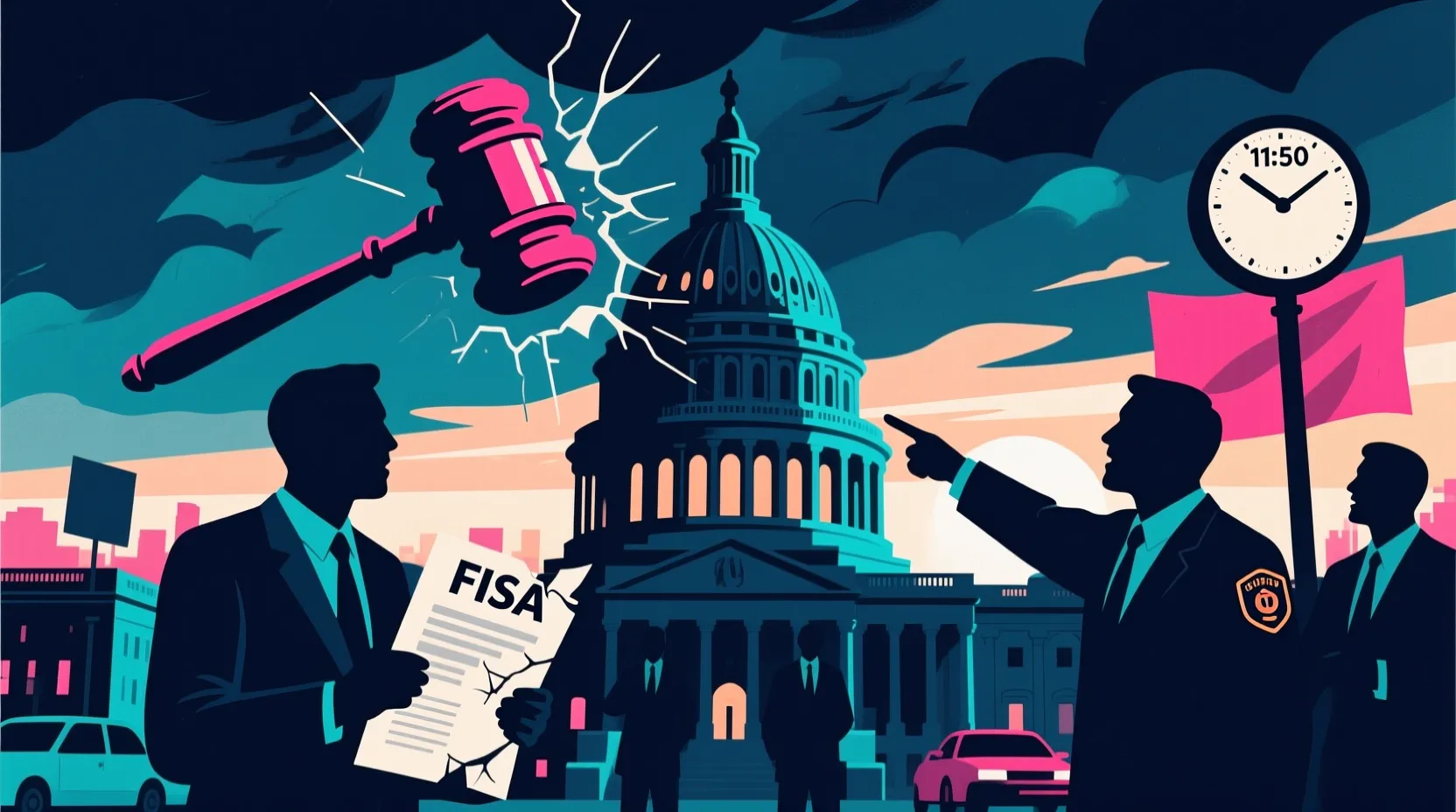
Early Friday morning, the House of Representatives quietly passed a 10-day extension of a powerful surveillance tool, just hours before it was set to expire. The move, done by unanimous consent, keeps FISA Section 702 alive until April 30, but only after a dramatic collapse of a broader five-year renewal deal late Thursday night.
That longer agreement had been brokered by House leaders and was expected to sail through. But a bloc of conservative Republicans revolted, refusing to support a package they say gives the government too much unchecked power to collect communications involving Americans. Their objections centered on so-called "backdoor searches," where intelligence agencies query data collected under Section 702 without first obtaining a warrant.
The rebellion forced Speaker Mike Johnson to pull the bill from the floor, leaving Congress with only hours to prevent a lapse in surveillance authority. The short-term patch was the only viable option to buy time. Without it, the U.S. would have lost legal access to a tool used to monitor foreign spies, terrorists, and hostile governments abroad.
Now, the pressure shifts to the final week of April. The Senate has made clear it won't take up any version of the bill until the House sends over a stable, majority-backed proposal. With just 10 days to go, lawmakers face a narrow window to reconcile differences - not just between chambers, but within their own party.
Supporters of the original five-year deal argue that weakening Section 702 puts national security at risk. They point to its role in uncovering foreign plots and tracking adversarial nations. But privacy advocates and their allies in the GOP say the program has long overstepped, especially in how it handles data involving U.S. citizens.
The current standoff isn't new - similar fights erupted in 2018 and 2020 - but the stakes feel higher this time. With global tensions rising and election-year scrutiny increasing, any lapse in intelligence gathering could have real consequences. Yet so far, compromise remains elusive.
For now, the lights stay on. But the deeper debate over how much surveillance power the government should hold, and under what limits, is far from settled.
About this author
Zwely News Staff compiles multi-source reporting into concise, viewpoint-aware coverage for readers who want context without noise.
Source Notes
House passes short term extension of FISA spy authority after GOP rebels block five-year deal
The House passed a short-term extension of a key government spy tool through unanimous consent early Friday morning after several GOP members voted to sink a late-night deal that would have allowed it to continue until 2031. The 10-day exte...
House passes short-term spy powers extension in late-night vote after deal falls apart
The House unanimously passed a short-term of the nation’s spy powers until in the wee hours Friday morning — pushing the deadline from April 20 to April 30 — after GOP rebels dramatically rejected a late-night, last-minute deal to extend fo...
House approves short-term FISA spy powers extension amid GOP infighting
House Republicans are fighting among themselves over a controversial warrantless surveillance law that is set to expire in the coming days.
Previous story
Zohran Mamdani is facing heat from Trump over a new tax plan, and scrutiny over his wife's past tweets
Next story