
Oil prices jump past $100 after US-Iran talks stall and Navy moves into position
Markets react as hopes for diplomacy fade and military pressure mounts near the Strait of Hormuz
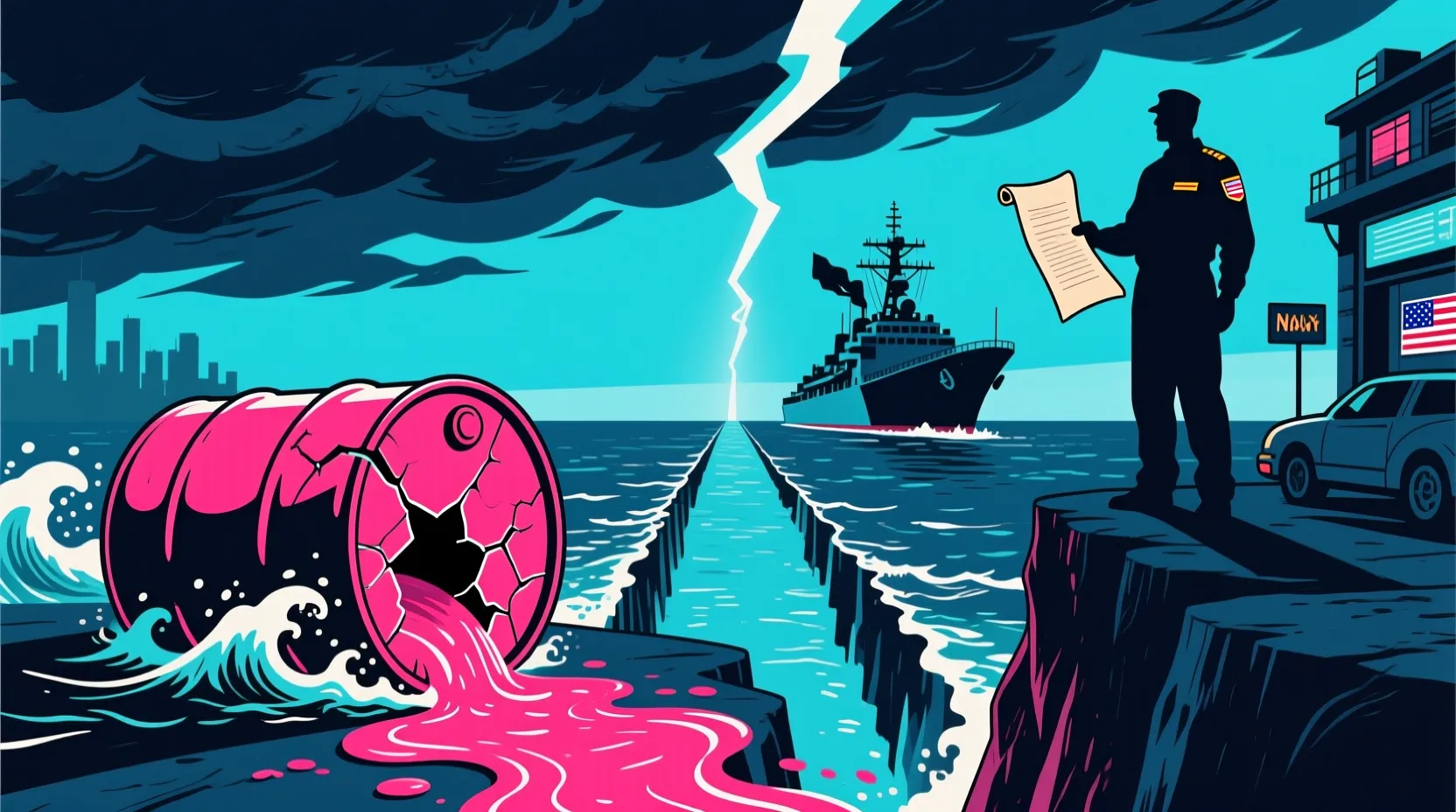
At a glance
What matters most
- Oil prices climbed past $100 a barrel after US-Iran peace talks in Pakistan collapsed over the weekend.
- The US Navy has begun enforcing a blockade of Iranian ports, though it says non-Iranian shipping will not be affected.
- Vice President JD Vance said the 'ball is in Iran's court' to revive negotiations, despite signs of stalled progress.
- Global markets are reacting to renewed fears of conflict in the Strait of Hormuz, a critical oil transit route.
Across the spectrum
What people are saying
A quick look at how the same story is being framed from different angles.
On the Left
The administration's decision to impose a blockade so soon after talks ended suggests a preference for military pressure over sustained diplomacy. Rather than pursuing de-escalation, this move risks fueling a cycle of confrontation that could endanger global stability and working people who bear the brunt of rising energy costs.
In the Center
While the blockade is limited in scope, it represents a significant escalation. The challenge now is balancing deterrence with the need to keep diplomatic channels open, especially as markets and allies watch for signs of失控 in a volatile region.
On the Right
The US is right to stand firm after Iran failed to commit to a deal. Applying economic and military pressure is necessary to counter Iranian aggression and protect vital energy routes. Diplomacy only works when adversaries know there's a credible consequence for walking away.
Full coverage
What you should know
Oil prices shot above $100 a barrel on Monday as hopes for a diplomatic breakthrough between the United States and Iran quickly faded. Over the weekend, talks held in Pakistan aimed at de-escalating regional tensions ended without an agreement, sending shockwaves through global energy markets. Traders reacted swiftly, pricing in the risk of further disruption in the Persian Gulf, where a significant portion of the world's oil supply passes through the narrow Strait of Hormuz.
In response to the stalled negotiations, the US Navy began enforcing a blockade of Iranian ports on Monday morning. According to US Central Command, the operation is designed to restrict Iranian maritime activity without interfering with vessels traveling to or from other countries in the region. The move stops short of a full naval closure but signals a sharp increase in military pressure. Officials emphasized that commercial shipping lanes remain open, but the presence of additional US forces has raised concerns among regional allies and trading partners.
Vice President JD Vance addressed the situation Sunday night, pushing back on reports that the talks had failed. While acknowledging that no deal was reached, he said the negotiations had made progress and placed the onus on Iran to take the next step. "The ball is in Iran's court," Vance said during a brief statement from Washington. His comments reflect a broader administration stance that diplomatic channels remain open-but only if Iran agrees to specific terms, which have not been made public.
Energy analysts say the jump in oil prices reflects more than just lost talks. "When you combine failed diplomacy with visible military action, markets assume the worst-case scenario is more likely," said Leila Chen, an energy strategist at Global Risk Insights. "Even if the US says it's not targeting global shipping, the mere presence of a blockade near such a critical chokepoint adds risk premiums fast."
The situation has drawn cautious reactions from US allies. European Union foreign policy officials called for restraint and urged both sides to return to dialogue, while Gulf states including the UAE and Saudi Arabia have quietly increased naval patrols in the region. China and Russia, meanwhile, have issued statements criticizing what they describe as "unilateral coercive measures" by the United States, though neither has proposed a new mediation effort.
For now, the focus remains on whether Iran will respond with its own actions-diplomatic or otherwise. The country has not issued an official statement on the talks or the blockade, but state media has begun running segments highlighting national self-reliance and military readiness. Past confrontations in the region have shown how quickly rhetoric can escalate into broader conflict, especially when energy supplies are at stake.
With oil prices holding above $100, the economic ripple effects could soon reach consumers. Fuel costs at the pump are expected to rise in the coming week, and airlines and shipping firms are already adjusting their forecasts. The Federal Reserve has noted that prolonged spikes in energy prices could complicate inflation management, adding another layer of pressure on policymakers. For the moment, all eyes are on Tehran and Washington-waiting to see whether the next move is a phone call or something far louder.
About this author
Zwely News Staff compiles multi-source reporting into concise, viewpoint-aware coverage for readers who want context without noise.
Source Notes
Oil prices ease on hopes of new US-Iran peace talks
Crude prices jumped above $100 on Monday after talks failed between the two sides at the weekend.
Oil prices near $100 as U.S. Navy blockades Iran's ports after peace talks fail
The blockade took effect Monday at 10 a.m. ET. U.S. Central Command said it will not impede vessels transiting to and from non-Iranian ports.
JD Vance says the ball is 'in Iran’s court' after Pakistan peace talks stall
VP JD Vance rejects reports Pakistan talks failed, says Iran negotiations made progress but Iranian team was unable to finalize a deal in talks.
Previous story
Super Typhoon Sinlaku edges toward Guam and the Northern Marianas with heavy rain and strong winds
Next story