The US and Iran are talking again for the first time in decades, and the world is watching closely
High-stakes trilateral talks in Islamabad could shape the future of the Middle East
At a glance
What matters most
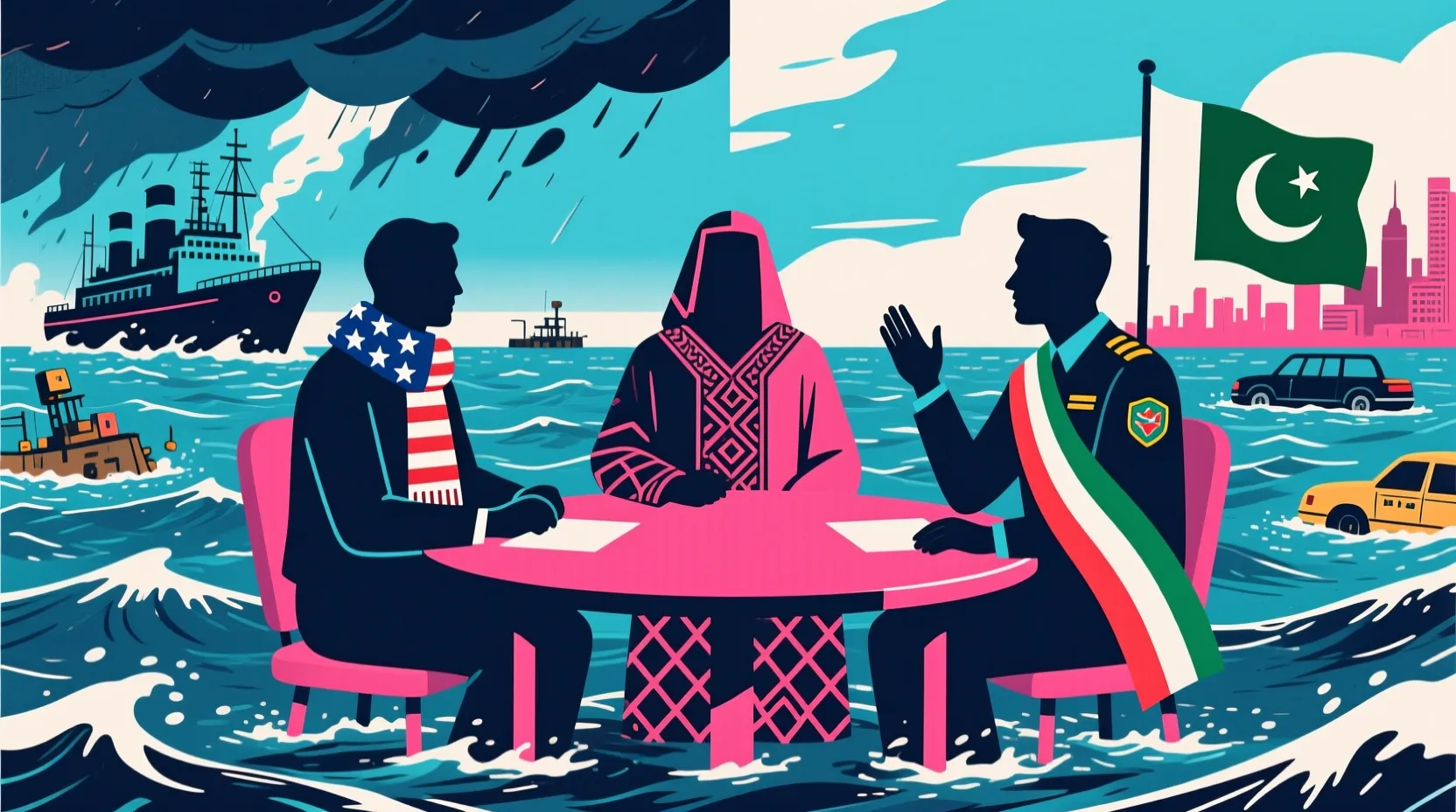
- The US and Iran are meeting face-to-face in Islamabad for the first high-level talks since the 1979 revolution, with Pakistan acting as mediator.
- The talks follow a two-week ceasefire after intense fighting that disrupted global oil supplies and raised fears of a wider war.
- American destroyers have begun clearing mines from the Strait of Hormuz, a key step toward restoring maritime security.
- President Donald Trump has framed the talks as a sign of strength, while critics question the cost of getting here.
Across the spectrum
What people are saying
A quick look at how the same story is being framed from different angles.
On the Left
The current talks are a necessary correction after a dangerous escalation fueled by militarized rhetoric and unilateral action. While diplomacy is welcome, it shouldn't be framed as a victory earned through violence. The administration's reliance on force deepened instability and cost lives, and long-term peace requires accountability, not just backroom deals. True progress means rejecting the idea that war is the only language authoritarian regimes understand.
In the Center
The talks represent a fragile but significant opportunity to de-escalate a crisis that threatened global stability. Regardless of how the conflict started, the fact that both sides are now negotiating is a positive development. The focus should be on securing verifiable agreements, reopening shipping lanes, and ensuring the ceasefire holds-practical steps that serve broader international interests.
On the Right
Strong leadership brought Iran to the table. For decades, diplomatic overtures were met with defiance and aggression. It took a clear show of American resolve-backed by military action-to create the conditions for real negotiation. The current talks are a direct result of that strength, and any deal must ensure Iran cannot threaten U.S. interests or allies in the future.
Full coverage
What you should know
In a rare diplomatic shift, U.S. and Iranian delegations are sitting across from each other in Islamabad, marking the highest-level direct talks between the two nations in more than four decades. The meeting, joined by Pakistani officials as neutral facilitators, comes after a two-week ceasefire halted a rapidly escalating conflict that had drawn in regional powers and sent oil prices soaring worldwide. For the first time since the 1979 revolution severed ties, American and Iranian diplomats are negotiating face to face, not through back channels or intermediaries.
The conflict began in late February when President Donald Trump ordered major combat operations against Iranian targets, citing attacks on U.S. allies and shipping in the Gulf. The strikes, conducted jointly with Israel, triggered retaliatory missile launches and the mining of key waterways, including the Strait of Hormuz-one of the world's most critical oil transit routes. The disruption sent shockwaves through global markets, with oil briefly spiking above $150 a barrel and freight costs doubling overnight.
Now, with a ceasefire holding and diplomatic momentum building, U.S. Navy destroyers have begun clearing sea mines from the Strait under Trump's orders. The USS Frank E. Peterson and USS Michelson are leading the operation, a visible signal of de-escalation. Officials say reopening the waterway is essential not just for energy security but for restoring confidence in global trade. The Pentagon has emphasized that military readiness remains high, but the shift from combat to clearance work marks a clear pivot in posture.
The trilateral format-U.S., Iran, and Pakistan-reflects the delicate balance required to keep talks moving. Pakistan, which shares a border with Iran and maintains complex ties with both Washington and Tehran, has positioned itself as a neutral broker. Islamabad's role underscores how traditional alliances have shifted under the pressure of this crisis, with regional players stepping into diplomatic roles once reserved for European powers or the UN.
Back in Washington, reactions are split along familiar lines. Supporters of the administration hail the talks as a win born of strength, arguing that only decisive military action could have brought Iran to the table. Critics, however, point to the human and economic toll of the conflict, with Salon highlighting the role of military leaders in enabling aggressive policies. Meanwhile, European allies, already strained by the war's ripple effects, are urging a durable resolution, warning that another flare-up could fracture NATO unity and deepen energy dependence on non-Middle Eastern suppliers.
What happens next remains uncertain. Even if the talks produce a formal agreement, enforcement and trust will be major hurdles. Decades of hostility don't vanish in a single meeting. But for now, the simple fact that these conversations are happening at all is being treated as a breakthrough-one that could either open a path to stability or expose how thin the peace really is.
Global markets have responded cautiously. Oil prices have dipped but remain volatile, and shipping insurers are still charging premium rates for Gulf transits. Diplomats say the coming days will be critical in determining whether this moment leads to lasting disengagement or merely a pause before the next crisis.
About this author
Zwely News Staff compiles multi-source reporting into concise, viewpoint-aware coverage for readers who want context without noise.
Source Notes
US and Iran hold highest-level talks in five decades
Delegations discuss ending a war that has spread across the Gulf and stoked a global energy crisis
US, Iran, and Pakistan hold direct three-way talks in Islamabad
The United States and Iran are engaging in a rare face-to-face meeting on Saturday in Pakistan, where mediators are trying to get both sides to resolve their differences to ensure peace in the Middle East. The war with Iran halted after a t...
Iran live updates: US-Iran-Pakistan trilateral talks ongoing, White House says
President Donald Trump announced "major combat operations" against Iran on Feb. 28, with massive joint U.S.-Israeli strikes.
Trump announces US is ‘starting the process of clearing out’ Strait of Hormuz
The United States Navy deployed two destroyers to clear sea mines laid by Iran in the Strait of Hormuz as the two-week ceasefire remains in effect, President Donald Trump announced on Saturday morning. The USS Frank E. Peterson and USS Mich...
The Iran War Is Putting Pressure on Europe
Panelists joined to discuss the effects of the conflict on America’s allies, and more.
Chairman of the Joint Chiefs is enabling Trump’s immorality
The president's threats to destroy Iran depend on institutions and individuals' willingness to go along
Previous story
The Masters 2026 heats up as players grumble over surprise course changes
Next story