
Three Russian submarines were caught near UK internet cables, defence secretary says
The UK says it tracked and deterred the subs in a month-long operation, but no damage was found
At a glance
What matters most
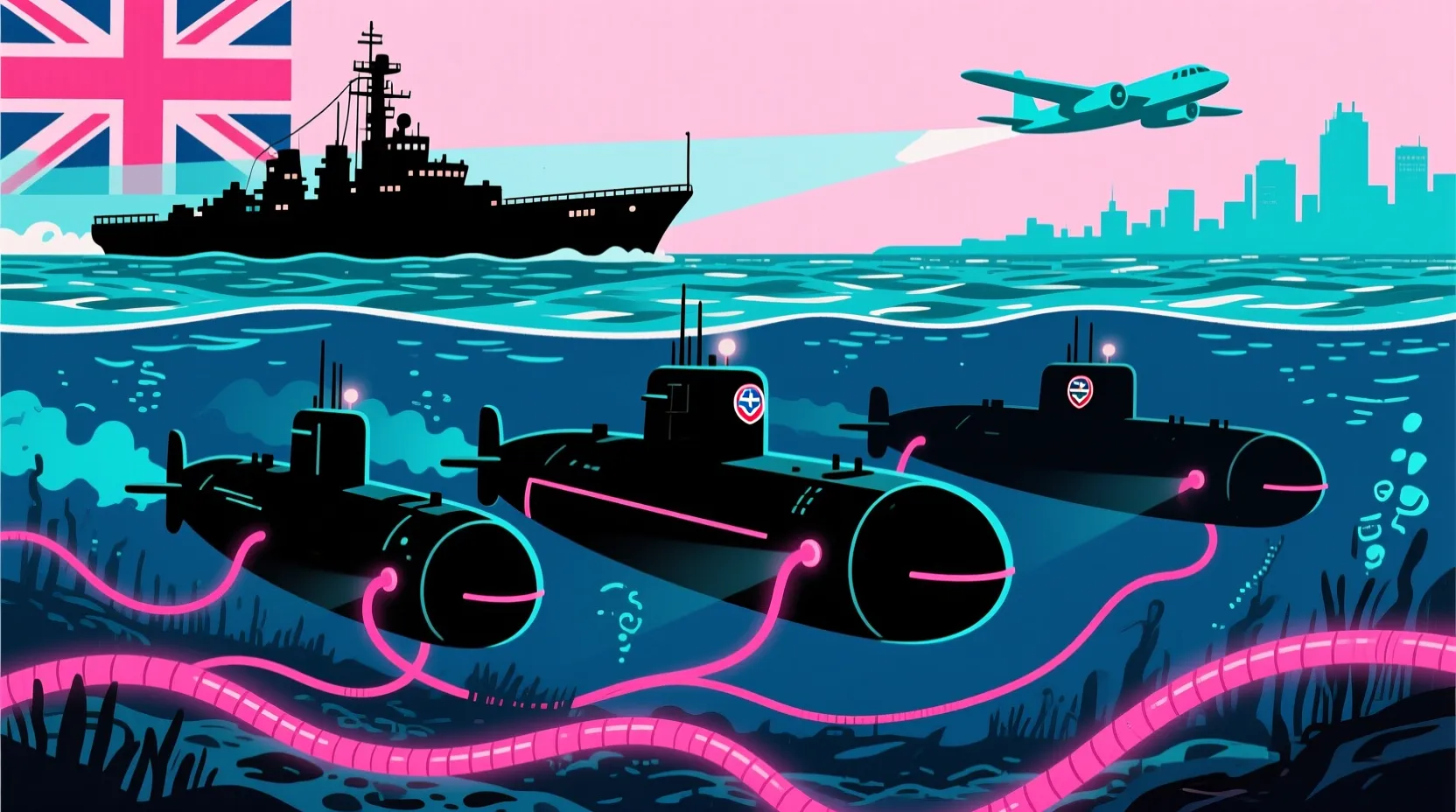
- Three Russian submarines were spotted loitering near vital undersea internet and communication cables in the North Atlantic
- The UK and Norway ran a joint operation using warships and aircraft to monitor and push the submarines away
- No damage to cables was found, but the move is seen as a warning sign of potential hybrid warfare tactics
- The defence secretary warned of serious consequences if such operations escalate
Across the spectrum
What people are saying
A quick look at how the same story is being framed from different angles.
On the Left
This incident highlights the growing threat of hybrid warfare and the need for stronger international cooperation to protect shared digital infrastructure. It also underscores how military spending should prioritize defensive capabilities and diplomacy over offensive posturing, especially when civilian systems like internet cables are at risk.
In the Center
The detection and deterrence of the submarines show that current defence and monitoring systems are effective. While the situation is concerning, the absence of damage and the successful multinational response suggest that protocols are working as intended under tense geopolitical conditions.
On the Right
This is a clear act of aggression that demands a firm response. Allowing Russia to probe critical infrastructure unchecked invites further escalation. The UK and its allies must strengthen naval presence and make it known that any threat to communication networks will be met with strong retaliation.
Full coverage
What you should know
Earlier this week, the UK defence secretary John Healey confirmed that three Russian submarines were detected operating suspiciously near undersea communication cables in the North Atlantic. The vessels were monitored over several weeks as they lingered near critical infrastructure that carries much of Europe's internet and financial traffic. The UK launched a month-long operation involving Royal Navy ships and surveillance aircraft, working alongside Norwegian forces, to track and deter the submarines.
While no tampering or damage was found, the mere presence of the submarines in such sensitive areas has sparked concern. These undersea cables are essential for global connectivity, and any disruption could have widespread effects on communications, banking, and national security. Officials described the Russian activity as a form of covert probing-possibly gathering intelligence or testing Western responses-rather than an outright attack.
Healey emphasized that the UK acted swiftly and transparently. "We made it clear that this kind of activity won't go unnoticed," he said. "Our forces ensured these submarines were monitored, challenged, and ultimately moved on." The operation included the use of sonar, aerial patrols, and naval escorts, demonstrating the UK's readiness to defend its strategic interests below the surface as well as above it.
Russia has not publicly commented on the incident. However, Western defence analysts have long warned that undersea cables are a vulnerable and attractive target in modern hybrid warfare. Previous reports have noted Russian naval activity near cable routes in the Baltic and Arctic, raising alarms about potential future disruptions during times of tension.
The episode underscores how modern conflicts aren't just fought with tanks and missiles, but also through stealth, surveillance, and infrastructure targeting. Unlike a cyberattack, which leaves digital traces, physical threats to cables can be harder to attribute and respond to-especially when no damage is done. That makes early detection and deterrence crucial.
Still, some experts caution against alarmism. While the submarine activity is serious, the fact that it was detected and countered without escalation shows that current monitoring systems are working. The collaboration with Norway also highlights the importance of NATO allies in protecting shared maritime zones.
For now, the cables remain intact, and the submarines have moved on. But the message from UK officials is clear: the deep sea is no longer a blind spot, and any future attempts to threaten critical infrastructure will come with serious consequences.
About this author
Zwely News Staff compiles multi-source reporting into concise, viewpoint-aware coverage for readers who want context without noise.
Source Notes
Three Russian submarines targeted UK cables, defence secretary says
Three Russian submarines were detected by the UK in the North Atlantic loitering over critical undersea cables, the defence secretary said.
UK says three Russian submarines tracked during ‘covert’ operation
British defence minister says the operation did not find evidence that Russia had damaged undersea infrastructure.
UK defense minister warns Putin of 'serious consequences' after covert underwater military operation
U.K. Defense Minister John Healey has revealed a major military operation involving the Royal Navy and Norway to deter Russian submarines in the North Sea.
UK navy foiled Russian submarines surveying undersea cables, defence minister says
John Healey says warship and aircraft forced Russia to abandon activity in North Sea in month-long operationA British warship and aircraft tracked and monitored Russian submarines trying to survey vital undersea infrastructure in the North...
Previous story
Afrika Bambaataa, hip-hop pioneer and Zulu Nation founder, has died at 67
Next story