
Trump ends up with a shaky Iran ceasefire after a rush to free an American journalist
A last-minute deal pulled back from escalation, but doubts are already piling up on both sides
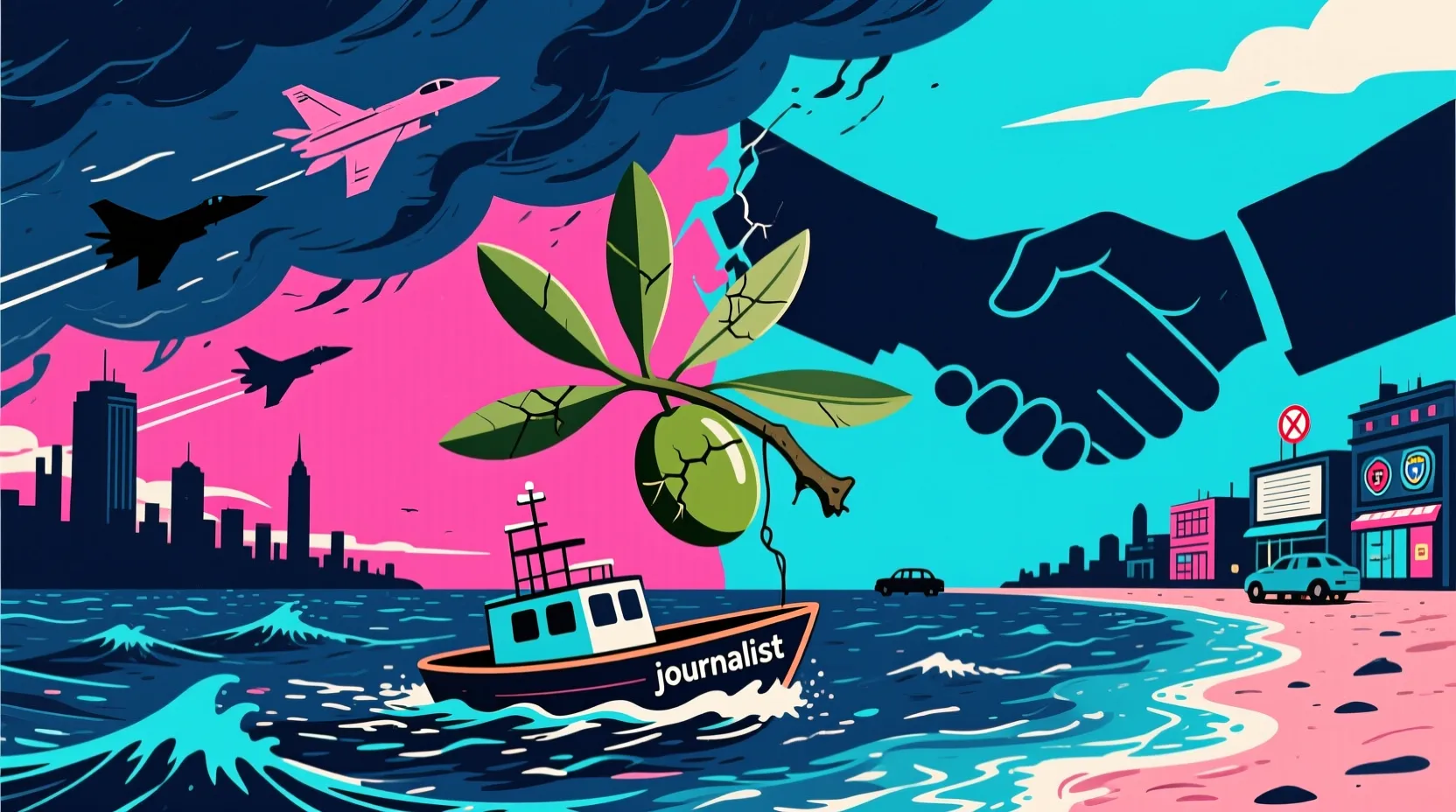
At a glance
What matters most
- An American journalist, Shelly Kittleson, was released by Iran-linked militants in Iraq after being held for several days.
- The release came alongside an informal ceasefire arrangement between the U.S. and Iran, though no formal agreement has been signed.
- Hardliners on both sides are questioning the deal, and Iran still holds strategic leverage in the region, especially around shipping lanes.
- The Trump administration is framing the outcome as a diplomatic win, but allies and critics alike warn the truce could unravel quickly.
Across the spectrum
What people are saying
A quick look at how the same story is being framed from different angles.
On the Left
Trump's deal looks more like a panic move than a strategy. Letting Iran call the shots through proxies and kidnappings sets a dangerous precedent. Real diplomacy requires consistency, not crisis-to-crisis bargaining with no oversight.
In the Center
The ceasefire avoided immediate conflict and brought home a civilian, which counts for something. But without verification or long-term goals, it's more of a timeout than a breakthrough.
On the Right
Trump got the job done fast where others would've delayed and let the journalist suffer. He used pressure to force a result, and that's what strong leadership looks like.
Full coverage
What you should know
It started with a kidnapping and nearly spiraled into open conflict. Last week, American journalist Shelly Kittleson was taken by Kataib Hezbollah, an Iran-backed militia, during a reporting trip near the Iraq-Syria border. Within hours, the Trump administration issued sharp warnings, and military assets were repositioned in the Gulf. But just as quickly, the situation shifted-Kittleson was freed, and a shaky understanding emerged between Washington and Tehran to pull back from further escalation.
The ceasefire wasn't signed or even fully detailed in public. Instead, it took shape through backchannel talks involving Omani and Qatari mediators, with final assurances exchanged over the weekend. U.S. officials say Iran signaled it would rein in proxy attacks on American forces in exchange for a halt in planned airstrikes. The release of Kittleson was the first visible sign the deal was holding. Still, there's no verification mechanism, no timeline, and no enforcement-just promises.
That's where the unease begins. On the U.S. side, some allies in Congress and the national security community worry the administration gave too much without getting lasting concessions. Iran still controls key chokepoints like the Strait of Hormuz, and its regional proxies remain armed and active. Meanwhile, in Tehran, hardliners dismissed the move as a temporary pause, not a policy shift. One militia leader even claimed the release of Kittleson was a one-time gesture-'This initiative will not be repeated,' he said.
Trump, for his part, has claimed victory. He called the outcome 'a great deal for America' during a brief appearance on Monday morning, praising his own instincts and speed. But even some supporters note the pattern: crisis, bluster, last-minute deal, then uncertainty. This time, the stakes were personal-the face of the hostage was on every news feed-but the underlying tensions with Iran are as unresolved as ever.
Analysts point out that while the journalist's safe return is unquestionably positive, the broader strategy remains unclear. There's no new framework for talks, no movement on nuclear limits, and no indication Iran will reduce its influence across the Middle East. If another incident occurs-say, an attack on a U.S. base or a seized vessel-the current truce could vanish overnight.
For now, the focus is on whether this pause can last long enough to open a wider dialogue. European diplomats have quietly welcomed the de-escalation, though they're not holding their breath. The window for building something more durable may be narrow, but it's open-for now.
What happens next likely depends less on policy documents and more on how both leaders react to the next provocation. With both Trump and Iran's leadership facing internal pressures, restraint may be in short supply.
About this author
Zwely News Staff compiles multi-source reporting into concise, viewpoint-aware coverage for readers who want context without noise.
Source Notes
Trump Finds Himself With Fragile Iran Cease-Fire After the Scramble to Make a Deal
After careening from one diplomatic extreme to another, President Trump finds himself with a fragile deal that is already showing signs of fraying.
Will Trump stick with his Iran truce?
US president’s ceasefire deal is fraying, the hawks in his alliance are sceptical and Tehran still controls the strait
A Few Thoughts on Trump’s Pre-Deal With Iran
First, just because Donald Trump is an inveterate liar, don’t assume that Iran is a reliable narrator about anything that...
Iran-Backed Kataib Hezbollah Reportedly Releases American Journalist Kidnapped In Iraq
'This initiative will not be repeated in the future'
Report: Kidnapped American Reporter to Be Released
Report: Kidnapped American Reporter to Be Released
Previous story
NASA shares the wake-up songs for the Artemis II crew, keeping a space tradition alive
Next story