Trump extends ceasefire with Iran as tensions simmer over blockade and diplomatic stalemate
With the truce holding for a second week, Washington and Tehran remain at odds over preconditions for talks.
At a glance
What matters most
- Trump extended the ceasefire with Iran by another 30 days without requiring reciprocal action.
- Iran insists the U.S. maritime blockade must end before any diplomatic talks can restart.
- Iranian leaders accuse the U.S. and Israel of using coercion instead of diplomacy.
- Trump claims Iran's government is 'seriously fractured' and unfit for credible negotiations.
Across the spectrum
What people are saying
A quick look at how the same story is being framed from different angles.
On the Left
The U.S. blockade is exacerbating the crisis, not resolving it. By maintaining economic pressure while refusing to engage diplomatically, the administration is trapping Iran in a no-win situation. Real progress requires lifting sanctions as a goodwill gesture and returning to multilateral talks through international channels.
In the Center
Both sides are using the truce to strengthen their positions rather than build trust. Trump's extension buys time, but without a clear diplomatic strategy, it risks becoming a cover for continued pressure. Iran's refusal to talk under blockade is understandable, but so is Washington's demand for verifiable changes.
On the Right
Trump is applying smart, sustained pressure to weaken a hostile regime without firing a shot. The blockade and ceasefire together isolate Iran economically and diplomatically, exposing its internal weaknesses. Negotiating now would reward bad behavior and surrender leverage.
Full coverage
What you should know
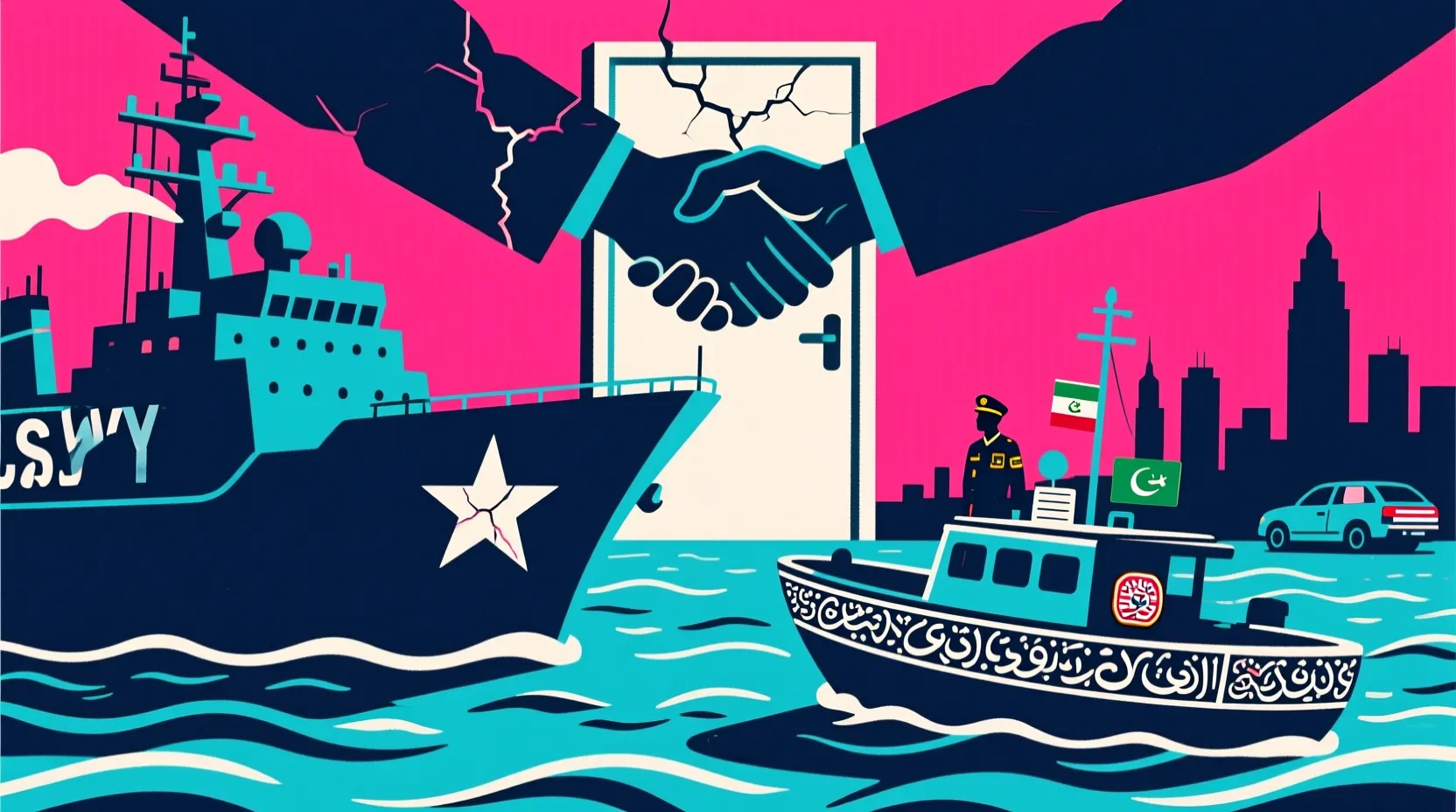
For the second week running, the Middle East remains quiet in one of its most volatile corners. President Trump announced late Monday he's extending the unilateral ceasefire with Iran for another 30 days, a move that keeps the immediate threat of military escalation at bay. But behind the calm, diplomacy is stalled. Iran says it won't return to talks unless the U.S. lifts its maritime blockade-a move Washington shows no sign of making.
The blockade, which restricts Iranian oil exports and limits naval movement in the Persian Gulf, has become the central point of contention. Iranian Parliament Speaker Mohammad Bagher Ghalibaf said the U.S. and Israel won't achieve their goals "through bullying," calling the blockade an illegal act of economic warfare. From Tehran's view, engaging in talks while under such pressure would mean negotiating under duress-a line they're unwilling to cross.
Trump, however, sees the situation differently. In remarks Tuesday, he described Iran's leadership as "seriously fractured," suggesting internal divisions make the regime unreliable. This assessment comes despite his earlier praise for Iran's new leadership figures, a shift that critics say reflects political convenience more than consistency. By framing Iran as unstable, the administration appears to justify its hardline stance: no talks until Tehran shows signs of serious internal change.
On the right, some commentators applaud the approach. Victor Davis Hanson, writing in The Daily Signal, argued that Trump isn't trying to negotiate-he's trying to break the regime's grip by tightening economic and military pressure. Others, particularly in conservative outlets, see the ceasefire extension not as a peace move but as a tactical pause, giving maximum pressure more time to take effect.
Still, the lack of any backchannel communication raises concerns. Fifteen days into the truce, there's been no movement toward de-escalation, no confidence-building measures, and no neutral parties brokering contact. Analysts warn that a ceasefire without diplomacy is just a delay, not a solution. If neither side blinks, the risk of miscalculation grows-especially if incidents at sea or in allied territories spark a chain reaction.
The international community has largely stayed quiet. No major European or Gulf leaders have stepped forward with mediation offers, and the UN has issued only routine calls for restraint. That silence may reflect fatigue with the cycle of crisis and truce, or it may signal a belief that only direct U.S.-Iran talks can break the deadlock-which both sides currently reject on their own terms.
For now, the region holds its breath. The guns are quiet, but the standoff is far from over. With Washington demanding political change in Tehran and Tehran demanding an end to what it sees as aggression, the path to talks remains blocked-by design, it seems, on both sides.
About this author
Zwely News Staff compiles multi-source reporting into concise, viewpoint-aware coverage for readers who want context without noise.
Source Notes
Iran blames Trump’s blockade for diplomatic impasse as fragile truce holds
Iranian Parliament Speaker Mohammad Bagher Ghalibaf says US and Israel will not achieve their goals 'through bullying'.
Ceasefire Day 15: Trump Extends Ceasefire Unilaterally as Iran Says Blockade an Act of War
State of the Union: Iran says an end to the blockade is a precondition for renewed talks. The post Ceasefire Day 15: Trump Extends Ceasefire Unilaterally as Iran Says Blockade an Act of War appeared first on The American Conservative.
Trump says Iran's government is 'seriously fractured’ after praising its new leaders
Trump said the Iranian regime was "seriously fractured" as part of his pretext for indefinitely extending the ceasefire with Iran a day before the previous one expired.
Trump Isn’t Negotiating—He’s Crushing Iran’s Regime
ditor’s note: This is a lightly edited transcript of today’s edition of “Victor Davis Hanson: In His Own Words” from Daily Signal Senior Contributor Victor Davis Hanson. Subscribe to Victor Davis Hanson’s own YouTube channel to watch past e...
Previous story
Cause of death revealed for teen in D4vd murder case
Next story