Trump says he didn't realize the AI image made him look like Jesus, and that's raising more questions than it answers
After posting a doctored image that sparked outrage, the president's explanation is drawing skepticism from allies and critics alike.
At a glance
What matters most
- Trump posted an AI image of himself in a glowing, messianic pose that many interpreted as comparing him to Jesus Christ.
- He later said he didn't realize the religious implications, a claim that's drawing doubt from across the political spectrum.
- House Speaker Mike Johnson personally asked Trump to remove the image, saying it could offend religious sensibilities.
- Critics and commentators, including Joe Rogan, reacted with disbelief, questioning both the judgment and clarity behind the post.
Across the spectrum
What people are saying
A quick look at how the same story is being framed from different angles.
On the Left
The incident reflects a pattern of self-aggrandizing behavior that borders on the delusional. Claiming not to see the religious symbolism in an image that clearly casts him as a divine figure suggests either willful ignorance or a concerning detachment from reality. It's not just offensive-it's a sign of escalating narcissism at the highest level of government.
In the Center
Whether intentional or not, the post was tone-deaf and poorly considered. Leaders, especially those in a diverse and religiously sensitive country, need to be aware of how their imagery is received. The fact that Speaker Johnson felt the need to intervene shows how easily symbolism can backfire, regardless of intent.
On the Right
Most people understand it was just an AI image meant to look powerful and inspiring. The outrage is overblown, driven by media eager to paint Trump as controversial. If you're looking for blasphemy, you'll find it-but most Americans aren't taking it that seriously.
Full coverage
What you should know
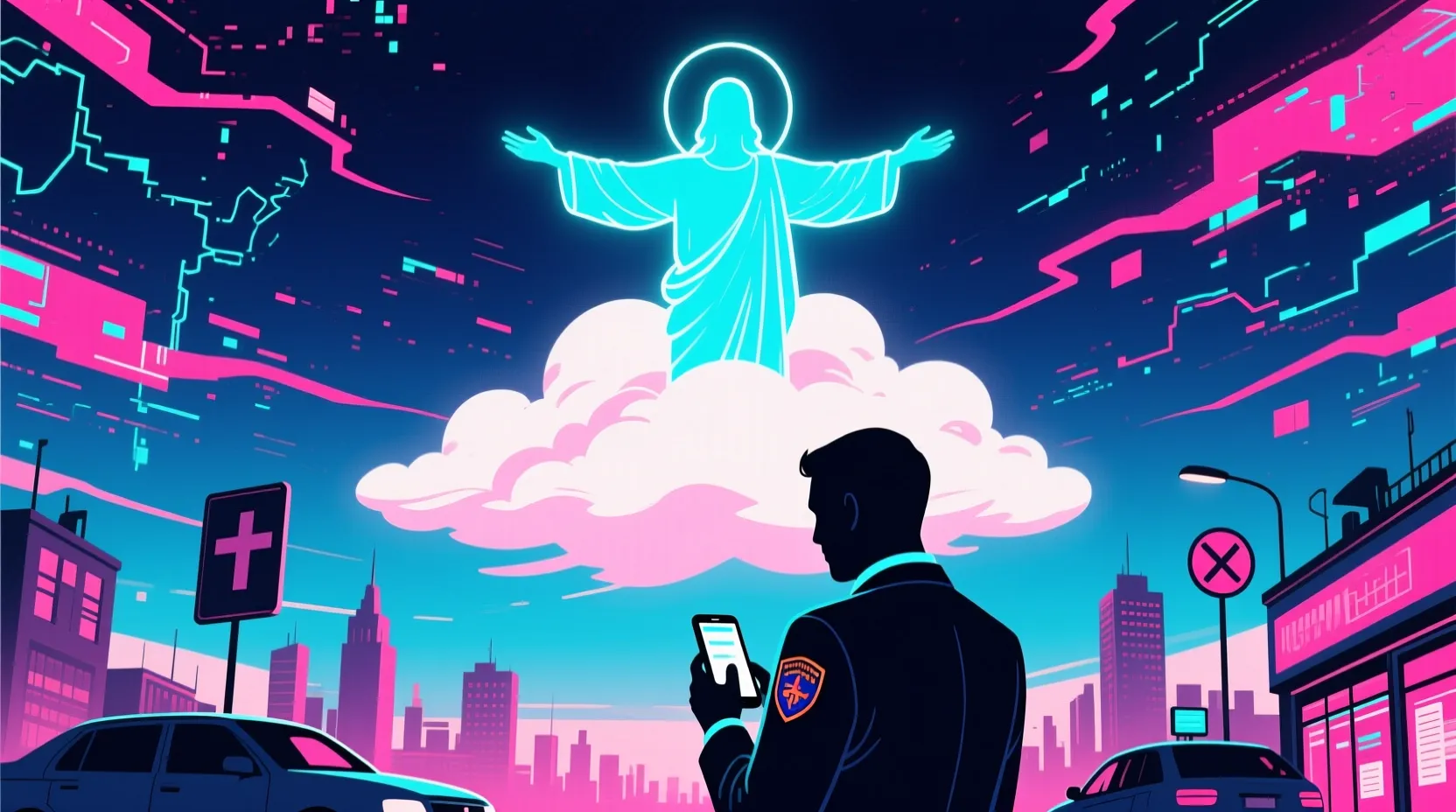
Over the weekend, President Trump shared an AI-generated image on Truth Social showing him standing with arms outstretched, bathed in golden light, atop what appeared to be a cloud-covered hill. The imagery-complete with a radiant halo-like glow-immediately drew comparisons to classic depictions of Jesus Christ. By Monday, the post had been deleted, but not before spreading widely and sparking a wave of criticism from religious leaders, political figures, and the public.
When asked about the image, Trump said he hadn't noticed the religious parallels. "I didn't see it that way," he reportedly told advisors. "It was just a cool picture." That explanation, rather than calming the situation, has only deepened concerns. If he truly didn't recognize the symbolism, critics argue, it raises questions about his attentiveness. If he did, then the decision to post it becomes even more provocative.
House Speaker Mike Johnson confirmed he spoke directly with the president after seeing the post. "I told him I thought it was inappropriate and asked him to take it down," Johnson said, emphasizing that such imagery could alienate faithful Americans who view religious symbols with reverence. Johnson, a devout Christian and longtime ally, framed his intervention as a matter of respect, not politics.
Outside the beltway, reactions were less charitable. Podcaster Joe Rogan, who has hosted Trump multiple times, reacted with laughter during a live stream. "He really didn't see that? Come on," Rogan said, shaking his head. "Either he's not paying attention, or he's playing 4D chess with holy imagery. Neither is great." The clip quickly went viral, capturing a broader sentiment: confusion over what the post was meant to convey-and why it was made at all.
The image was created using widely available AI tools, continuing a trend of synthetic media blurring the lines between satire, self-promotion, and symbolism. But unlike previous instances of AI mischief, this one landed at a sensitive intersection of faith, power, and personality. Some evangelical leaders expressed discomfort, while others downplayed the issue, saying the focus should remain on policy.
Still, the episode has become a flashpoint. For critics, it's emblematic of a presidency that often prioritizes spectacle over substance. For supporters, it's another example of the media overreacting to something meant to be inspirational. But even among backers, there's quiet unease about the growing number of moments that invite scrutiny not just of Trump's policies, but of his grip on reality.
As the White House moves on to its next agenda item, the AI Jesus image lingers-not just as a viral misstep, but as a reminder of how much of modern politics now hinges on perception, technology, and the stories leaders choose to tell about themselves.
About this author
Zwely News Staff compiles multi-source reporting into concise, viewpoint-aware coverage for readers who want context without noise.
Source Notes
Trump's Reaction to the Jesus Flap Compounds Concerns About His Mental Acuity
The president claims he was oblivious to the picture's blasphemous implications, which is troubling if true.
Johnson says he asked Trump to take down AI Jesus image
House Speaker Mike Johnson (R-La.) on Tuesday said he asked President Trump to take down the AI image that many saw as the president being depicted as Jesus Christ. “I talked to the president about it as soon as I saw it and told him I don’...
Rogan cracks up over Trump’s explanation of AI Jesus image
Podcaster Joe Rogan on Tuesday laughed off President Trump’s explanation for a now-deleted post depicting the president as a Jesus-like figure. Trump posted the controversial image on Truth Social late Sunday, as he lashed out against Pope...
Previous story
A small Massachusetts town is deciding whether to raise property taxes by half
Next story