
Ukraine and Russia trade blame after short-lived Easter ceasefire falls apart
A 32-hour truce meant to coincide with Orthodox Easter quickly unraveled, with both sides accusing the other of hundreds of violations.
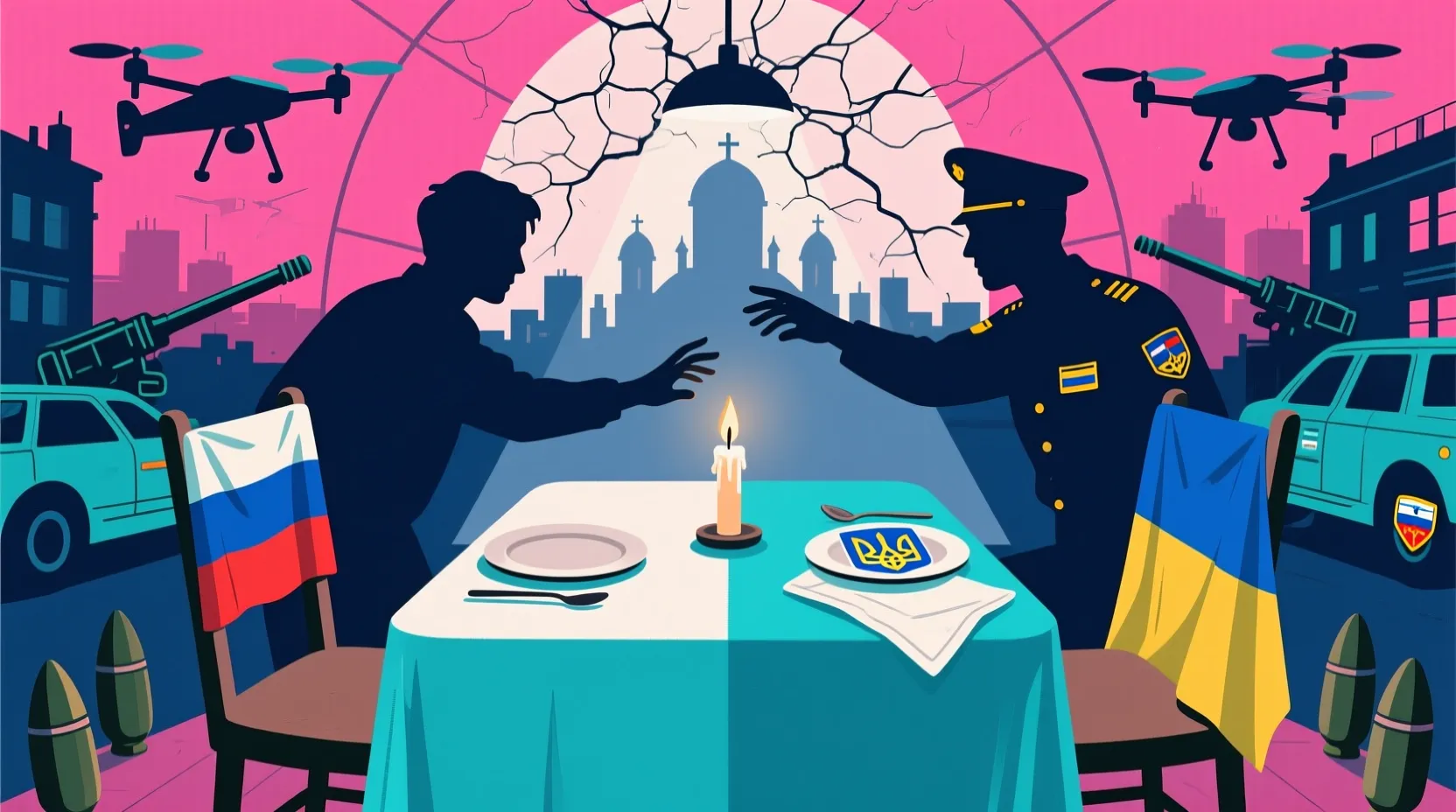
At a glance
What matters most
- Russian President Vladimir Putin announced a 32-hour ceasefire over Orthodox Easter, but it quickly broke down.
- Both Ukraine and Russia accused each other of hundreds or thousands of violations during the truce window.
- President Zelensky said Ukrainian forces would respond 'symmetrically' to any attacks, signaling continued readiness to fight.
- The collapse of the ceasefire highlights the fragile and distrustful state of the conflict more than four years in.
Across the spectrum
What people are saying
A quick look at how the same story is being framed from different angles.
On the Left
The ceasefire was a hollow publicity stunt by Putin, designed to paint Russia as peace-seeking while continuing its aggression. Ukraine had little reason to trust a unilateral pause, especially without international oversight. The fact that fighting never truly stopped shows Moscow's disinterest in diplomacy and reinforces the need for continued Western military support to Kyiv.
In the Center
Both sides have incentives to accuse the other of breaking truces, and without neutral observers, it's nearly impossible to verify who fired first. While Putin's ceasefire lacked credibility from the start, Ukraine's refusal to reciprocate any goodwill-even symbolic-highlights how total the breakdown in communication has become. The situation remains stuck in a cycle of retaliation with no clear path to negotiation.
On the Right
Russia's offer, however limited, was a potential opening for de-escalation, and Ukraine's immediate dismissal of it-along with symmetric retaliation-suggests Kyiv isn't serious about peace. With no end in sight and U.S. support facing growing scrutiny, these repeated breakdowns show the conflict may be drifting toward a frozen, unwinnable stalemate.
Full coverage
What you should know
A short-lived ceasefire meant to honor Orthodox Easter collapsed almost as soon as it began, with Ukraine and Russia trading sharp accusations of widespread violations. Russian President Vladimir Putin had unilaterally declared a 32-hour pause in fighting, starting Friday evening and ending Sunday morning, but within hours both militaries said the other had launched attacks across multiple fronts.
Ukrainian President Volodymyr Zelensky responded firmly, stating that Ukrainian forces would reply to any aggression "symmetrically." That wording suggests Kyiv would match the scale and intensity of Russian actions without necessarily escalating further. In a statement, Zelensky emphasized that Ukraine did not initiate fire during the truce window and blamed Moscow for undermining its own ceasefire.
Russian officials, meanwhile, claimed Ukrainian troops carried out over a thousand violations, including artillery strikes and drone attacks. The Russian Defense Ministry released a list of alleged incidents but provided no independently verifiable evidence. Ukraine's military command countered with its own tally-hundreds of Russian attacks recorded during the same period, particularly in Donetsk and Kharkiv regions.
The ceasefire was not negotiated but announced by Moscow, which has used similar short-term pauses in the past, often around religious holidays. Critics have dismissed these moves as propaganda gestures with no real intent to reduce violence. This time, the breakdown was faster and more total than in previous attempts, with heavy fighting resuming before the truce officially ended.
There was no international monitoring mechanism in place to verify claims from either side, leaving the public reliant on conflicting military briefings. Diplomatic reactions were muted, with Western officials expressing skepticism about the sincerity of the pause but reiterating support for Ukraine's right to self-defense.
The episode underscores how deeply entrenched the war has become. Even brief humanitarian pauses now seem impossible without mutual agreement and verification-neither of which exist. With both sides locked in a grinding conflict over territory and survival, symbolic gestures appear to carry little weight on the battlefield.
For civilians near the front lines, the broken truce brought little surprise. Shelling continued in several areas over the weekend, forcing families to stay in shelters. Humanitarian groups had hoped the pause might allow for aid deliveries or evacuations, but those plans were quickly scrapped as fighting persisted.
About this author
Zwely News Staff compiles multi-source reporting into concise, viewpoint-aware coverage for readers who want context without noise.
Source Notes
Ukraine and Russia accuse each other of hundreds of ceasefire violations
Ukrainian President Volodymyr Zelensky says his nation's forces would respond "symmetrically" to Russian attacks.
Ukraine, Russia claim thousands of violations of Putin-imposed holiday ceasefire
Russian President Vladimir Putin's 32-hour Orthodox Easter ceasefire appeared to unravel as Russia and Ukraine traded accusations of thousands of violations, deepening mutual mistrust.
Ukraine, Russia accuse each other of violating Putin's Easter ceasefire
Russian President Vladimir Putin on Thursday declared a 32-hour ceasefire over the Orthodox Easter weekend.
Previous story
Netanyahu claims US and Israel have crushed Iran's nuclear and missile programs
Next story