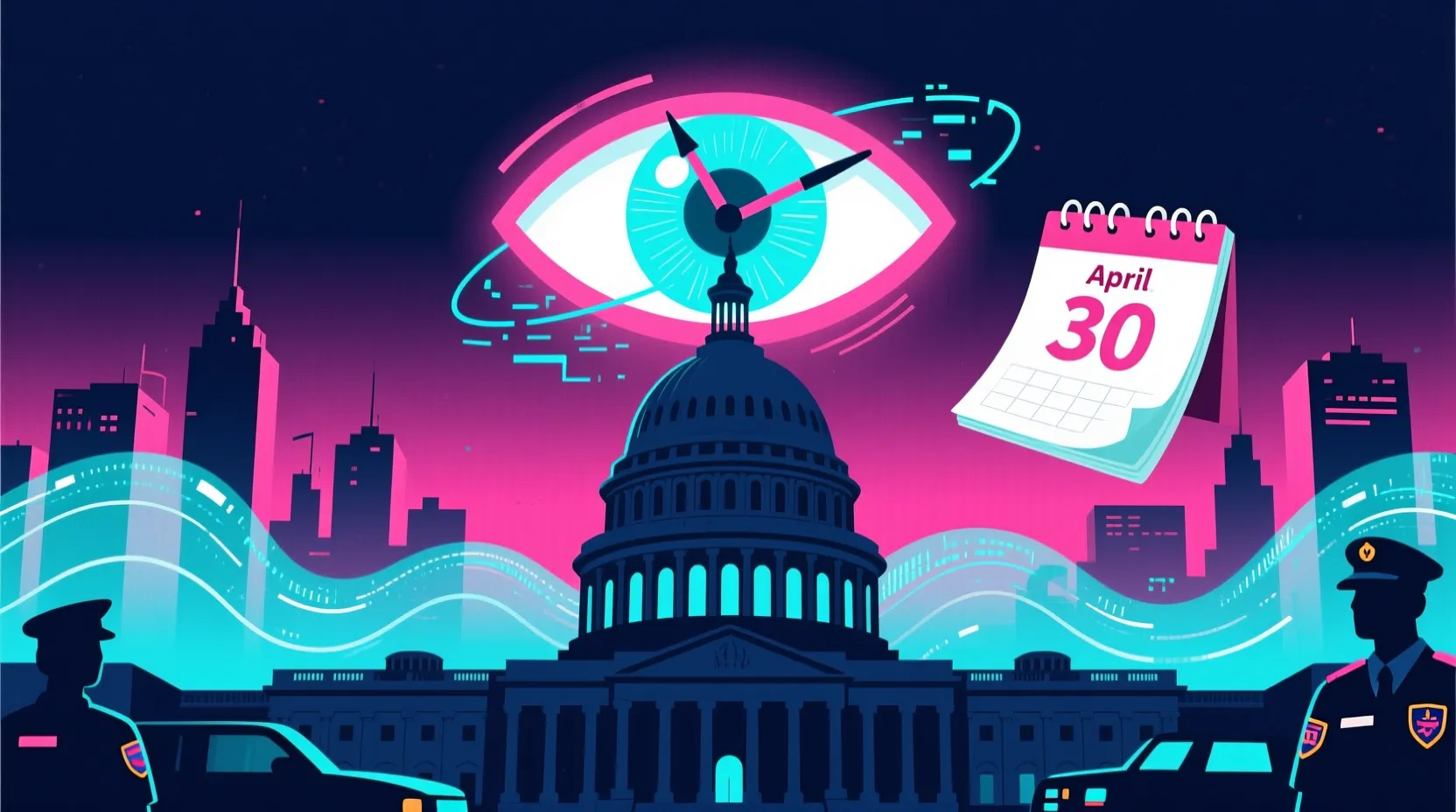
Congress gives itself 10 more days to figure out a fight over US surveillance powers
A last-minute patch keeps a controversial spying tool alive, but deep disagreements remain

At a glance
What matters most
- Congress extended FISA Section 702 for 10 days after a longer renewal failed due to Republican dissent
- The program lets US agencies collect foreign intelligence without a warrant, including messages between foreigners and Americans
- Hard-line conservatives blocked the extension unless privacy reforms were added, defying even President Trump's push
- The short patch avoids an immediate lapse but leaves major debates on surveillance and civil liberties unresolved
Across the spectrum
What people are saying
A quick look at how the same story is being framed from different angles.
On the Left
Civil liberties advocates see the Republican revolt as a rare opening to rein in a surveillance system that's operated with too little transparency and too much access to Americans' private communications. They argue that Section 702 has long violated privacy rights under the Fourth Amendment and that any reauthorization must include strong limits on data collection, usage, and sharing across agencies.
In the Center
Section 702 is widely viewed as a vital tool for national security, but concerns about oversight and abuse are legitimate. A balanced approach would preserve the program's core mission while adding clear rules for handling incidentally collected US citizen data, ensuring court oversight, and requiring more public reporting to build trust.
On the Right
National security should not be held hostage by internal party disputes, especially when foreign threats are rising. While some reforms may be reasonable, the priority must be maintaining uninterrupted intelligence capabilities. The hard-line push to attach new restrictions risks weakening defenses and sending the wrong message to adversaries watching from abroad.
Full coverage
What you should know
With hours to spare, Congress has temporarily kept alive a powerful surveillance tool that lets US intelligence agencies collect communications from people overseas - even when those messages involve American citizens. A 10-day extension of FISA Section 702 passed late Thursday, buying lawmakers a narrow window to work out deeper disagreements that derailed a longer renewal.
The program has long been a cornerstone of US foreign intelligence, allowing the government to monitor suspected terrorists, foreign agents, and other national security threats abroad without needing a warrant for each target. But it's also drawn criticism for potentially sweeping up Americans' private conversations in the process, especially when they're talking to someone overseas.
This week, that tension boiled over. Republican leadership had pushed for an 18-month extension to keep the program running with minimal changes. But around 20 hard-line conservatives refused to go along, demanding stronger privacy safeguards and limits on how the government can use the data. Their rebellion was notable not just for its impact, but because it defied pressure from President Donald Trump, who publicly urged support for the original plan.
The failed vote exposed a growing rift within the GOP between party leaders who prioritize national security continuity and a faction increasingly skeptical of government surveillance. Some of these lawmakers argue that unchecked access to communications data undermines constitutional rights, even if the targets are overseas.
Supporters of the program warn that letting it expire - even briefly - could create dangerous gaps in intelligence gathering. They point to past successes in disrupting terrorist plots and countering foreign cyber threats as proof of its value. But critics say oversight has been too weak for too long and that reforms are overdue, especially as technology makes it easier to collect and store vast amounts of personal data.
Now, with just 10 days on the clock, both chambers must find a compromise. The Senate has shown more openness to reform-minded changes, while the House remains divided. If no deal emerges, the program could lapse entirely, something no administration has had to operate without in nearly two decades.
For now, the lights stay on. But the debate over how much power the government should have to listen in - and who gets protected - is far from over.
About this author
Zwely News Staff compiles multi-source reporting into concise, viewpoint-aware coverage for readers who want context without noise.
Source Notes
US Congress extends controversial surveillance power under FISA for 10 days
The measure has long been criticised for allowing US intelligence agencies to collect citizen data without a warrant.
Three things to know about FISA Section 702: Congress passes short-term extension of controversial surveillance program
The law allows the U.S. government to surveil people outside the U.S., including when they're communicating with American citizens.
GOP hard-liners derail government's spying power despite pressure from Trump
The House has failed to pass an 18-month extension of FISA after 20 Republicans defied President Donald Trump and tanked the late-night vote. Republican leadership intended to extend the Foreign Intelligence Surveillance Act through October...
Congress approves brief extension of FISA surveillance; disputes unresolved
Congress has approved a 10-day extension of a warrantless spy program after conservative Republican hard-liners refused to support GOP leaders' urging to reauthorize the law without any modifications.
Previous story
Clarence Thomas gave a speech linking progressivism to Hitler and it quickly went off the rails
Next story