
Farmers are getting hit hard by rising fuel and fertilizer costs as the Iran conflict drags on
What was supposed to be relief money is now being wiped out by war-driven price spikes
At a glance
What matters most
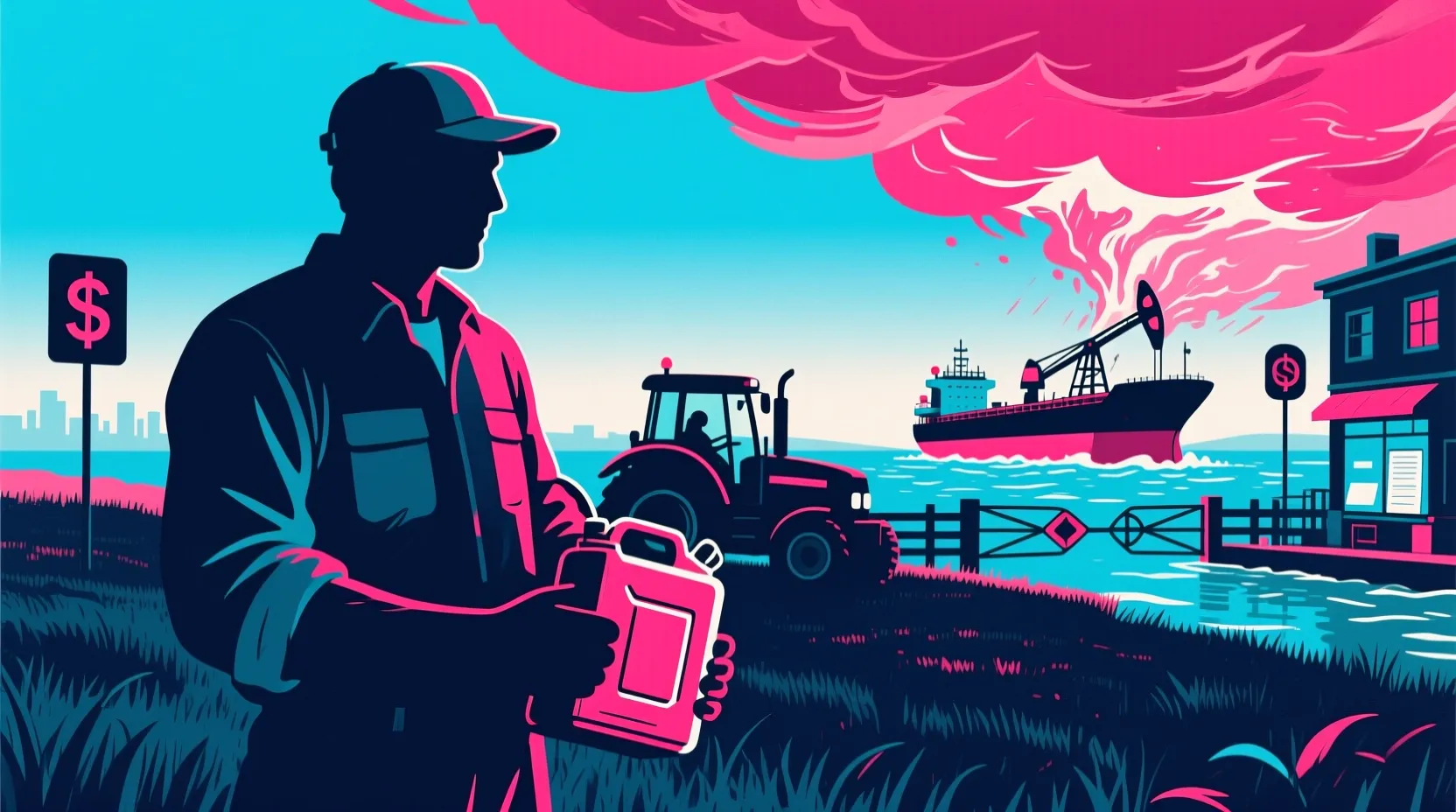
- Fuel and fertilizer prices are surging because of the Iran conflict and the closure of the Strait of Hormuz
- A $12 billion farm aid package from the Trump administration is being offset by these rising costs
- Farmers in key regions like the Mississippi Delta say they're being pushed to the brink
- British Airways warns of higher airfares as oil prices climb
Across the spectrum
What people are saying
A quick look at how the same story is being framed from different angles.
On the Left
The current crisis shows how past trade policies and military actions have long-term consequences. Farmers, who were promised stability through federal aid, are now paying the price for a foreign policy that prioritizes confrontation over diplomacy. Without stronger investments in renewable energy and domestic supply chains, rural communities will keep bearing the brunt of global conflicts they didn't create.
In the Center
The rising costs reflect a complex mix of global events and market forces. While the Iran conflict is a major driver, long-standing trade issues and supply chain dependencies also play a role. Policymakers need to balance immediate relief for farmers with strategies that reduce vulnerability to future shocks, without escalating military or economic tensions further.
On the Right
This situation underscores the risks of relying on government aid instead of resilient markets. Farmers were supported during past trade disputes, but ongoing global instability shows the need for energy independence and reduced regulation that could lower production costs. Stronger borders and a focus on American-made fuel would help protect against foreign disruptions.
Full coverage
What you should know
For farmers in the Mississippi Delta, the promise of relief from a $12 billion aid package years ago feels distant now. What was meant to stabilize their livelihoods is being undone by a new crisis: skyrocketing fuel and fertilizer costs driven by the ongoing conflict with Iran. With the Strait of Hormuz closed, global oil routes are rerouted or stalled, sending energy prices upward-and dragging farm expenses with them.
These rising input costs are hitting at a fragile time. Many farmers are still dealing with the long-term effects of trade tariffs that disrupted export markets. Now, they're facing a double squeeze-higher costs to plant and grow crops, but no guarantee of higher returns when harvest time comes. In interviews, several said they're cutting back on fertilizer use just to stay afloat, a move that could reduce yields later this year.
The ripple effects aren't limited to rural America. The owner of British Airways has warned passengers to expect higher ticket prices, pointing directly to the fuel crisis sparked by the conflict. With oil prices spiking, airlines are recalculating their budgets, and those costs are likely to be passed on to travelers in the coming weeks.
The original aid package, rolled out during the Trump administration, was designed to cushion farmers from geopolitical shocks. But this current wave of instability is proving harder to offset. Unlike temporary trade disputes, an active conflict in a critical oil corridor has no clear end in sight, making long-term planning nearly impossible for both farmers and businesses dependent on stable fuel prices.
Experts say the situation highlights how interconnected global systems have become. A disruption in the Middle East doesn't just affect oil markets-it reshapes the economics of farming, transportation, and consumer prices thousands of miles away. For now, many farmers are waiting, watching fuel prices day by day, and hoping the situation eases before planting season deepens.
There's no political consensus on how to respond. Some lawmakers are calling for renewed aid, while others argue that long-term solutions require reducing dependency on volatile global supply chains. But for those working the fields, the debate feels far removed from the daily reality of deciding whether they can afford to run their tractors.
As the conflict continues, the pressure builds-not just on farms, but on every sector that relies on affordable energy. What started as a distant geopolitical standoff is now showing up in the cost of flying, the price of food, and the future of family-run farms.
About this author
Zwely News Staff compiles multi-source reporting into concise, viewpoint-aware coverage for readers who want context without noise.
Source Notes
Trump’s $12B farm aid was meant as relief. The Iran war is wiping it out
With rising costs of fuel and fertilizer, and tariffs still in place, the outlook for 2026 is bleak
The rising cost of fertilizer and fuel prices is pushing some farmers to the brink
In the Mississippi Delta, a crucial agricultural region, farmers say their patience is wearing thin. Reeling from the effects of tariffs, they must now also navigate rising fertilizer and fuel costs.
British Airways warns of flight price rises due to fuel crisis
The owner of British Airways (BA) has warned of higher ticket prices as the closure of the Strait of Hormuz due to the Iran war has led to a sharp rise in oil prices.
UK Imposes Lifetime Smoking Ban for People Born After 2009
Residents of the United Kingdom born after 2009 will be permanently barred from purchasing cigarettes under the government’s new Tobacco and Vapes Bill, a measure aimed at creating what officials call a “smoke‑free generation.” The legislat...
Previous story
Gunfire and explosions rock Mali as armed groups hit military sites across the country
Next story