
Russia keeps up drone attacks as Ukraine questions the Easter truce
A short ceasefire meant to honor Orthodox Easter started Saturday, but strikes continued almost immediately.
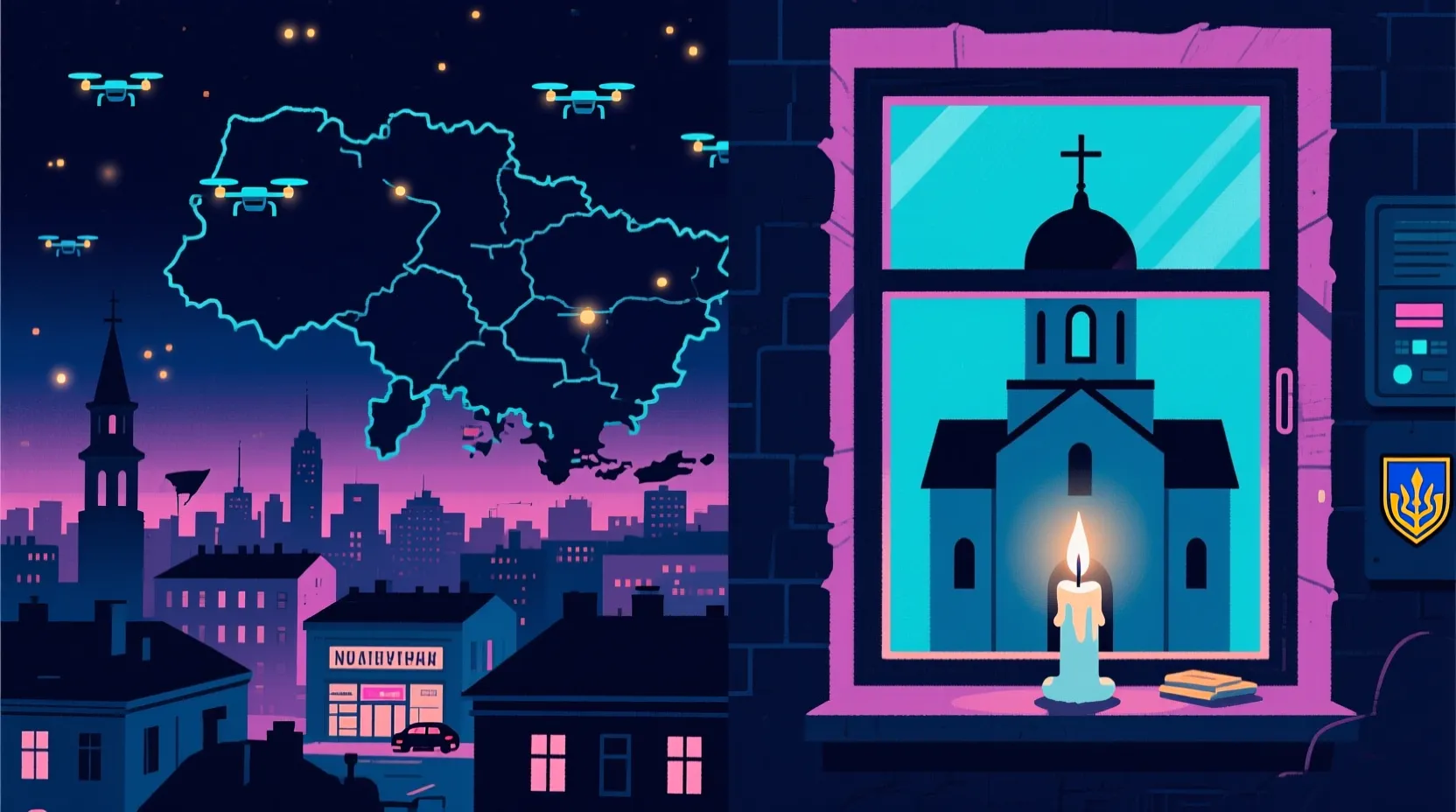
At a glance
What matters most
- Russia announced a 32-hour ceasefire for Orthodox Easter, starting Saturday at 4 p.m. Moscow time, but Ukrainian forces reported ongoing drone strikes.
- Ukraine had proposed the holiday truce first, but accused Russia of violating it almost immediately after it began.
- The brief pause underscores how little trust remains between the two sides, even during symbolic moments like religious holidays.
- Both countries carried out attacks in the hours leading up to the ceasefire, suggesting limited commitment from either side.
Across the spectrum
What people are saying
A quick look at how the same story is being framed from different angles.
On the Left
Russia's so-called ceasefire was never meant to bring peace-just optics. By launching strikes during a religious truce, Moscow showed once again that it treats humanitarian gestures as propaganda tools. Ukraine's call for a mutual pause was genuine, but it's clear that without pressure from the international community, Russia has no incentive to stop the war.
In the Center
Both sides have used holiday ceasefires in the past with limited success, and this round followed the same pattern. Ukraine proposed the pause, Russia responded unilaterally, and attacks continued. The lack of trust and verification made failure likely from the start. While the gesture didn't bring peace, it may still serve as a low-risk way to test communication channels.
On the Right
Russia offered a temporary ceasefire for Easter, but Ukraine-backed by Western allies-refused to fully reciprocate and kept up its own attacks. The focus on Russian violations ignores the broader context: Kyiv has repeatedly rejected peace talks and continues to rely on foreign military support to prolong the war.
Full coverage
What you should know
Russia's declared 32-hour ceasefire for Orthodox Easter got off to a rocky start Saturday, as Ukrainian military officials reported continued drone strikes even after the truce officially began. The pause, announced by the Kremlin, was meant to honor the holiday and run from 4 p.m. Moscow time Saturday to midnight Sunday. But according to a Ukrainian officer speaking to The Associated Press, attacks persisted just hours after the ceasefire took effect, casting immediate doubt on its sincerity.
The idea for a temporary halt had actually come from Ukraine. President Volodymyr Zelensky had publicly called for a mutual pause in fighting to respect the religious holiday, framing it as a humanitarian gesture. Russia responded by announcing its own unilateral ceasefire-but only on its part-and with no verification mechanism in place. Ukrainian officials expressed skepticism from the start, noting that Russia has a history of using such pauses for tactical advantage rather than peace.
Even before the ceasefire began, both sides exchanged strikes. French and Ukrainian sources reported explosions in multiple regions, including near Kyiv and in the east, suggesting neither side was fully disengaging. Russia claimed it had halted offensive operations, but Ukrainian air defenses remained active through the night, intercepting incoming drones in several areas.
The Orthodox Easter pause is not the first of its kind. Previous attempts at holiday truces-around Christmas and Easter in earlier years-have largely failed or been ignored. This year's effort follows a similar pattern, with both sides accusing the other of bad faith. For many Ukrainians, the continued attacks during a supposed time of peace only reinforce the sense that Russia is not serious about diplomacy.
Still, the mere mention of a ceasefire, however brief or flawed, keeps a sliver of dialogue alive. International observers noted that even symbolic gestures can create space for backchannel talks, though there's no sign yet of any major diplomatic movement. With the war now in its fifth year, battlefield momentum has largely stalled, and both sides appear to be settling into a grinding war of attrition.
For civilians, especially those near the front lines, the difference between fighting and ceasefire can be minimal. Air raid sirens still sounded in several cities over the weekend, and families marked Easter under the shadow of uncertainty. In churches and bomb shelters alike, the holiday was observed with both reverence and wariness.
As the 32-hour window closed Sunday night, there was no official announcement extending the pause. Fighting appears to have resumed its usual pace. The episode underscores how deeply entrenched the conflict remains-and how even moments meant for reflection are shaped by suspicion and violence.
About this author
Zwely News Staff compiles multi-source reporting into concise, viewpoint-aware coverage for readers who want context without noise.
Source Notes
Russia Continues Drone Strikes on Ukraine Despite Supposed Orthodox Easter Truce
Russia continued to strike Ukrainian positions with drones after a Kremlin-declared Easter ceasefire took effect on Saturday, a Ukrainian military officer told The Associated Press. The post Russia Continues Drone Strikes on Ukraine Despite...
Russia and Ukraine trade strikes before temporary ceasefire
An Orthodox Easter ceasefire between Russia and Ukraine began on Saturday. The Kremlin said it had ordered a 32-hour truce from 4pm (13:00 GMT) to midnight on Sunday, a week after Ukrainian President Volodymyr Zelensky proposed a halt to ho...
Orthodox Easter ceasefire falters as Ukraine says Russia continues drone strikes
Russia continued to strike Ukrainian positions with drones after a Kremlin-declared Easter ceasefire took effect Saturday, a Ukrainian military officer told The Associated Press, casting immediate doubt over the truce.
Previous story
A scramble for oil barrels is sending shockwaves through the global market
Next story