The cost of groceries is squeezing households, and now the government is looking closely at how prices are set
From beef to eggs, Americans are paying more at the store - and officials are asking whether the system itself is part of the problem
At a glance
What matters most
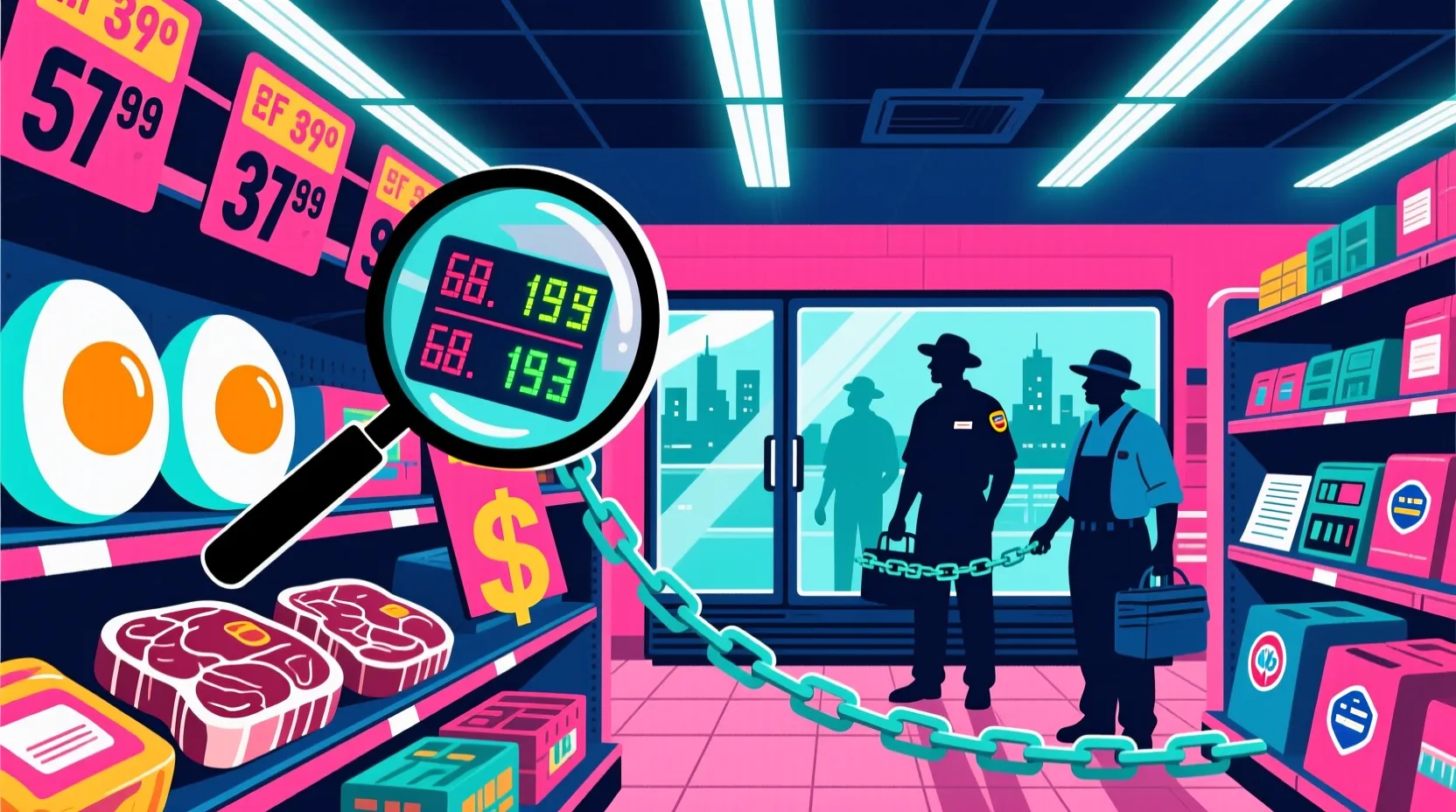
- The Justice Department is investigating whether anti-competitive practices in agriculture are contributing to high grocery prices for staples like beef and eggs
- Maryland has passed a first-in-the-nation law banning surveillance pricing, where stores adjust prices in real time using customer data and tracking
- While U.S. fuel prices remain high, they're still significantly lower than in parts of Europe, where taxes and policy choices have led to much steeper costs at the pump
Across the spectrum
What people are saying
A quick look at how the same story is being framed from different angles.
On the Left
High grocery prices aren't just bad luck - they're the result of corporate consolidation and weak oversight. The DOJ's move is overdue, and Maryland's ban on surveillance pricing shows how policy can protect everyday people from exploitative systems. More states should follow, and federal regulators need to take bolder action to ensure markets serve the public, not just shareholders.
In the Center
Rising food and fuel costs are hitting household budgets hard, and it makes sense for officials to examine whether market practices are contributing. The DOJ's review and Maryland's new law reflect legitimate concerns about fairness and competition. But solutions should be based on evidence, not assumptions, and need to balance consumer protection with the realities of running a business in a complex economy.
On the Right
Energy and food prices are shaped by global markets and government overreach, not corporate greed. Europe's sky-high fuel costs show what happens when taxes and regulations go too far. Instead of copying that model with more price controls, the U.S. should focus on deregulation, increased production, and free-market solutions to bring costs down sustainably.
Full coverage
What you should know
For millions of Americans, the grocery bill keeps climbing. Beef, eggs, and other staples have stayed stubbornly expensive, even as inflation has cooled in other parts of the economy. Now, the Justice Department is turning up the heat on the agriculture sector, asking whether market concentration and opaque pricing practices are making life harder for both farmers and shoppers.
Officials are focusing on how a small number of companies dominate key parts of the supply chain - from meatpacking to grain distribution - and whether that power lets them set prices that benefit corporate margins more than farmers or consumers. The probe isn't targeting any single company yet, but it signals a broader push to understand why food costs haven't come down even as other inflation pressures ease.
At the same time, Maryland has taken a bold step with the new Protection From Predatory Pricing Act. The law bans surveillance pricing, a practice where stores use real-time data - like a shopper's location, past purchases, or even the weather - to adjust prices on digital shelves or apps. Critics say it's a form of price discrimination that hits vulnerable communities hardest, especially when low-income neighborhoods are charged more for the same goods.
The Maryland law is the first of its kind in the U.S., and it could inspire similar moves in other states. Retailers argue that dynamic pricing helps them stay competitive and manage inventory, but lawmakers say transparency and fairness should come first when it comes to basic necessities.
Meanwhile, fuel prices remain a sore spot. Americans are paying around $4.10 a gallon for gas and $5.60 for diesel - high, but still far below what drivers in places like Ireland face, where gas runs $8.55 and diesel nearly $9.60. The difference isn't due to supply issues. It's largely because European governments impose much higher fuel taxes and have stricter environmental policies, choices that keep prices elevated but also fund public services and climate goals.
Back in the U.S., the conversation is shifting from blaming global forces to examining homegrown systems. If prices are being shaped more by corporate behavior than supply and demand, then the fix might not be waiting for the market to balance out - it could require new rules, enforcement, and a rethinking of how fairness is built into everyday shopping.
For now, families are feeling the pinch, and policymakers are starting to treat high prices not just as an economic trend, but as a structural issue worth untangling.
About this author
Zwely News Staff compiles multi-source reporting into concise, viewpoint-aware coverage for readers who want context without noise.
Source Notes
DOJ Steps Up Agriculture Market Scrutiny Amid Rising Prices
As millions of Americans face an affordability crisis, the Justice Department is homing in on the agriculture industry, focusing on the rising costs faced by farmers and ranchers and soaring prices of key grocery staples like beef and eggs.
Worried about rising gas prices? The Europe path doubles costs
While Americans fill their gas tanks for around $4.10 a gallon and $5.60 for diesel, Irish drivers and other Europeans are paying $8.55 for gas and nearly $9.60 for diesel. That is not a market accident. It is the direct result of Europe’s...
Grocery Store Law To Change for Millions of Americans
Maryland lawmakers have passed the Protection From Predatory Pricing Act, blocking retailers from using surveillance pricing.
Previous story
IDF soldier caught on camera smashing Jesus statue in Lebanon
Next story