
The Supreme Court passes on a heated parental rights case but takes up a religious preschool fight
One decision keeps schools and families in a legal gray area, while the other could reshape how religious groups interact with public programs.
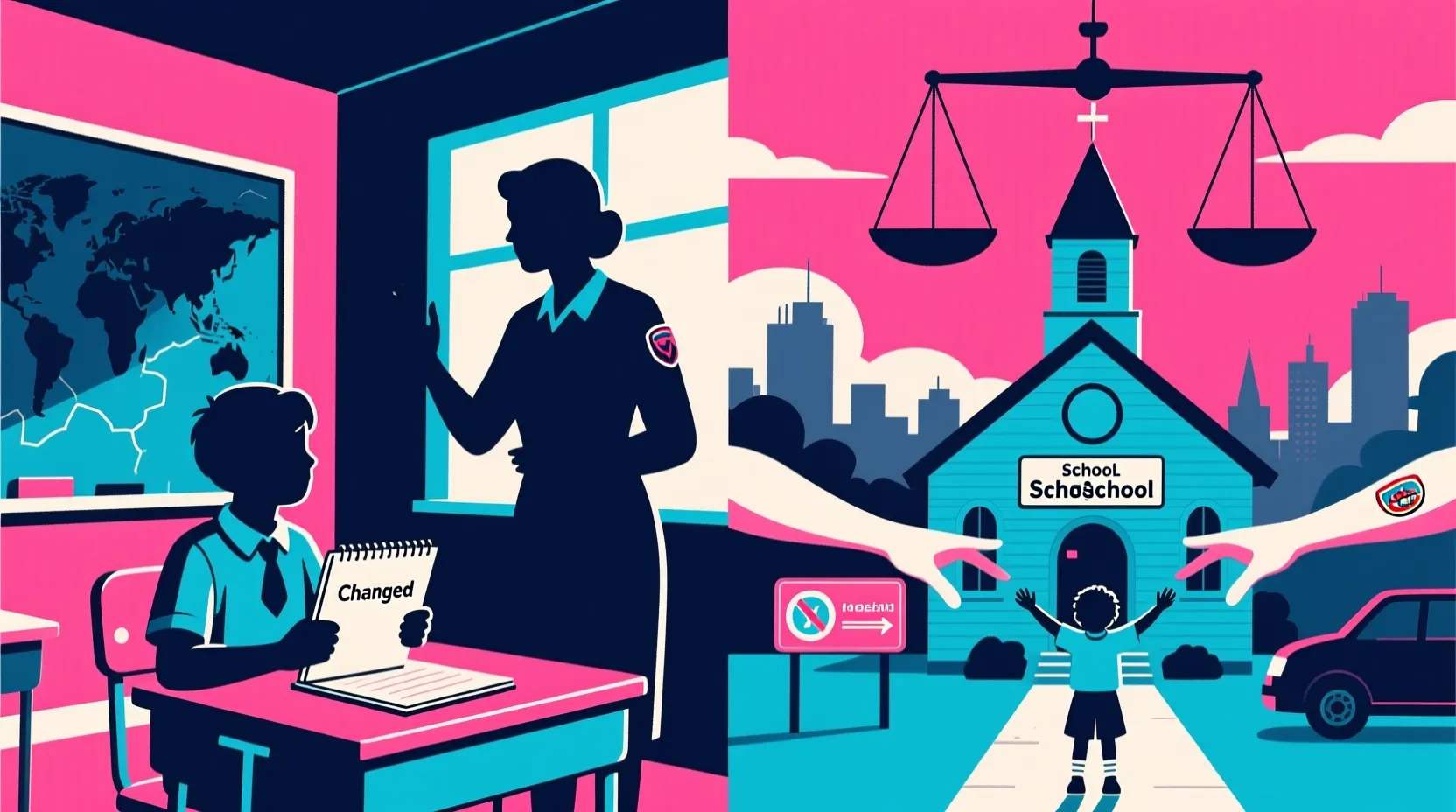
At a glance
What matters most
- The Supreme Court refused to review a Massachusetts case where parents argued they must be told if their child changes names or pronouns at school.
- The decision leaves in place a lower court ruling that such policies don't violate parental rights under the Constitution.
- In a separate move, the Court will hear a case about whether Catholic preschools can deny enrollment to same-sex couples and still get state funding.
- The preschool case could test the balance between religious freedom and anti-discrimination laws.
Across the spectrum
What people are saying
A quick look at how the same story is being framed from different angles.
On the Left
The Court's decision not to intervene in the Massachusetts case affirms that schools have a responsibility to protect LGBTQ+ students, especially when coming out at home could be unsafe. Forcing disclosure could put kids at risk, and parental rights don't override a student's right to safety and dignity. On the Colorado case, allowing religious exemptions could open the door to discrimination in publicly funded programs, which should be held to civil rights standards.
In the Center
The Court's choice to skip the Massachusetts case suggests it sees no clear constitutional violation in school policies that support transgender students without parental notification - at least under these facts. Meanwhile, the Colorado case presents a more defined legal conflict between religious liberty and anti-discrimination rules, making it a clearer candidate for review. The justices may be trying to avoid broad cultural rulings without a sharply framed legal question.
On the Right
By declining to hear the parental rights case, the Court is allowing schools to bypass parents on deeply personal issues, undermining family authority. Parents should have a say when schools affirm a child's gender identity. On the Colorado case, religious groups should not be forced to compromise their beliefs to receive public funds - especially when the state isn't requiring other providers to meet the same standards.
Full coverage
What you should know
The Supreme Court made a quiet but significant move Monday by declining to step into a clash over parental rights and school policies on gender identity. The justices turned away an appeal from Massachusetts parents who argued that schools must get their permission before supporting a student's use of a different name or pronouns. The decision means a federal appeals ruling stands - one that says such school practices don't violate the Constitution's guarantee of parental rights.
The case centered on the Chelmsford Public Schools, which had a policy allowing staff to respect a student's gender identity without notifying parents. The parents claimed this sidelined their role and violated their fundamental rights. But the First Circuit Court of Appeals disagreed, saying schools have discretion in how they support students' well-being. With the Supreme Court now passing on the issue, similar battles are likely to continue in statehouses and lower courts across the country.
At the same time, the Court chose to take on a different cultural flashpoint - one involving religion and public funding. It agreed to hear a challenge from two Catholic parishes in Colorado that run preschools. These schools receive public money but refuse to enroll children of same-sex couples, citing religious beliefs about marriage. Colorado says that violates anti-discrimination law. The parishes argue they shouldn't have to choose between their faith and financial support. The case could force the Court to clarify how far religious exemptions go when public funds are involved.
This isn't the first time the justices have weighed religious claims against LGBTQ+ rights. In past rulings, the Court has sometimes sided with religious objectors, as in the 2018 Masterpiece Cakeshop case. But it has also upheld anti-discrimination principles in other contexts. How they balance those values this time could set a precedent for schools, charities, and faith-based organizations that operate in the public sphere.
Meanwhile, another high-profile petition is waiting in the wings. A case asking the Court to decide whether tech companies like Twitter can be sued for hosting child sexual abuse material - despite legal protections under Section 230 - has completed its briefing. The justices haven't yet decided whether to take it up, but many legal observers see it as a potential turning point for online liability.
Together, these actions show the Court shaping the boundaries of rights in sensitive areas - family, faith, and digital safety - without always stepping in to resolve every dispute. By saying no to the Massachusetts parents, the justices are letting current policies stand, at least for now. But by saying yes to the Colorado preschools, they're signaling a willingness to tackle another thorny intersection of belief and public life.
For families, schools, and religious groups, the message may be clear: some fights will be settled in court, others will keep playing out locally. And the Supreme Court, even when silent, can shape the landscape just by choosing which battles to join.
About this author
Zwely News Staff compiles multi-source reporting into concise, viewpoint-aware coverage for readers who want context without noise.
Source Notes
Supreme Court stays out of parental rights case
The Supreme Court on Monday declined to take up an appeal from Massachusetts parents who contended the Constitution requires school employees to get their consent to encourage their child’s pronoun and name change in the classroom. The pare...
Supreme Court declines to hear challenge to schools hiding student gender transitions from parents
The Supreme Court denied a petition to hear a case challenging a Massachusetts school district’s policy of hiding student gender transitions from parents, despite the justices issuing a key ruling on the matter on its emergency docket last...
Supreme Court to hear Catholic preschools’ case involving same-sex parents
The Supreme Court took up a new religious rights case on Monday, agreeing to hear two Catholic parishes’ challenge to Colorado’s mandate that they enroll children of same-sex couples in their preschools to receive public funds. The case pro...
An Important Cert Petition Pending Before the Supreme Court on Section 230 Immunity
The briefing is completed on a cert petition presenting the urgent question of whether section 230 immunizes Twitter's knowing possession and distribution of child sex abuse materials.
Previous story
Patrick Muldoon, known for Days of Our Lives and Starship Troopers, has died at 57
Next story