
Trump orders US Navy to blockade Strait of Hormuz after Iran talks collapse
The move comes amid stalled diplomacy and rising global energy concerns.
At a glance
What matters most
- President Donald Trump has ordered a US Navy blockade of the Strait of Hormuz, blocking ships that pay tolls to Iran.
- The move comes after high-stakes peace negotiations led by Vice President Vance collapsed over Iran's demand for transit fees.
- Global oil prices spiked Sunday as the strait, a key energy corridor, faces major disruption.
- The Biden administration previously avoided military escalation, but Trump's approach signals a sharper stance.
Across the spectrum
What people are saying
A quick look at how the same story is being framed from different angles.
On the Left
Critics see the blockade as a dangerous overreach that could spark an unnecessary war. They argue diplomacy hasn't been fully exhausted and warn that Trump's rhetoric plays into a cycle of escalation that endangers both regional stability and American service members.
In the Center
While Iran's toll demand is widely seen as provocative, the blockade carries significant risks. A military-led solution may deter coercion, but it also increases the chance of miscalculation. The focus now is on whether this move pressures Iran back to the table or pushes it toward retaliation.
On the Right
Supporters say the blockade is a long-overdue response to Iranian aggression. They argue that clear, forceful action is necessary to protect global trade and deter future threats, and that Trump is finally standing up to a regime that's been testing US resolve for years.
Full coverage
What you should know
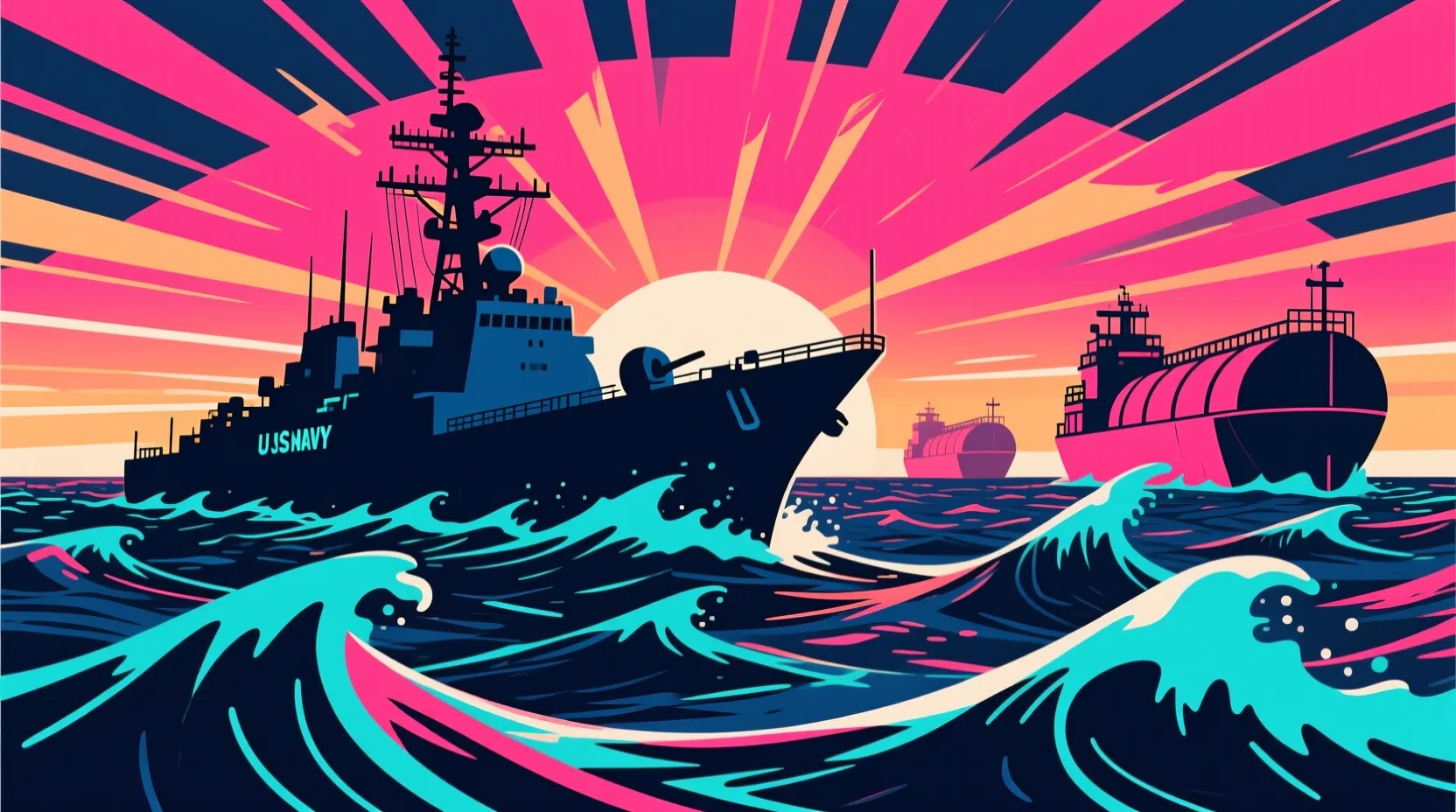
President Donald Trump has ordered the US Navy to enforce a blockade on the Strait of Hormuz, declaring that no ship paying a toll to Iran will be allowed to pass through the vital waterway. The announcement, made Sunday morning, marks a dramatic escalation in US-Iran tensions and comes just hours after peace talks led by Vice President Vance ended without agreement.
The Strait of Hormuz, a narrow channel between Iran and Oman, is one of the world's most critical energy chokepoints. About a fifth of the world's oil supply passes through it daily. For weeks, Iran had threatened to restrict access unless shipping companies paid a newly imposed transit fee, which Washington and its allies labeled as extortion. Trump called the demand unacceptable, saying, 'This is world extortion, and it stops now.'
Before the blockade was announced, shipping through the strait had already slowed to a trickle. Data from Bloomberg Markets showed only a handful of tankers made the crossing Sunday morning, as operators waited for clarity. Now, with the US Navy taking an active enforcement role, commercial traffic is expected to drop further, raising fears of supply shortages.
The failed negotiations in Islamabad were meant to de-escalate the crisis. Vice President Vance spent 36 hours shuttling between Iranian and Gulf state representatives, but Iran refused to back down on the toll. Trump, speaking from the White House, said diplomacy had run its course: 'We tried talking. We tried patience. Now we're acting.'
Oil prices jumped nearly 8% in early trading, with Brent crude surpassing $110 a barrel. Analysts warn that prolonged disruption could ripple through global markets, affecting everything from fuel costs to inflation. Some energy firms are already rerouting shipments, though alternatives are limited and far more expensive.
The Biden administration had previously avoided direct confrontation, favoring sanctions and quiet diplomacy. Trump's decision reflects a more confrontational posture, one that aligns with his broader foreign policy emphasis on strength and deterrence. Still, questions remain about how long the blockade can be sustained and whether it could provoke a military response from Iran.
For now, US naval forces are positioning in the Gulf, and Pentagon officials say they're prepared for any contingency. The international community is watching closely-some allies have expressed cautious support, while others urge restraint. One thing is clear: the stakes in the Persian Gulf have never been higher.
About this author
Zwely News Staff compiles multi-source reporting into concise, viewpoint-aware coverage for readers who want context without noise.
Source Notes
Trump Announces ‘Blockade’ Of Iran, Says No Ships Paying Toll Will Pass
'THIS IS WORLD EXTORTION'
Trump announces naval blockade of Strait of Hormuz as Iran peace talks fail
Reopening the critical waterway is a sticking point in negotiations as oil supply bottlenecks prompt a global energy crisis
Trump Vows to Blockade Strait of Hormuz After Iran Peace Talks Stumble
WASHINGTON/ISLAMABAD, April 12 (Reuters) — President Donald Trump said on Sunday the U.S. Navy would immediately start blockading the Strait of Hormuz, raising the stakes... Read More The post Trump Vows to Blockade Strait of Hormuz After I...
“LOCKED AND LOADED”: Trump orders Hormuz blockade
After Vance's marathon peace talks failed, Trump announced a blockade and warned of further escalation with Iran
Hormuz Tracker: Limited Transits Before Trump Announces Blockade
Shipping flows through the Strait of Hormuz continued to operate at reduced levels on Sunday, before President Donald Trump announced an immediate blockade of the critical maritime chokepoint by the US Navy.
Previous story
Orban and Magyar face off in Hungary's biggest election test yet
Next story