
Trump orders US Navy to blockade Strait of Hormuz as Iran ceasefire stalls
The move escalates pressure on Tehran after failed talks, with global oil markets watching closely
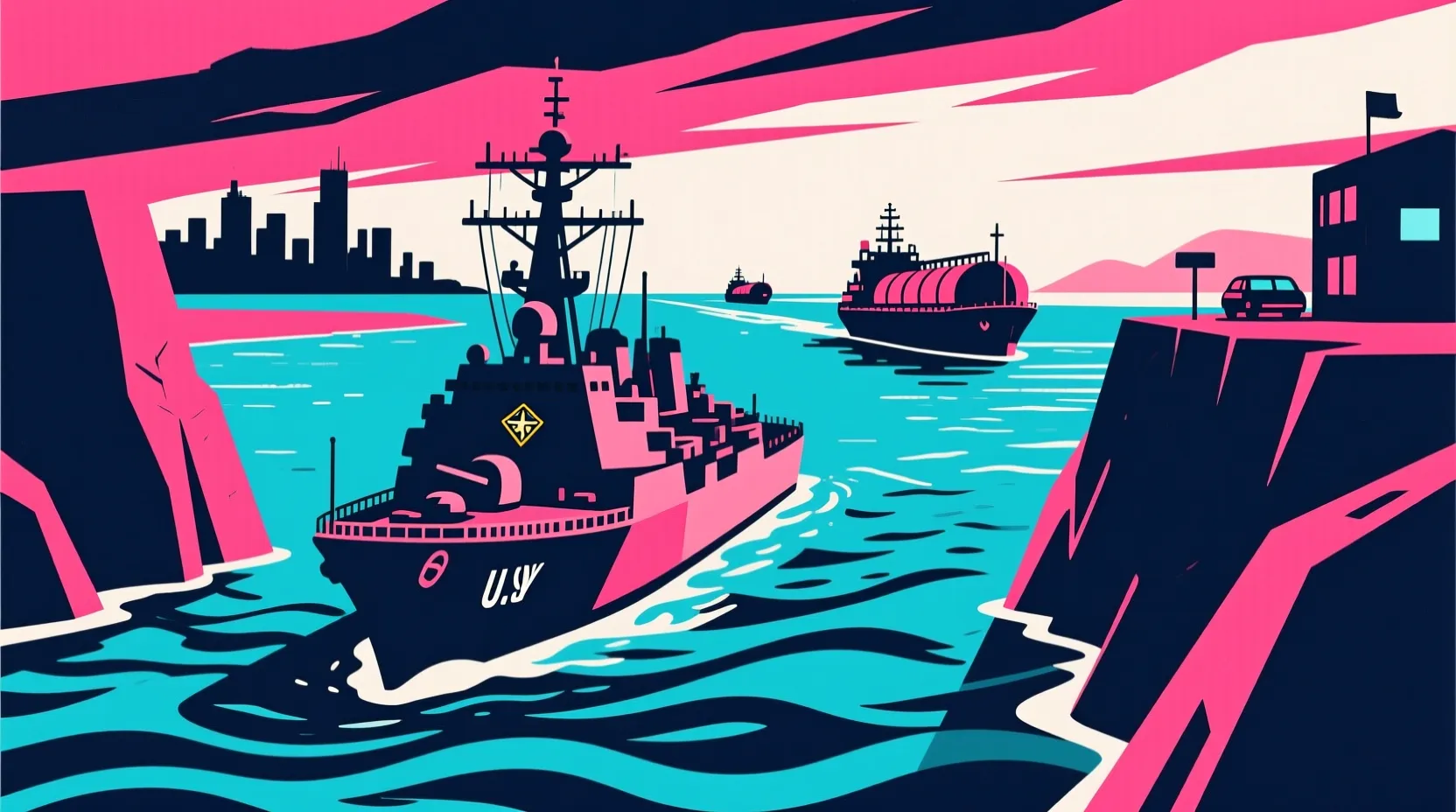
At a glance
What matters most
- President Trump ordered the U.S. Navy to block vessels to and from Iranian ports after a ceasefire failed to produce progress on reopening the Strait of Hormuz
- The blockade is intended to pressure Iran economically, but risks further destabilizing the region and disrupting global oil supplies
- Iran has not yet responded militarily, but officials warn the move could trigger a new cycle of escalation
- The administration argues the action is reciprocal, citing Iran's earlier closure of the strait during hostilities
Across the spectrum
What people are saying
A quick look at how the same story is being framed from different angles.
On the Left
This blockade plays into a familiar pattern of militarized foreign policy that prioritizes pressure over diplomacy. Instead of de-escalating, the administration is reviving a maximum-pressure strategy that has historically deepened conflicts without achieving lasting solutions. The move risks harming ordinary Iranians most, while endangering global stability and climate goals by prolonging reliance on fossil fuel chokepoints.
In the Center
The administration is trying to regain leverage after a stalled ceasefire, and the Strait of Hormuz is central to that effort. While the blockade carries risks, it may be seen as a calibrated step short of direct conflict. The real test will be whether it creates space for renewed talks-or pushes both sides toward actions they can't walk back.
On the Right
Trump is holding Iran accountable after it broke the terms of the ceasefire. The Strait of Hormuz is a global lifeline, and Iran's closure of it was an act of economic warfare. A reciprocal blockade is not only justified-it's necessary to show that aggression has consequences. Strong leadership like this restores deterrence and protects U.S. interests abroad.
Full coverage
What you should know
President Donald Trump has ordered the U.S. Navy to enforce a blockade at the Strait of Hormuz, a critical chokepoint for global oil shipments, after a two-week ceasefire with Iran showed little progress. The move comes after Iran failed to follow through on commitments to reopen the waterway, which it had shut during recent hostilities, disrupting energy markets and raising tensions across the Middle East.
The administration framed the blockade as a necessary and proportional response. Officials say Trump's condition for extending the ceasefire was clear: Iran had to allow free passage through the strait. With that not happening, the U.S. has shifted back to pressure mode, using naval forces to restrict maritime traffic to and from Iranian ports. The Pentagon confirmed that warships are now monitoring and turning back non-essential vessels.
The decision has drawn mixed reactions. Supporters argue it restores leverage and holds Iran accountable for its actions. Critics, however, warn it risks miscalculation at a volatile moment. The Strait of Hormuz handles about one-fifth of the world's seaborne oil, and even the threat of full closure can send shockwaves through global markets. Oil prices edged upward Monday as traders assessed the potential for prolonged disruption.
So far, Iran has not launched any direct military response, but its leadership has issued strong statements condemning the blockade as illegal and aggressive. There are growing concerns that the situation could spiral if either side misreads the other's intentions. Regional allies, including Saudi Arabia and the UAE, are urging caution, while European partners have called for renewed diplomacy.
The White House insists the goal isn't war, but compliance. Trump's team believes economic pressure-particularly on Iran's oil exports and supply lines-can force a return to negotiations on U.S. terms. Yet past attempts to use isolation as leverage have had mixed results, and there's no guarantee this approach will break the current deadlock.
Behind the scenes, military planners are preparing for multiple scenarios, including the possibility of Iranian retaliation against shipping or U.S. forces in the region. The Navy has increased its presence in the Persian Gulf, and intelligence agencies are monitoring Iranian naval and proxy activity closely.
For now, the situation remains tense but contained. Whether the blockade leads to a breakthrough or a deeper crisis may depend on how Iran chooses to respond-and how long global markets are willing to wait.
About this author
Zwely News Staff compiles multi-source reporting into concise, viewpoint-aware coverage for readers who want context without noise.
Source Notes
Understanding why Trump ordered the blockade in the Strait of Hormuz
President Donald Trump had one requirement for the two-week Iranian ceasefire: Iran had to reopen the Strait of Hormuz to alleviate the economic pain from the war. But now, halfway through the pause in strikes, it’s the United States that i...
The Memo: Trump rolls the dice with blockade of Iran
President Trump is rolling the dice again in relation to Iran. His order for the Navy to block ships as they go to and from Iranian ports is pushing the conflict into a new cycle of escalation. Trump is adamant he can use renewed pressure t...
MAGA break with Trump on Iran is imaginary
Back in January, President Trump dropped a one-liner worthy of the usually inimitable Willie Brown, the former mayor of San Francisco, who said of his long-ago romance with then-District Attorney Kamala Harris: “She loved me, I loved me. It...
Iran deserves Trump’s reciprocal blockade
President Donald Trump has ordered the U.S. Navy to blockade the Strait of Hormuz after negotiations between the United States and Iran failed to end the war. He is right to do so, and Tehran would be wise to comply. Trump’s order, on April...
Previous story
Jacksepticeye is helping bring Bloodborne to life as an R-rated animated movie
Next story