
Trump's administration eases federal stance on medical marijuana
A new reclassification opens doors for research and tax breaks, but stops short of full legalization.
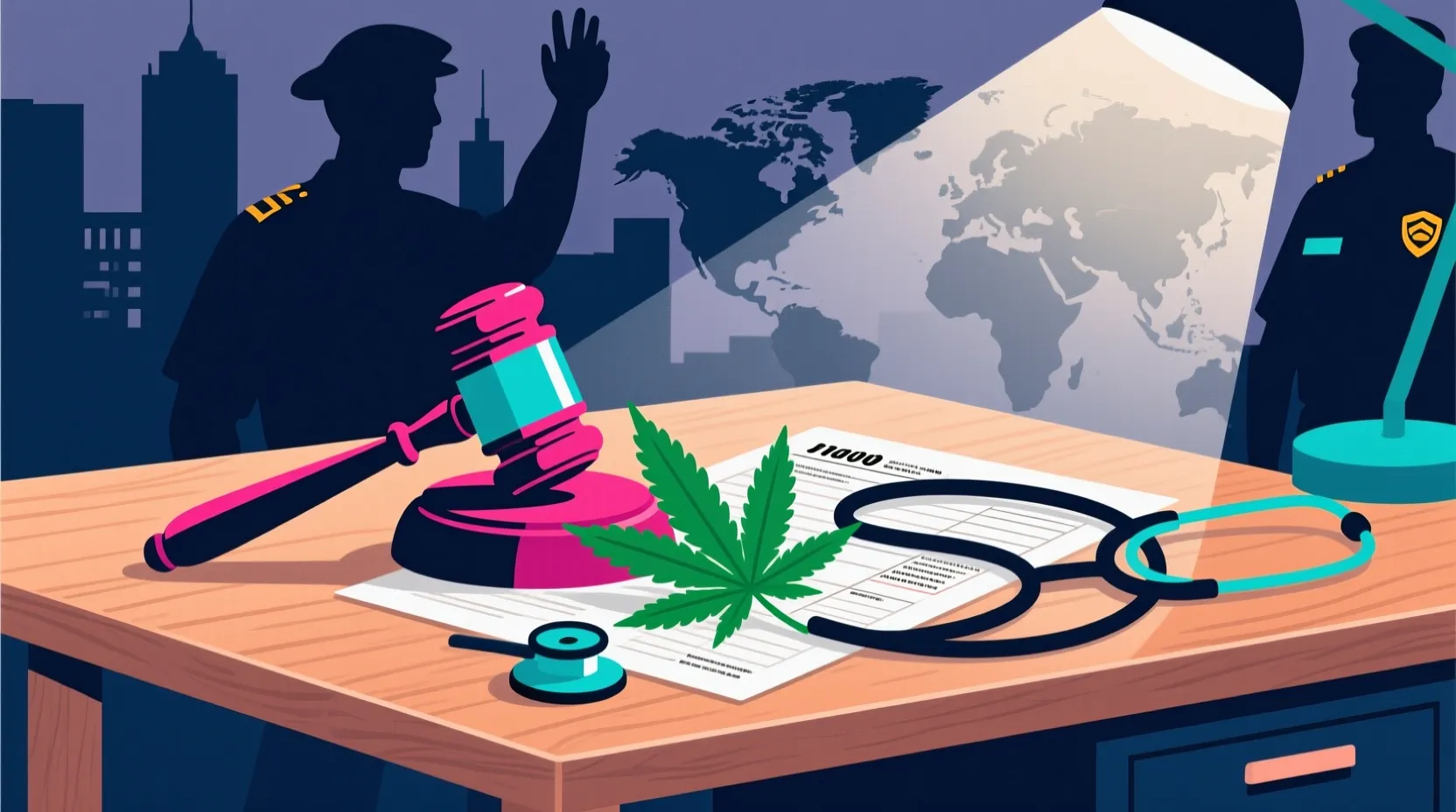
At a glance
What matters most
- The Justice Department reclassified state-licensed medical marijuana as a less dangerous substance under federal law.
- The change allows easier research access and lets compliant businesses claim federal tax deductions previously denied.
- The move fulfills part of a 2025 Trump executive order but stops short of full legalization or recreational use approval.
- Supporters see it as overdue progress; critics say it's a limited step that leaves many patients and businesses in legal limbo.
Across the spectrum
What people are saying
A quick look at how the same story is being framed from different angles.
On the Left
This reclassification is a small but necessary step toward justice, though it highlights how far we still are from ending the war on drugs. Thousands remain incarcerated for cannabis offenses, and full legalization with equity measures is the only real solution.
In the Center
The move balances public health, legal consistency, and federalism by recognizing state medical marijuana laws without overriding broader drug enforcement policies. It's a cautious but meaningful update to outdated regulations.
On the Right
President Trump is following through on his pledge to modernize drug policy where it makes sense-supporting medical access and research while maintaining law and order and respecting state-level decisions.
Full coverage
What you should know
In a notable shift, the Trump administration has moved to reclassify state-licensed medical marijuana as a less dangerous drug under federal regulations. The Justice Department's updated stance, announced Thursday, removes some long-standing barriers that have blocked scientific research and kept cannabis businesses from accessing basic financial benefits like federal tax deductions.
The change means that medical marijuana products produced and distributed under strict state licensing rules will no longer be treated as strictly as harder narcotics under federal scheduling. While recreational cannabis remains fully illegal at the national level, the reclassification opens the door for universities, pharmaceutical researchers, and doctors to study the drug more freely. It also allows compliant medical dispensaries to claim tax breaks that have been off-limits for decades, simply because they dealt in a federally banned substance.
The move builds on an executive order President Trump signed in 2025, which directed federal agencies to review cannabis policy in light of widespread state legalization. At the time, the order was seen as a cautious signal rather than a full endorsement. Now, with the reclassification in place, it's clear the administration is willing to act-albeit within narrow boundaries. Officials emphasized that the change applies only to medical use in states where it's already legal and regulated.
Reaction has been mixed. Public health advocates and patient groups welcomed the decision as a long-overdue recognition of medical reality. For years, doctors have prescribed cannabis for chronic pain, epilepsy, and cancer-related symptoms, even as federal rules treated it as highly dangerous. "This is about aligning policy with science," said one researcher at a major medical university, who spoke on background.
Still, many reform advocates say the step doesn't go far enough. Thousands of people remain in prison for nonviolent cannabis offenses, and recreational users-and the businesses serving them-still operate in legal gray zones. Some Democratic lawmakers called the move "symbolic" without broader decriminalization or expungement measures. Meanwhile, conservative critics worry the change undermines drug enforcement efforts and could encourage broader use.
Politically, the shift reflects a quiet evolution in how even Republican-led administrations approach drug policy. With polls showing strong public support for medical marijuana across party lines, the reclassification may be as much about pragmatism as principle. It also comes amid internal administration turbulence, including recent cabinet shake-ups, suggesting Trump may be focusing on achievable wins as his second term unfolds.
For now, the reclassification won't change daily life for most Americans. But for researchers, patients, and business owners in legal states, it removes real obstacles that have slowed progress for years. Whether this leads to broader reform-or remains a limited exception-will likely depend on what Congress and future administrations choose to do next.
About this author
Zwely News Staff compiles multi-source reporting into concise, viewpoint-aware coverage for readers who want context without noise.
Source Notes
US reclassifies some marijuana products as less dangerous drug
Step is latest example of shift away from heavy penalisation that has given way to widespread legalisation efforts.
Trump administration reclassifies medical marijuana as a 'less-dangerous drug'
President Donald Trump’s administration on Thursday reclassified state-licensed medical marijuana as a less-dangerous drug, easing research barriers and granting tax relief. The change falls short of federal legalisation but marks a major s...
DOJ Reclassifies Marijuana, Building on President Trump's Earlier E.O.
President Donald Trump's DOJ has moved to reclassify how marijuana is treated by the federal government, building on his 2025 executive order. The post DOJ Reclassifies Marijuana, Building on President Trump’s Earlier E.O. appeared first on...
China is conducting industrial-scale espionage to steal US AI technology, White House says
President Donald Trump’s science and technology adviser on Thursday released a memorandum that says the government has found China is conducting industrial-scale campaigns to steal U.S. artificial intelligence technology. Director of the Wh...
Trump’s Cabinet firings reveal a teetering administration
The president's forced resignation of Labor Secretary Lori Chavez-DeRemer is a reminder that old habits die hard
Trump Voters Like Marco Rubio More and More
And J. D. Vance less and less
Previous story
Warner Bros Discovery shareholders back $110 billion merger with Paramount Skydance
Next story