Trump's tough talk on Iran is raising alarms, but pulling back now could be just as risky
With U.S. forces deep in a standoff, the president's hardline stance is drawing both criticism and caution from experts.
At a glance
What matters most
- President Donald Trump launched major combat operations against Iran in late February, including joint U.S.-Israeli strikes and a naval blockade.
- CENTCOM reported that 31 Iranian vessels were turned back this week amid heightened military activity in the region.
- Some analysts warn that rejecting diplomacy outright could backfire, while others say backing down could signal weakness.
- Trump's recent behavior has sparked discussion about his fitness for office, but removing him via the 25th Amendment is widely seen as unrealistic.
Across the spectrum
What people are saying
A quick look at how the same story is being framed from different angles.
On the Left
Trump's aggressive posture toward Iran is reckless and driven more by ego than strategy. His refusal to engage in diplomacy risks a catastrophic war, and his erratic behavior raises serious concerns about his ability to command during a crisis. The 25th Amendment exists for moments like this, even if it's unlikely to be used.
In the Center
While Iran faces real internal and external pressures, completely ruling out diplomacy limits U.S. options. The current approach may maintain leverage, but without a clear plan for de-escalation, the risk of unintended conflict grows. Stability in the region depends on both strength and strategic flexibility.
On the Right
Trump is right to keep the pressure on Iran. Past administrations offered concessions that led nowhere, and now is not the time to ease up. The military posture shows resolve, and backing down would only encourage further aggression. Concerns about his fitness are politically motivated and ignore the results of his tough stance.
Full coverage
What you should know
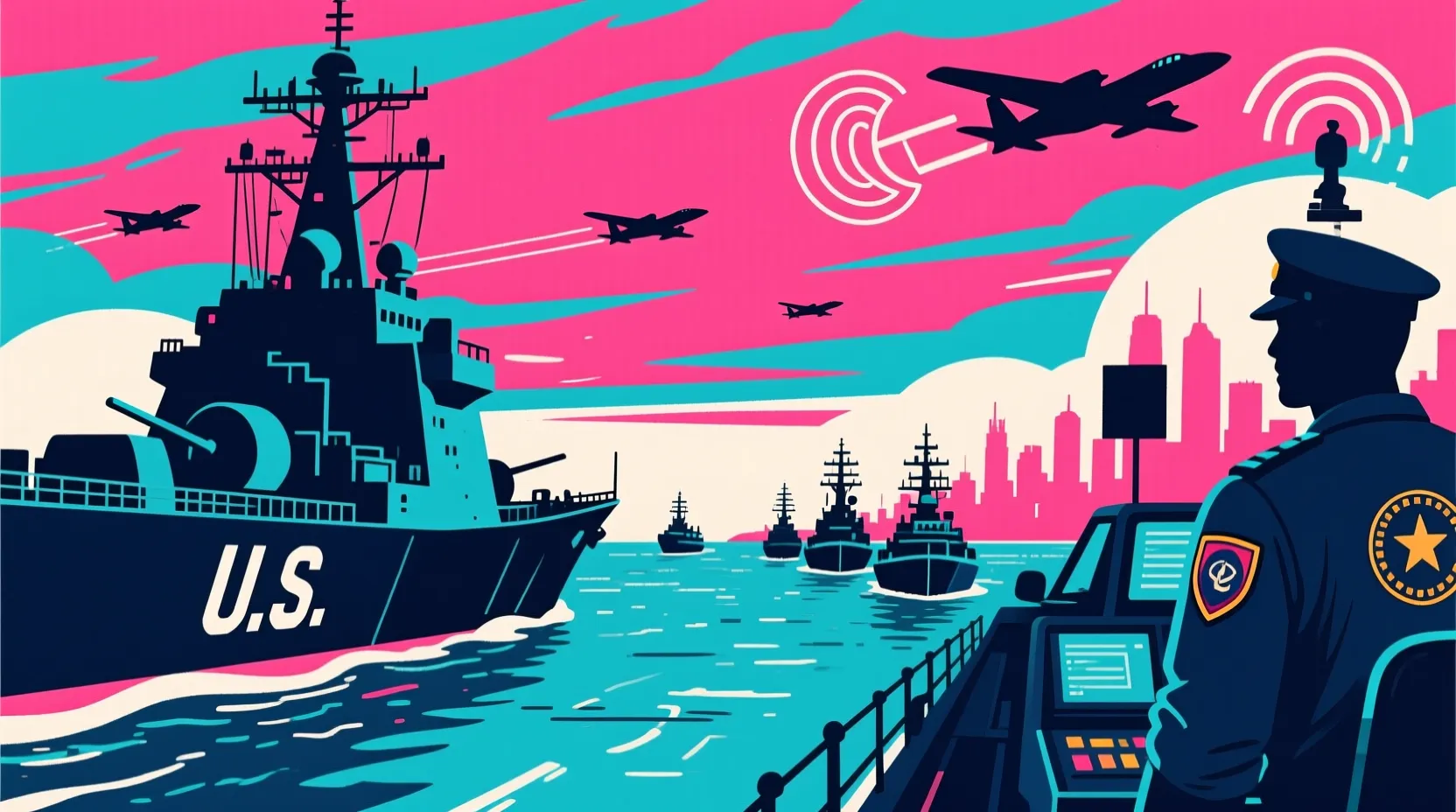
President Donald Trump's campaign of pressure against Iran has entered a critical phase, with U.S. Central Command confirming that 31 Iranian vessels were turned back this week during a blockade in the Persian Gulf. The move follows Trump's declaration of "major combat operations" on February 28, which included coordinated airstrikes with Israel - a significant escalation that has kept global leaders on edge.
The confrontational posture has drawn mixed reactions. On one hand, Trump's team argues that Iran is under unprecedented strain, facing internal unrest and economic collapse, and that now is not the time to offer an easy diplomatic off-ramp. As one opinion piece in Newsweek put it, diplomacy could act as a "release valve" that lets Tehran regroup without making real concessions.
Yet some foreign policy experts warn that refusing to engage at all could backfire. Cutting off every channel for negotiation might push Iran toward more aggressive posturing or harden its stance at home. With U.S. Marines deployed and the USS Tripoli involved in maritime operations, the risk of miscalculation remains high, especially in tightly packed waterways like the Strait of Hormuz.
Meanwhile, Trump's conduct during the crisis has raised eyebrows. Recent public appearances - including a military briefing where he stood beside the Easter Bunny while touting nuclear capabilities - have fueled informal discussions about his mental fitness. But despite murmurs, invoking the 25th Amendment to remove a sitting president is seen as politically unworkable, especially without clear medical or constitutional consensus.
The White House continues to frame the operation as a necessary show of strength. Officials argue that Iran has long exploited diplomatic pauses to advance its regional goals, and that sustained pressure is the only way to force meaningful talks. Still, allies have urged caution, noting that prolonged military engagement without a clear exit strategy could drain resources and destabilize the region further.
On the ground, U.S. forces remain on high alert. The blockade has disrupted some shipping lanes, and CENTCOM reports increased electronic and aerial surveillance from Iranian units. There's no indication yet of direct combat since the initial strikes, but the close proximity of naval assets keeps tensions simmering.
As the situation unfolds, the administration faces a narrow path: maintaining pressure without triggering wider conflict, and staying open to diplomacy without appearing to retreat. With Trump showing no signs of softening his stance, the world is watching to see whether this strategy forces change in Tehran - or pushes the region closer to a broader crisis.
About this author
Zwely News Staff compiles multi-source reporting into concise, viewpoint-aware coverage for readers who want context without noise.
Source Notes
Why invoking the 25th Amendment to oust Trump would never work
In recent weeks, President Donald Trump has threatened to destroy “an entire civilization,” touted U.S. military might while flanked by the Easter Bunny, picked a fight with the pope, and posted a social-media graphic depicting himself as J...
Donald Trump Must Not Fall for Iran’s Diplomacy Trap | Opinion
The President correctly identifies that Iran is under pressure, but he must not allow diplomacy to act as a sort of release valve.
Iran live updates: CENTCOM says 31 vessels turned back during blockade
President Donald Trump announced "major combat operations" against Iran on Feb. 28, with massive joint U.S.-Israeli strikes.
Previous story
A rotisserie chicken bill is trying to make life easier for food stamp users
Next story