
Virginia voters are deciding whether to let Democrats redraw congressional lines this year
A special election today could shift the balance of power in Congress and reignite debates over fair maps.
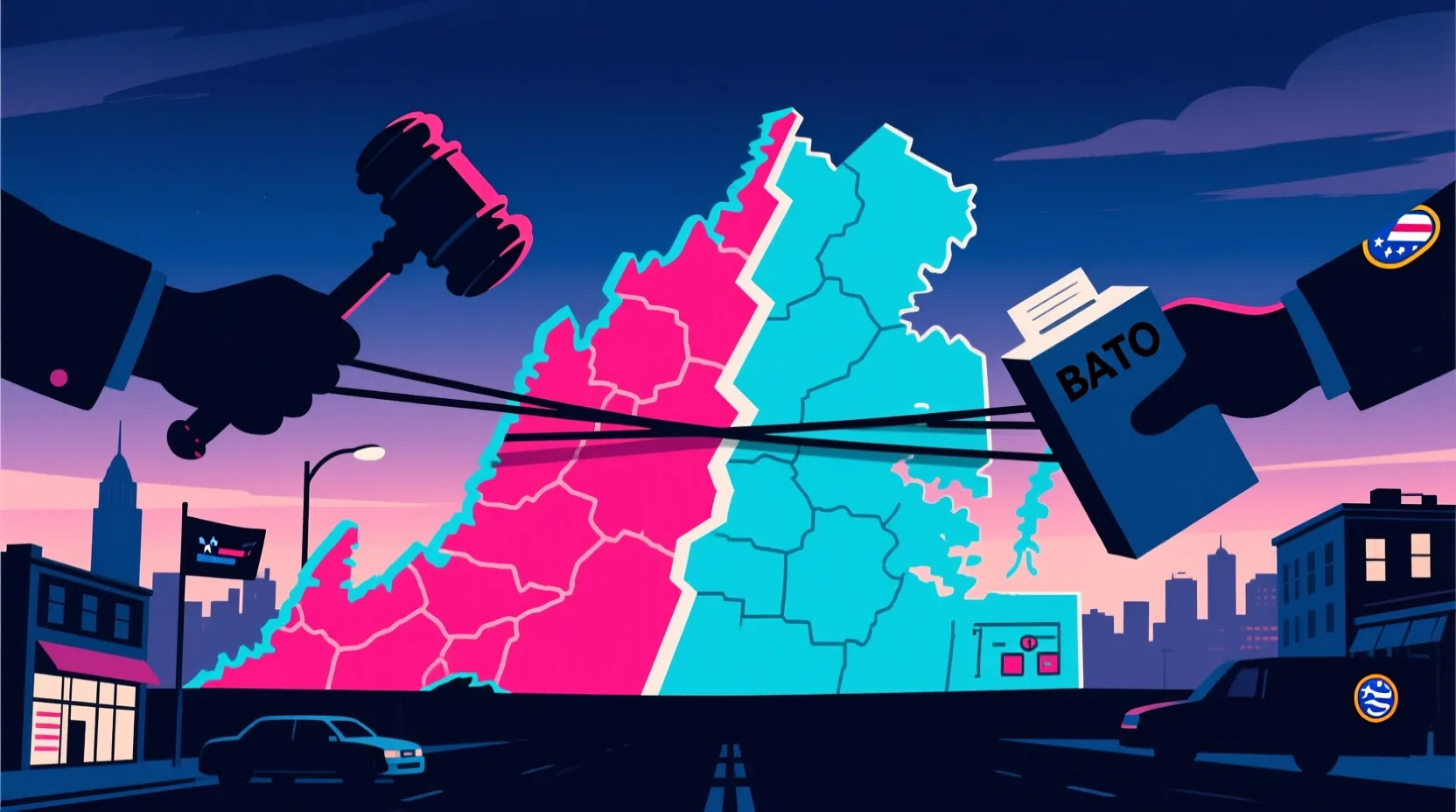
At a glance
What matters most
- Virginia is voting on whether to let the Democratic-controlled legislature redraw congressional district lines this year.
- Polls show the measure is slightly ahead, but opposition argues it could lead to unfair partisan advantage.
- If approved, the new maps could help Democrats gain seats in the U.S. House during the 2026 midterms.
- The vote marks a shift from Virginia's recent use of independent redistricting commissions.
Across the spectrum
What people are saying
A quick look at how the same story is being framed from different angles.
On the Left
This measure is a necessary correction to ensure fair representation. The independent commission failed to act, and delaying new maps would lock in outdated, inequitable districts. Letting the legislature step in temporarily is a democratic response to a practical problem, not a power grab.
In the Center
While the legislature may need to step in due to commission deadlock, bypassing an independent process raises valid concerns about bias. Voters are being asked to weigh immediate practicality against long-term trust in fair redistricting.
On the Right
This is a transparent attempt by Democrats to manipulate district lines for political gain. After years of promoting independent redistricting, the party is now abandoning it when convenient - a move that undermines election integrity.
Full coverage
What you should know
Virginians are heading to the polls today in a special election that could reshape the state's congressional representation. Voters are deciding whether to allow the Democratic-controlled legislature to redraw the state's congressional district lines - a rare move that bypasses the independent redistricting commission Virginia adopted just a few years ago. The outcome, while still uncertain, could have ripple effects on the balance of power in the U.S. House of Representatives later this year.
Supporters of the measure argue that updating the maps now will correct lingering imbalances from the last redistricting cycle and ensure fairer representation. Recent polling suggests the proposal is narrowly ahead, with some surveys showing slim public support. Proponents say the current districts still reflect outdated population patterns and that legislative action is necessary to align with recent census data and court rulings.
But the move has drawn sharp criticism, especially from conservative commentators and lawmakers. Brit Hume, in commentary aired Sunday, called Virginia's proposed process more 'egregious' than similar efforts in other states, warning it could tilt the playing field ahead of the midterms. Others, like writers at The Daily Signal, argue the vote amounts to letting Democrats 'lock in' long-term control by drawing favorable maps during a moment of political advantage.
Virginia had been seen as a reform success story after establishing an independent redistricting commission in 2020. That system was meant to reduce partisan gerrymandering, a problem that long plagued the state. But legal challenges and political gridlock have stalled the commission's work, prompting lawmakers to propose this temporary shift back to legislative control. Now, voters must decide whether to trust elected officials or uphold the independent model.
The stakes are high. With ten congressional seats potentially affected, even small changes in district lines could flip one or more seats in a state that often serves as a national bellwether. Analysts say Democrats are favored to gain at least one additional seat if the new maps are approved and implemented in time for the November elections.
Still, the debate isn't just about partisan math. It's reigniting broader questions about fairness, transparency, and trust in the redistricting process. Some good-government groups are urging caution, warning that reverting to legislative control - even temporarily - could erode public confidence and set a risky precedent for future cycles.
Results from today's vote are expected tonight, with early returns already drawing attention from national political watchers. Regardless of the outcome, the conversation about how and who draws election boundaries is likely to continue, especially as other states face similar challenges in the years ahead.
About this author
Zwely News Staff compiles multi-source reporting into concise, viewpoint-aware coverage for readers who want context without noise.
Source Notes
Virginia redistricting vote: What polls suggest and what voters will decide
The race is tight, and a win could result in more seats in Congress for the Democrats.
Brit Hume Flags Virginia Redistricting As More ‘Egregious’ Than Other States
'that could swing the results of the majority'
Here are the results for Virginia's 2026 redistricting ballot measure
Live election results: Get the latest on Virginia's special election on redistricting.
Virginians Set to Vote on a Map That Could Lock in Democratic House Dominance
Virginia, once a model for independent redistricting, is asking voters to temporarily hand the Democratic-controlled Legislature power to redraw congressional lines having a 10-1 partisan... Read More The post Virginians Set to Vote on a Ma...
Previous story
Iran says it won't show up for Trump's Pakistan peace talks
Next story