
A bomb blast on a Colombian highway kills 20 and shakes the country just weeks before elections
The attack, blamed on a dissident Farc faction, has reignited fears about security and political stability.
At a glance
What matters most
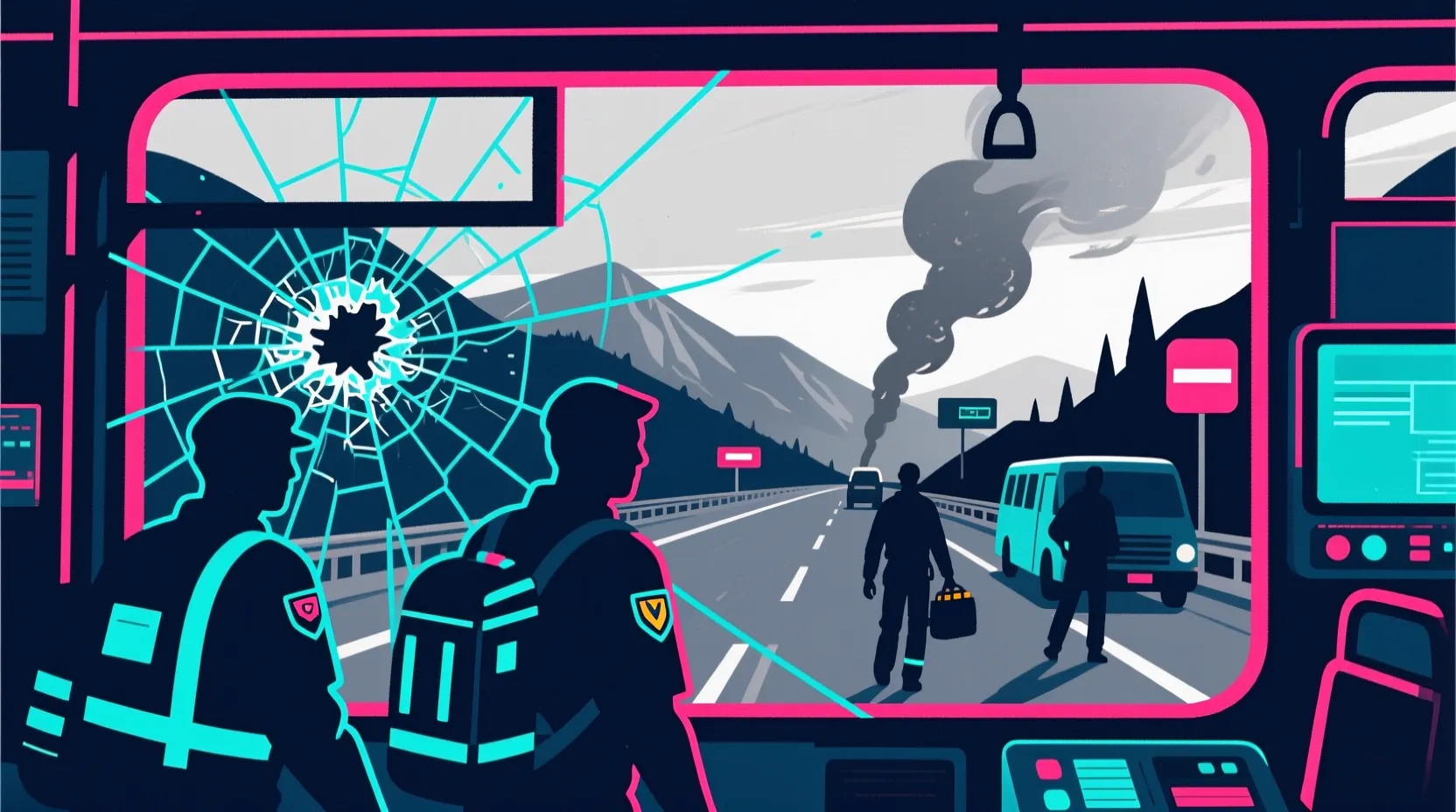
- At least 20 people were killed and 36 injured when a bomb exploded on a bus traveling through Colombia's Cauca region.
- The attack is being blamed on a dissident faction of the former Farc guerrilla group that never signed the 2016 peace deal.
- The bombing happened weeks before Colombia's May 2026 elections, raising concerns about political instability and security.
- The Pan-American Highway is a major transport route, and attacks there have historically signaled broader unrest.
Across the spectrum
What people are saying
A quick look at how the same story is being framed from different angles.
On the Left
This tragedy highlights the human cost of abandoning peace initiatives and underfunding rural development. The dissident Farc faction thrives in areas where the state has long been absent-without investment in jobs, education, and justice, violence will keep flaring. The focus should be on expanding peace, not militarization.
In the Center
The bombing is a grim reminder that despite progress, Colombia still faces serious security challenges in remote regions. A balanced response is needed-one that holds armed groups accountable while continuing to support peace efforts and protect vulnerable communities.
On the Right
Attacks like this show the risks of soft-on-crime policies and overreliance on negotiations with armed groups. When violence targets civilians, strong security measures and decisive military action are necessary to restore order and deter future attacks.
Full coverage
What you should know
A powerful explosion on a bus along Colombia's Pan-American Highway in the southwestern Cauca region has killed at least 20 people and left 36 injured, officials confirmed Monday. The blast, which tore through the vehicle late Saturday, has sent shockwaves across the country just weeks before national elections, reviving painful memories of decades past when guerrilla violence regularly disrupted daily life.
Authorities have pointed to a dissident faction of the Revolutionary Armed Forces of Colombia (Farc) as the likely perpetrator. Unlike the main Farc group, which disarmed after a landmark peace agreement in 2016, this splinter cell has continued armed operations, especially in remote, rural areas like Cauca. The group has been linked to a string of recent attacks, including extortion, kidnappings, and clashes with security forces.
The bus was traveling through a stretch of highway known for its strategic importance and vulnerability to attacks. The region has long been a hotspot for armed groups competing over territory and illicit economies, including drug trafficking. Security experts say the choice of target-a civilian bus on a major road-suggests an intent to instill fear and draw national attention.
President Gustavo Petro, who has staked his administration on reviving peace efforts and reducing military responses, condemned the bombing and called for unity. In a public address, he described the attack as a 'cowardly act against innocent people' and pledged to strengthen protection for civilians in conflict zones. Still, critics argue that violence in rural areas has worsened under his watch, especially as multiple armed factions expand their influence.
The timing of the blast has added political weight to the tragedy. With elections scheduled for May, candidates across the spectrum are now grappling with how to address security without fueling militarization. Some opposition figures have seized on the attack to question the government's peace-focused strategy, while Petro's allies warn that reverting to hardline tactics could unravel fragile progress.
Locals in Cauca say they feel caught in the middle. Many have lived under the shadow of armed conflict for generations, and while the 2016 peace deal brought hope, its benefits never fully reached their communities. 'We're tired of being forgotten,' said one resident near the blast site. 'We just want to travel safely, to live without fear.'
As Colombia mourns, the attack underscores the uneven reach of peace and the persistent dangers in its most isolated regions. With elections approaching, the pressure is growing on leaders to deliver not just promises, but protection.
About this author
Zwely News Staff compiles multi-source reporting into concise, viewpoint-aware coverage for readers who want context without noise.
Source Notes
Bomb blast on Colombia highway leaves at least 20 dead ahead of May elections
Dissident Farc faction blamed for attack on Pan-American Highway that also injured 36 people in south-western regionThe death toll in a weekend highway bombing in Colombia has risen to 20, with another 36 people injured, amid a surge of vio...
Death toll from Colombia bus bombing rises to 20 during wave of violence
Officials say 20 people died after an explosive device detonated on a bus in southwestern Colombia's Cauca region, injuring 36 others Saturday.
Previous story
Melania Trump calls for action against Jimmy Kimmel over 'expectant widow' joke
Next story