
A federal appeals court says work on Trump's White House ballroom can keep going
The project had been briefly limited to below-ground work, but judges cleared the way for full construction to resume through June.
At a glance
What matters most
- A federal appeals court cleared the way for full construction on the White House ballroom to resume, overriding a temporary limit to below-ground work.
- The project is tied to President Trump's plan to expand the White House's event capacity, but faces ongoing legal scrutiny.
- A full hearing on the legality of the construction is scheduled for June, keeping the issue in the courts for now.
- The decision marks a short-term win for the administration, though opponents argue the project bypassed proper oversight.
Across the spectrum
What people are saying
A quick look at how the same story is being framed from different angles.
On the Left
This construction project reflects a pattern of prioritizing spectacle over transparency. Expanding a ballroom during a time of national challenges raises questions about values and process. The fact that it's moving forward despite legal concerns suggests the administration is testing how much it can bypass standard oversight.
In the Center
Major renovations at the White House aren't unusual, and some updates are likely overdue. The court's decision allows work to continue while legal questions are properly reviewed, which balances progress with accountability. The June hearing will be key in determining whether the process was followed correctly.
On the Right
The White House belongs to the president, and modernizing its facilities is a reasonable use of resources. The legal pushback feels more like political resistance than a genuine concern for rules. If the administration followed the necessary steps, there's no reason to delay improvements that benefit diplomacy and public events.
Full coverage
What you should know
A federal appeals court has given the green light for construction on President Trump's planned White House ballroom expansion to move forward, lifting a brief restriction that had limited work to below-ground activities. The decision, handed down Friday, allows contractors to resume above-ground construction through at least June, when a more comprehensive hearing is expected to take place.
The project, which aims to significantly enlarge the existing East Wing event space, has drawn criticism over whether it followed proper federal review processes. Earlier in the week, a lower court judge had paused above-ground work, citing concerns about environmental and historical preservation rules. But the three-judge appeals panel disagreed, saying the government had met enough procedural requirements to justify continuing while the legal questions are sorted out.
Supporters of the expansion argue it will modernize aging infrastructure and allow the White House to host larger diplomatic and public events. Officials have described the new ballroom as a long-overdue upgrade, noting that the current space hasn't seen major renovations in decades. But critics say the scale and speed of the project suggest it's more about image than necessity, and they worry it sets a precedent for bypassing standard oversight.
The appeals court did not rule on the ultimate legality of the project, only that construction could proceed temporarily. That means the debate is far from over. Legal challenges are expected to continue into the June hearing, where judges will weigh whether the administration properly assessed the project's impact on the historic site and surrounding environment.
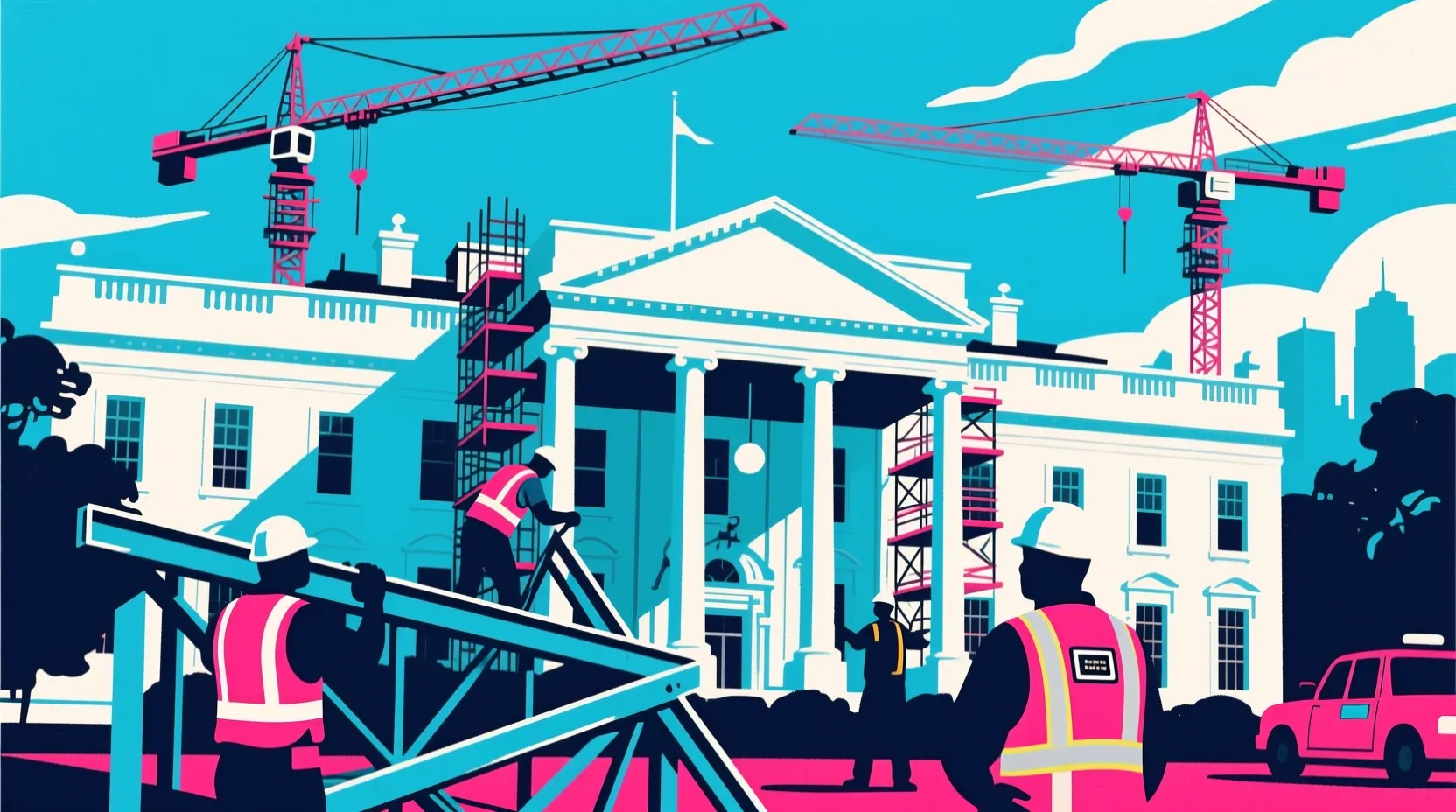
For now, cranes and crews have returned to the East Wing site, where steel framing is already visible above ground. The White House has not issued a detailed public timeline, but officials have indicated they hope to complete the ballroom in time for major summer events.
This isn't the first time a presidential renovation has sparked legal or public debate. Past administrations have faced scrutiny over changes to the White House complex, but few have moved as quickly or as visibly as this one. The current pace has raised eyebrows among preservation groups, who say even temporary construction on such a symbolic site should face stricter review.
With the courts still involved, the ballroom's future isn't guaranteed. But for the moment, the project is back on track - a reminder of how legal and political tensions can play out not just in courtrooms, but in the foundations of the nation's most famous residence.
About this author
Zwely News Staff compiles multi-source reporting into concise, viewpoint-aware coverage for readers who want context without noise.
Source Notes
All construction of Trump's White House ballroom can resume, appeals court says
Construction is expected to continue at the White House until the next hearing which is due to take place in June.
Appeals court green lights Trump’s White House ballroom construction through June
A three-judge federal appeals panel on Friday allowed construction on President Trump’s White House ballroom to go forward into June, a move that came one day after a federal judge limited the project to “below-ground construction.” The pan...
Judge orders DOJ, DHS to stop censoring anti-ICE social media group
A federal judge ruled that the Trump administration appeared to have illegally threatened Facebook and Apple into censoring anti-ICE groups' social media, and he said he'll order the government to cut it out.
Judge orders DOJ, DHS to stop censoring anti-ICE social media groups
A federal judge ruled that the Trump administration appeared to have illegally threatened Facebook and Apple into censoring anti-ICE groups' social media, and he said he'll order the government to cut it out.
Previous story
The Pitt season finale leaves fans divided over a tough call in the ER
Next story