Tesla brings its robotaxi service to Dallas and Houston
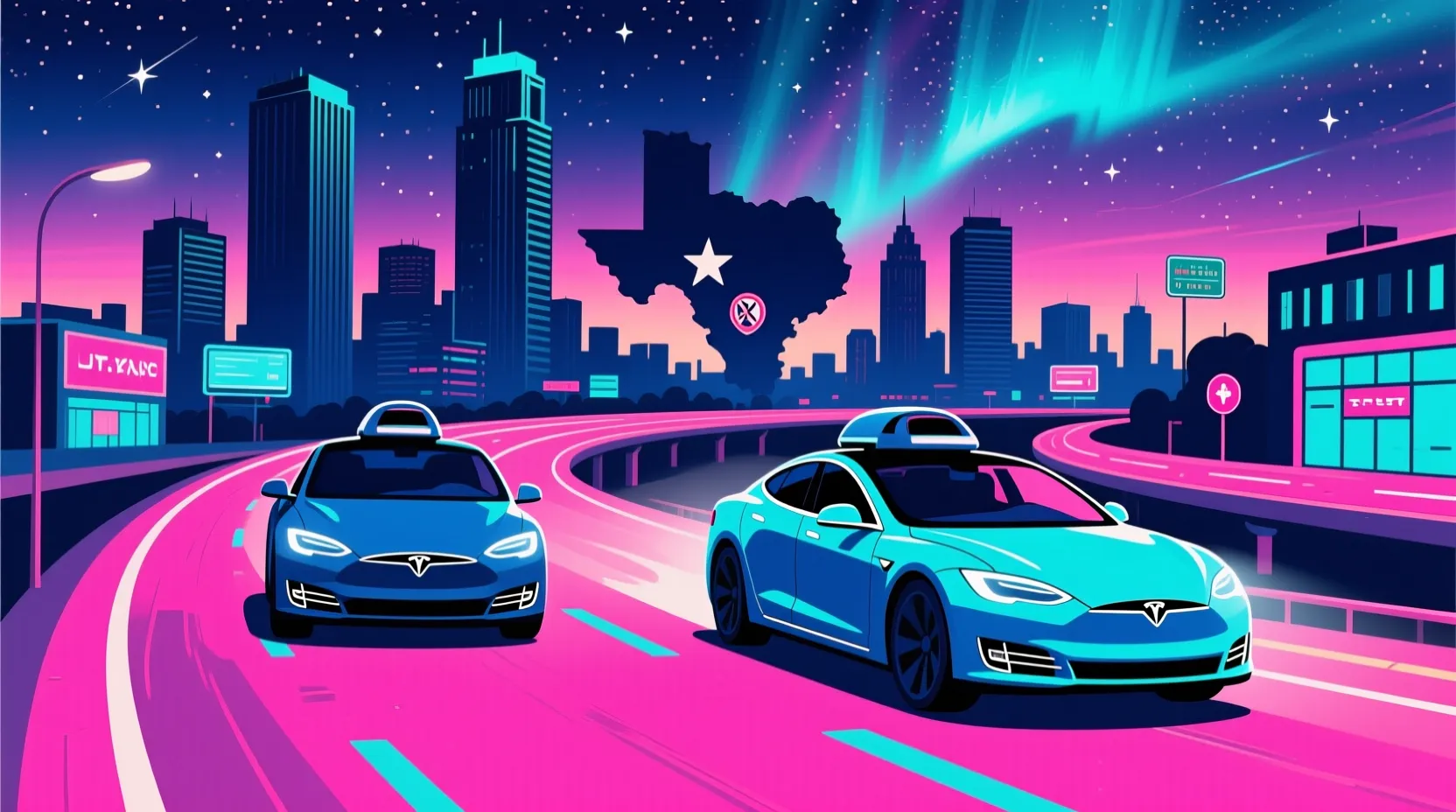
The company is expanding its driverless ride-hailing service in Texas, building on last year's launch in Austin.
At a glance
What matters most
- Tesla has officially launched its robotaxi service in Dallas and Houston, expanding beyond its initial Austin pilot.
- The service relies on Tesla's Full Self-Driving (FSD) technology and operates without human drivers behind the wheel.
- This move positions Tesla as a more serious player in the autonomous ride-hailing market, competing with firms like Waymo and Cruise.
- Local regulations and public trust in driverless vehicles remain key hurdles as the service scales across major cities.
Across the spectrum
What people are saying
A quick look at how the same story is being framed from different angles.
On the Left
Expanding robotaxis without stronger federal oversight risks putting public safety second to corporate ambition. Tesla's reliance on camera-only systems hasn't been fully proven at scale, and rolling out driverless cars in major cities should require independent validation, not just company claims. Cities should demand data transparency and enforce strict accountability for incidents.
In the Center
Tesla's expansion into Dallas and Houston is a logical next step after Austin, offering real-world testing in diverse traffic environments. While the technology still faces hurdles, the gradual rollout allows for data collection and safety improvements. Regulatory balance is key-encouraging innovation while ensuring public trust.
On the Right
This is American innovation in action-Tesla is leading the world in autonomous driving by moving fast and not waiting for red tape to catch up. Dallas and Houston are ideal places for this tech to grow, with pro-growth policies and open roads. Government should stay out of the way and let the market decide.
Full coverage
What you should know
Tesla is bringing its robotaxi service to two of Texas' largest cities. A brief social media post from the company on Saturday confirmed that driverless Tesla vehicles are now operating in Dallas and Houston. The update, accompanied by a short video of a Tesla navigating city streets, marks the most significant expansion of the service since its limited launch in Austin over a year ago.
The robotaxis run on Tesla's Full Self-Driving (FSD) software, which the company has continued to refine through real-world data collected from its customer-owned vehicles. Unlike earlier versions that required driver supervision, the current robotaxi fleet operates without anyone behind the wheel during trips. Riders can hail a vehicle through the Tesla app, much like using other ride-hailing platforms.
Dallas and Houston represent a strategic step for Tesla. Both cities have sprawling urban layouts and high car dependency, making them ideal testing grounds for autonomous mobility solutions. The expansion also avoids some of the stricter regulatory environments found in cities like San Francisco, where competitors have faced pushback over safety concerns.
Still, questions remain about how quickly the service will scale. Tesla hasn't disclosed how many vehicles are active in each city or whether service hours are limited. Local officials in both cities have acknowledged the rollout but stopped short of offering formal endorsements, citing the need for ongoing safety monitoring.
The move puts Tesla in closer competition with Waymo, which operates robotaxis in Phoenix, Austin, and parts of the Bay Area, and Cruise, despite the latter's recent setbacks. Unlike those companies, Tesla isn't relying on purpose-built vehicles or lidar-heavy sensor suites-its approach depends entirely on cameras and neural network processing, a bet on vision-based autonomy.
For now, the service is free or heavily subsidized, a common tactic to encourage early adoption. But Tesla's long-term goal is clear: to create a network of self-owned or fleet-operated vehicles that generate revenue even when owners aren't using them.
As with any new technology, public trust will be crucial. While Tesla's FSD has logged millions of miles, it has also been involved in incidents under investigation by federal regulators. How Dallas and Houston residents respond-both as riders and as fellow road users-could shape the pace of future rollouts in other regions.
About this author
Zwely News Staff compiles multi-source reporting into concise, viewpoint-aware coverage for readers who want context without noise.
Source Notes
Tesla brings its robotaxi service to Dallas and Houston
Tesla is expanding its robotaxi service to Dallas and Houston, according to a social media post from the company. The post says simply that “Robotaxi is now rolling out in Dallas & Houston 🤠” and includes a 14-second video showing Tesla ve...
No Driver? No Problem! Tesla Launches Robotaxis In Two Major Cities
Tesla is rolling out its robotaxis in Dallas and Houston, the electric vehicle maker said on Saturday, marking further expansion of its nascent service in the United States since its Austin, Texas, launch last year. Tesla’s official robotax...
Previous story
A federal appeals court says work on Trump's White House ballroom can keep going
Next story