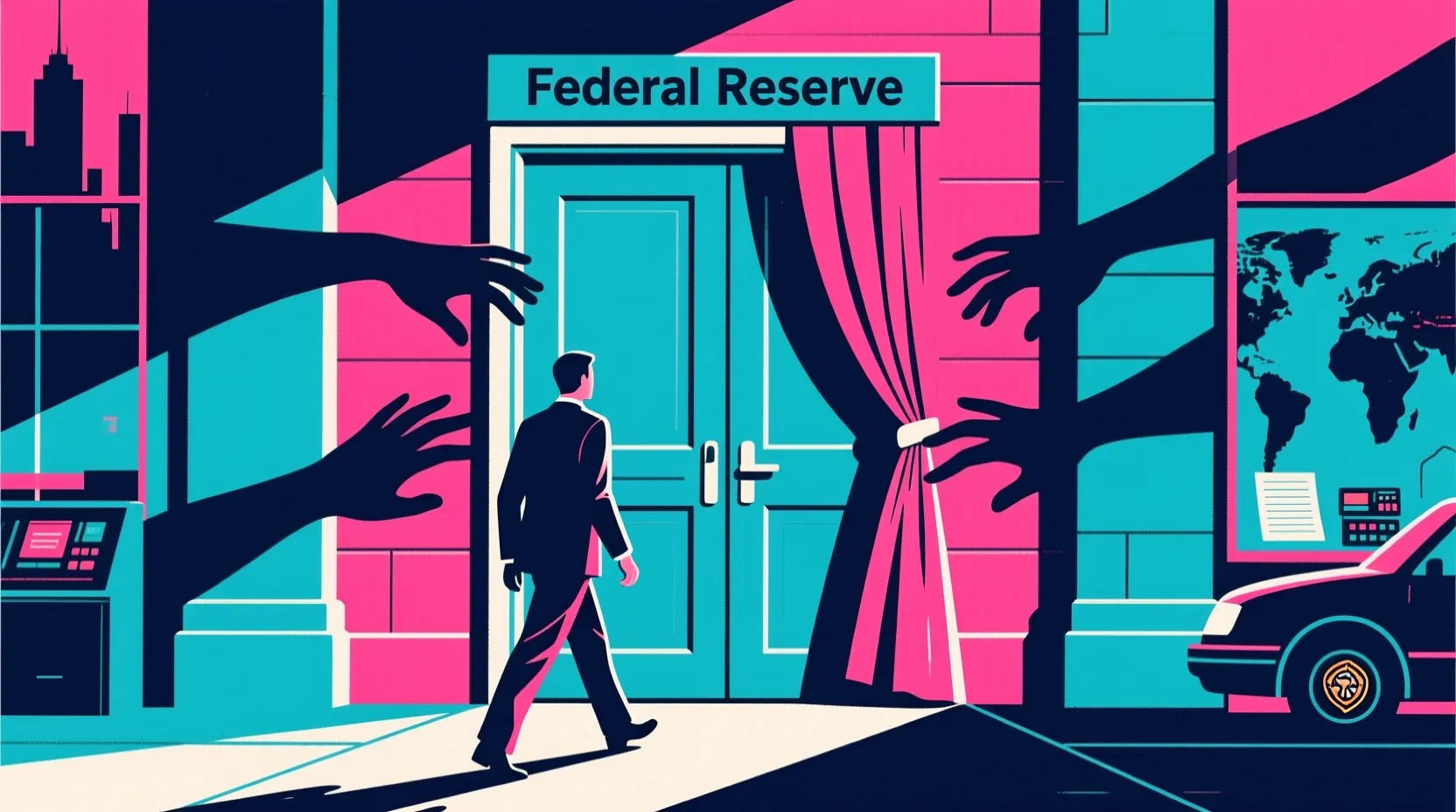
Carney says Canada's deep economic ties to the US are now a liability
The prime minister is pushing to diversify trade as US policies under Trump spark new uncertainty

At a glance
What matters most
- Prime Minister Mark Carney says Canada's economic dependence on the U.S. is now a strategic weakness, not a strength.
- He's pushing to diversify trade by building stronger ties with countries in Asia, Europe, and Latin America.
- The shift comes amid growing uncertainty over U.S. trade policy under President Trump's current administration.
- Carney released a 10-minute video outlining new incentives for foreign investment and upcoming trade negotiations.
Across the spectrum
What people are saying
A quick look at how the same story is being framed from different angles.
On the Left
Carney's comments highlight the dangers of unchecked U.S. protectionism and the need for countries to build more balanced, equitable trade relationships. His push to diversify makes sense-not just as an economic strategy, but as a stand against the volatility of Trump-era policies that prioritize American interests at the expense of allies.
In the Center
While Canada's close ties with the U.S. have historically benefited both economies, Carney is right to acknowledge the risks of overdependence. Global trade is shifting, and relying on one market-especially one with unpredictable leadership-warrants a strategic reassessment.
On the Right
Calling the U.S. relationship a 'weakness' risks alienating Canada's most important ally and trading partner. Instead of looking abroad, Carney should focus on strengthening North American cooperation and reassuring American businesses that Canada is a reliable neighbor.
Full coverage
What you should know
Canadian Prime Minister Mark Carney made a blunt assessment this weekend: the country's deep economic ties to the United States, long seen as a cornerstone of stability, have become a liability. In a 10-minute national address released Sunday morning, Carney argued that global shifts-especially the unpredictable trade stance of President Trump's administration-have turned what was once an advantage into a point of vulnerability.
"We built our economy on access to the U.S. market, and that served us well for decades," Carney said. "But the world is more dangerous and divided than it was. Relying so heavily on one partner, especially one with erratic policies, is no longer a strength-it's a risk we can't ignore." He pointed to recent U.S. tariff threats on Canadian aluminum and auto parts as evidence that the relationship can no longer be taken for granted.
To counter the imbalance, Carney announced a push to accelerate trade talks with India, Indonesia, and members of the Pacific Alliance in Latin America. His government is also rolling out new tax incentives for companies that establish supply chain links outside North America. The goal, he said, is to ensure Canada isn't caught flat-footed if U.S. policy shifts again.
The remarks reflect a growing unease among Canadian officials about the reliability of their largest trading partner. While Canada and the U.S. share one of the most integrated economies in the world, with billions in daily cross-border trade, that closeness now feels like a double-edged sword. Past disputes under Trump, including steel tariffs and threats to withdraw from USMCA, still shape Ottawa's planning.
Carney, a former central banker and international finance expert, has spent much of his first year in office reworking Canada's economic playbook. This latest move is part of a broader strategy to position the country as more globally agile-not just a northern extension of U.S. supply chains.
Reaction in the U.S. has been muted so far. The White House has not commented, but some Republican lawmakers criticized Carney's remarks as ungrateful, given the volume of trade that flows between the two countries. Meanwhile, business leaders in Canada are cautiously supportive, though many warn that diversifying trade won't happen quickly or easily.
Still, the message from Ottawa is clear: in today's climate, overreliance on any single economy-even a neighbor-comes with real costs. And Canada is ready to start hedging its bets.
About this author
Zwely News Staff compiles multi-source reporting into concise, viewpoint-aware coverage for readers who want context without noise.
Source Notes
Carney: Canada’s economic ties with US now a weakness
Canadian Prime Minister Mark Carney on Sunday said the country’s economic ties to the U.S. have become a “weakness,” pointing to global uncertainty caused by President Trump’s trade and tariff policies. “The world is more dangerous and divi...
Carney says Canada’s strong economic ties to US are ‘weakness’ to be corrected
Prime minister details efforts to attract investment and sign trade deals with other countries in 10-minute video addressCanada’s strong economic ties to the United States were once a strength but are now a weakness that must be corrected,...
Canada's prime minister refers to US economic ties as a weakness
Canadian Prime Minister Mark Carney says Canada's "strengths" from its tight relationship with the United States have become "weaknesses."
Previous story
Oil jumps and markets wobble after US seizes ship, dimming hopes for Iran peace deal
Next story