Macron and Starmer host European push to secure the Strait of Hormuz
France and the UK are rallying non-warring nations to protect shipping, but the plan faces skepticism from allies
At a glance
What matters most
- Macron and Starmer are leading talks with about 40 non-combatant countries on a joint naval mission to protect shipping in the Strait of Hormuz
- The plan focuses on a European-coordinated effort separate from current U.S. military operations in the region
- Critics, including some in the U.S., question the initiative's effectiveness and suggest it may be more about political symbolism than security
- The Strait of Hormuz remains a critical global chokepoint, with about a fifth of the world's oil passing through it daily
Across the spectrum
What people are saying
A quick look at how the same story is being framed from different angles.
On the Left
This effort reflects a growing need for multilateral, diplomacy-first solutions to global crises. By organizing a coalition of non-combatant nations, Macron and Starmer are promoting stability without escalating military involvement. It's a step toward a more balanced international order where security isn't solely dependent on U.S. power.
In the Center
The initiative shows European leaders trying to fill a security gap, but its success hinges on practical details like participation, coordination, and enforcement. Without strong buy-in from key naval powers or alignment with existing efforts, the mission risks being under-resourced or duplicative.
On the Right
This appears to be a symbolic move by European leaders seeking visibility on the world stage without committing the resources or risk needed for real impact. Bypassing U.S. leadership in a volatile region could weaken overall deterrence and create confusion among allies.
Full coverage
What you should know
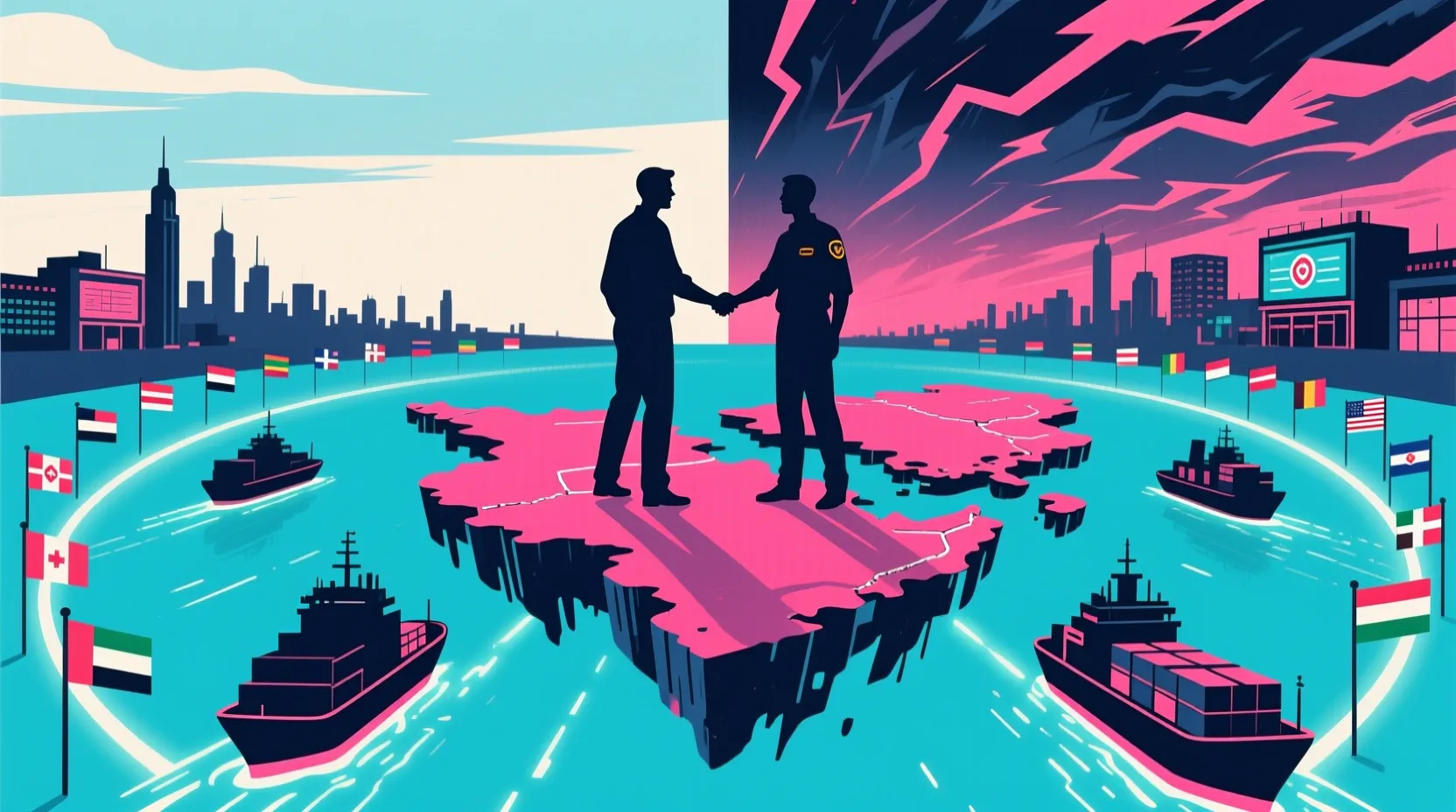
French President Emmanuel Macron and British Prime Minister Keir Starmer opened the doors of the Élysée Palace on Friday for a high-stakes diplomatic effort aimed at stabilizing one of the world's most volatile waterways. The two leaders hosted a video conference with around 40 countries classified as 'non-belligerent'-nations not directly involved in the current Middle Eastern conflict-to discuss a coordinated naval presence in the Strait of Hormuz. The goal is to protect commercial shipping from escalating threats as regional tensions continue to simmer.
The Strait of Hormuz, a narrow passage between Iran and the Arabian Peninsula, is a linchpin of global energy supply. Roughly one-fifth of the world's oil passes through it every day. Any disruption can send shockwaves through international markets. With recent attacks on commercial vessels and growing uncertainty in the region, Macron and Starmer argue that a neutral, multinational force could help keep trade flowing without deepening military entanglements.
The proposed mission would be European-led and operate independently of existing U.S.-led naval operations. Officials say the focus is on deterrence through visibility-using ships from non-combatant nations to escort freighters and monitor maritime activity. The idea is to reduce the risk of accidental escalation while ensuring that global supply chains remain intact.
But the initiative is already drawing criticism. Some U.S. commentators, particularly on the right, have dismissed the plan as more symbolic than strategic. Fox News quoted unnamed defense officials questioning whether the effort amounts to 'playing at being relevant' without the military muscle or regional intelligence networks to back it up. They argue that past attempts at similar coalitions have struggled with coordination and enforcement.
Supporters, however, see it as a necessary step toward greater European autonomy in global security. They point out that relying solely on the U.S. is no longer a given, especially as American foreign policy continues to shift. By building a broad coalition of trading nations with a shared interest in open waterways, the hope is to create a more sustainable and politically balanced approach.
Friday's meeting didn't announce any formal deployment, but it laid the groundwork for further talks in the coming weeks. Diplomats say the next phase will involve working out command structures, rules of engagement, and which countries are willing to contribute ships or surveillance assets. The challenge will be turning diplomatic momentum into operational reality.
For now, the gathering at the Élysée stands as a notable moment of European initiative on a global security issue. Whether it leads to a lasting presence in the Strait of Hormuz-or fades as a well-intentioned gesture-will depend on follow-through, trust among partners, and how the region's dynamics evolve in the months ahead.
About this author
Zwely News Staff compiles multi-source reporting into concise, viewpoint-aware coverage for readers who want context without noise.
Source Notes
Strait of Hormuz: Macron, Starmer meet at Elysée Palace
French President Emmanuel Macron and British Prime Minister Keir Starmer will on Friday host a video conference with their European allies to discuss the possible deployment of a multinational force to the Strait of Hormuz once the war in I...
France, UK host talks on securing Hormuz
French President Emmanuel Macron and British Prime Minister Keir Starmer are chairing a meeting of around 40 so-called “non-belligerent” countries this Friday to discuss securing the Strait of Hormuz. The closure of this vital route—now sub...
Starmer and Macron accused of ‘playing at being relevant’ with Strait of Hormuz plan
Britain and France push a European-led naval mission to safeguard shipping in the Strait of Hormuz, separate from U.S. military operations in the region.
Previous story
Lebanese families head home as ceasefire pauses fighting with Israel
Next story