Musk and Altman are finally facing off in court over what OpenAI was supposed to be
A years-long rift between two of tech's biggest names is now a full-blown legal battle.
At a glance
What matters most
- Elon Musk is suing OpenAI and CEO Sam Altman, claiming the company abandoned its original nonprofit, open-source mission in favor of profit-driven deals with Microsoft.
- The trial, now underway in Oakland, centers on whether OpenAI has strayed from its founding agreement to prioritize public benefit over private gain.
- The outcome could influence how AI companies balance innovation, ethics, and accountability as the technology becomes more embedded in daily life.
- Musk co-founded OpenAI but left in 2018; he argues the current structure violates the original vision he helped shape.
Across the spectrum
What people are saying
A quick look at how the same story is being framed from different angles.
On the Left
This lawsuit highlights the risks of letting powerful technologies fall under the control of billionaire-driven ventures, even ones that start with good intentions. Musk may be litigious, but the core concern is valid: when public-interest missions get sidelined for profit, especially with AI, the cost is borne by society. The trial could force a long-overdue conversation about accountability and who really benefits from innovation.
In the Center
While Musk's timing and motives may raise eyebrows, the case raises legitimate questions about organizational integrity and mission drift. OpenAI's shift was likely inevitable given the resources needed to compete, but that doesn't mean it should escape scrutiny. The court has a chance to clarify whether promises made in a startup's early days still matter once it becomes a global player.
On the Right
This looks less like a principled stand and more like a power play by Musk, who left OpenAI years ago and is now trying to undermine a successful competitor. OpenAI had to evolve to survive in a high-stakes industry, and its partnership with Microsoft helped bring transformative AI to the public faster. Courts shouldn't second-guess business decisions just because a founder changed his mind.
Full coverage
What you should know
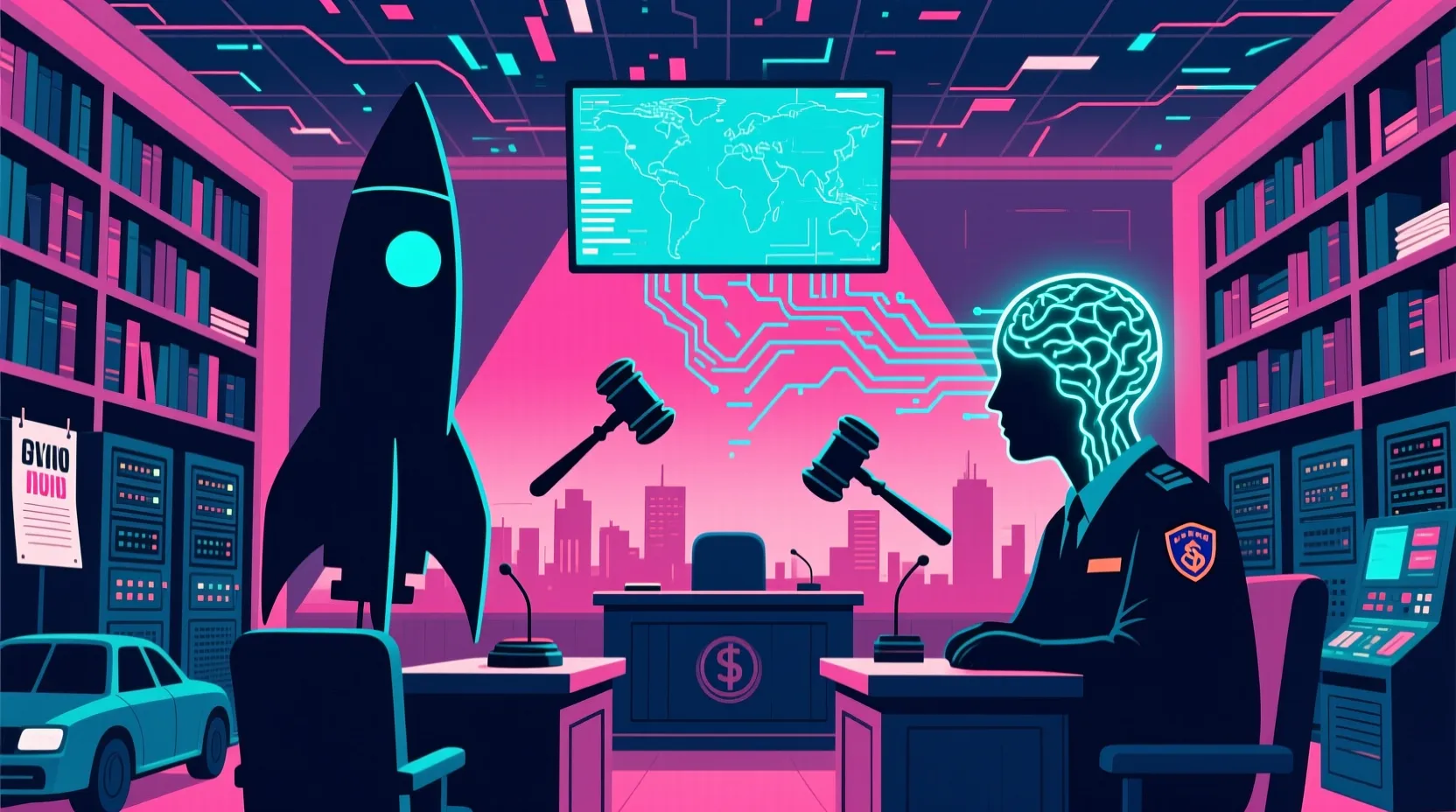
Elon Musk and Sam Altman, once allies in the push to build safe and open artificial intelligence, are now on opposite sides of a courtroom. A federal trial that began this week in Oakland, California, marks the climax of a years-long rift between the two tech leaders. At stake is the soul of OpenAI - the company behind ChatGPT - and whether it has broken its founding promise to serve humanity over shareholders.
Musk, who helped launch OpenAI in 2015, claims the organization has strayed far from its original mission. His lawsuit argues that OpenAI was set up as a nonprofit with a commitment to open-source development and broad public access. But as the company forged a multibillion-dollar partnership with Microsoft and shifted toward a for-profit model, Musk says it abandoned those ideals. He's now asking the court to either reinstate the original mission or return assets and IP to the public domain.
Altman and OpenAI's defense maintain that the evolution was necessary to fund the massive costs of AI development. They argue that staying purely nonprofit would have left the company unable to compete with tech giants like Google and Meta. By creating a capped-profit arm, they say they've preserved enough control to keep safety and ethics central - all while accelerating progress in a fast-moving field.
The trial comes at a time when AI is no longer just a tech story. It's shaping elections, labor markets, and creative industries. Regulators, lawmakers, and the public are all asking who gets to control these powerful systems. This case, while focused on corporate structure, touches on bigger questions: Can a company stay true to an idealistic mission once it starts chasing breakthroughs - and billions?
Jury selection began Monday, and witnesses could include former collaborators, engineers, and executives who were in the room when OpenAI was just an idea. Internal emails and early governance documents are expected to play a key role, with Musk's team aiming to show a clear departure from the original charter. OpenAI, meanwhile, will likely emphasize its ongoing research in AI safety and its efforts to democratize access through tools and APIs.
Legal experts say the case could set a precedent for how mission-driven startups handle growth and pressure. If Musk wins, it could force a restructuring of OpenAI or even spark similar challenges at other hybrid nonprofit-for-profit ventures. If OpenAI prevails, it may cement a model others could follow - one where idealism and investment coexist, even uneasily.
Whatever the outcome, the courtroom showdown between Musk and Altman feels symbolic. Two men who once shared a vision for a better future through AI are now defining it in legal terms. And as the world watches, the trial may end up shaping not just a company, but the expectations we have for the technologies that are starting to shape us.
About this author
Zwely News Staff compiles multi-source reporting into concise, viewpoint-aware coverage for readers who want context without noise.
Source Notes
Musk vs. Altman: Tech titans face off in court
Tesla CEO Elon Musk and OpenAI CEO Sam Altman are poised to face off in court Monday, as the years-long feud between the two tech titans comes to a head at a trial over the ChatGPT maker’s corporate structure. Musk, who helped found OpenAI...
Musk and Altman face off in federal court. Here's what to know.
The trial comes at a pivotal moment for AI, a technology poised to bring advancement that could also drastically reshape humanity.
Tech titans Elon Musk and Sam Altman head to court in trial over OpenAI: What to know
Elon Musk's lawsuit alleging OpenAI violated its nonprofit mission heads to trial as jury selection begins in a federal court in Oakland, California.
Previous story