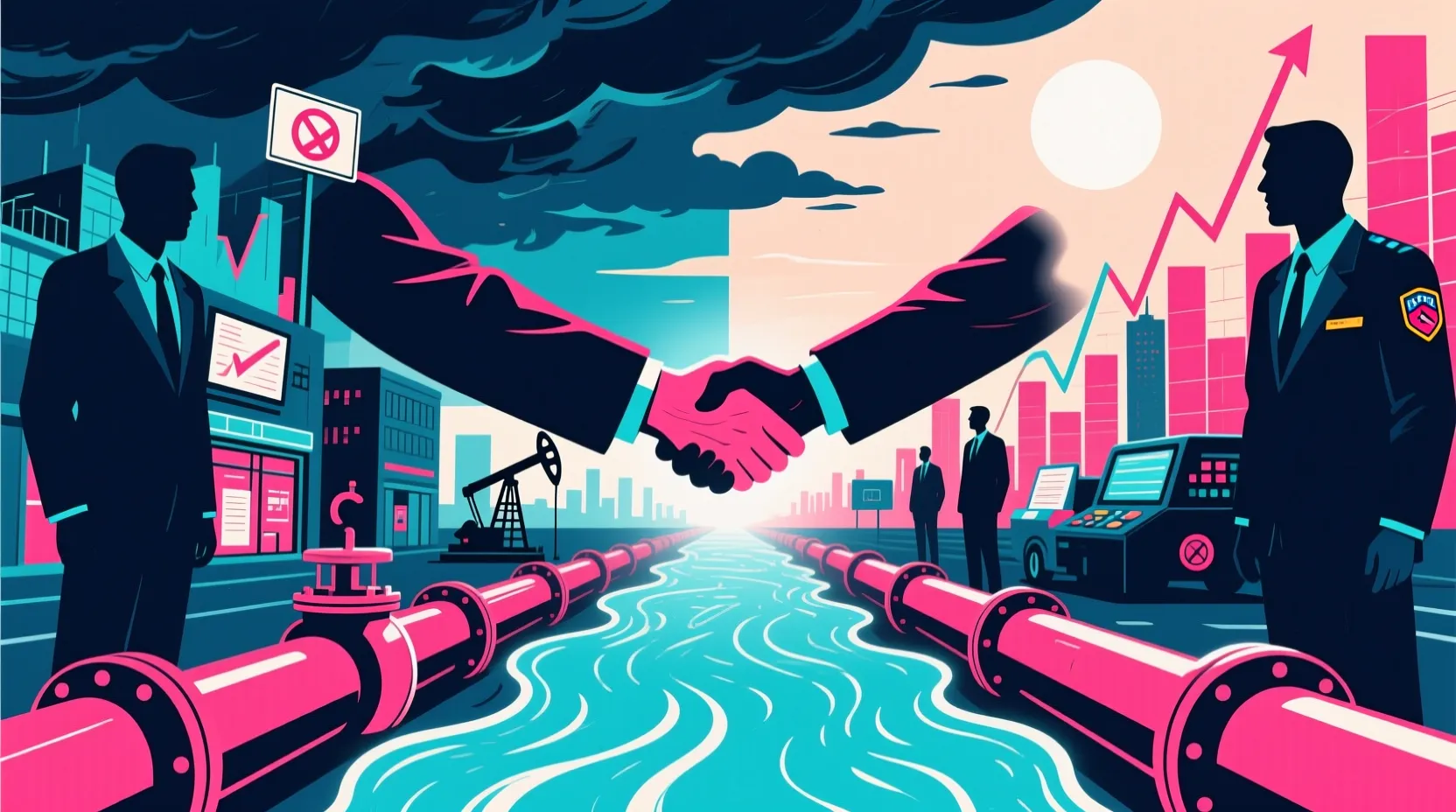
The Iran conflict is crushing global oil demand, and everyone's feeling the squeeze
A spike in prices from Middle East tensions has led to the first drop in oil demand in years - and it's reshaping energy markets worldwide

At a glance
What matters most
- Global oil demand is falling in 2026 for the first time since the pandemic, due to price spikes from Middle East instability
- The U.S. has moved to block the Strait of Hormuz, escalating pressure on Iran, but the move has further rattled energy markets
- High fuel prices are causing 'demand destruction,' with consumers and industries cutting back worldwide
- Maine has banned new data centers over energy use concerns, reflecting broader strain on power systems
Across the spectrum
What people are saying
A quick look at how the same story is being framed from different angles.
On the Left
The U.S. military escalation in the Persian Gulf has backfired, creating a global energy crisis that hurts working people the most. Instead of pursuing diplomacy, the current approach has driven up prices and triggered an avoidable economic slowdown. The focus should be on reducing fossil fuel dependence, not doubling down on intervention that benefits oil companies and defense contractors.
In the Center
The drop in oil demand reflects a predictable market response to geopolitical risk. While the U.S. action in the Strait of Hormuz was intended to counter Iranian aggression, it has come with significant economic trade-offs. The situation underscores the need for balanced energy policy that accounts for both security and affordability.
On the Right
Firm action against Iran is necessary to protect global energy security and counter a destabilizing regime. The temporary drop in demand is a side effect of necessary pressure, not a reason to retreat. Long-term stability in the Middle East requires showing that aggression won't be tolerated, even if it causes short-term market pain.
Full coverage
What you should know
The world is using less oil this year - not by choice, but because it can't afford it. After months of escalating tensions in the Middle East, particularly around Iran, oil prices have shot up so high that economies and consumers are pulling back. The International Energy Agency (IEA) confirmed this shift this week, reporting the first annual decline in global oil demand since 2020. It's a sign that what began as a regional crisis is now reshaping energy use on a global scale.
The spike in prices stems from military actions and threats in the Persian Gulf, including the U.S. decision to block the Strait of Hormuz. That narrow waterway, a critical route for about a fifth of the world's oil, has become a flashpoint. While the move was meant to pressure Iran, it's also tightened supply and sent prices soaring. Instead of driving up revenue, though, the surge has triggered what analysts call 'demand destruction' - a situation where high costs force people and businesses to use less fuel, whether by driving less, cutting industrial output, or switching to alternatives.
The IEA noted that some countries are quietly stockpiling oil, fearing longer-term disruptions, but that hasn't offset the broader pullback in consumption. In Europe and Asia, manufacturers are scaling back operations. In the U.S., trucking firms are reporting lower mileage, and airlines are reconsidering expansion plans. Even everyday drivers are feeling it at the pump, with gasoline prices hitting multi-year highs in several states.
Meanwhile, energy companies are hitting the brakes. TotalEnergies has announced it's pausing investment reviews on several international projects, waiting to see how the situation stabilizes. The uncertainty is making long-term planning nearly impossible. At the same time, domestic energy debates are heating up. Maine recently banned new data centers over concerns they'll overload the power grid - a move that reflects growing anxiety about how much strain the system can handle during a crisis.
This isn't the first time geopolitics has shaken oil markets, but the speed and scale of the demand drop are unusual. Normally, high prices benefit oil-producing nations. This time, even exporters are feeling the pinch as global slowdowns reduce overall trade and travel. Analysts warn that if tensions persist, the ripple effects could dampen economic growth well beyond the energy sector.
For now, there's no clear path to de-escalation. Diplomatic channels remain limited, and military posturing continues. The U.S. maintains its position in the Strait of Hormuz, while Iran has repeated its threats to disrupt shipping if sanctions intensify. With summer driving seasons approaching and energy demand typically rising, the coming months could test global resilience even further.
One thing is clear: the old rules of supply and demand are being rewritten in real time. What happens in the Gulf doesn't stay in the Gulf - it shows up in fuel bills, factory output, and policy decisions thousands of miles away.
About this author
Zwely News Staff compiles multi-source reporting into concise, viewpoint-aware coverage for readers who want context without noise.
Source Notes
Daily on Energy: Iran and oil updates, Maine bans data centers, and a look at the TotalEnergies deal
WHAT’S HAPPENING TODAY: Good afternoon and happy Wednesday, readers! President Donald Trump’s plan to block the Strait of Hormuz has been fully implemented, but Iran’s threats are continuing to grow. We are closely watching the administrati...
Daily on Energy: Oil price relief, demand destruction, and a new GOP effort to speed up nuclear projects
WHAT’S HAPPENING TODAY: Good afternoon and happy Tuesday, readers! If you’re living in the DMV area, it’s time to break out your sunscreen, as we’re in for some scorching days later this week. Tomorrow, temperatures in Washington, D.C., are...
Global oil demand to plunge amid disruptions caused by war on Iran: IEA
The IEA's oil 'demand destruction' report comes after its chief said unnamed countries are hoarding stocks.
Iran War Wipes Out Global Oil Demand Growth This Year
Global oil demand will decline this year for the first time since the 2020 pandemic as a price surge caused by the Middle East conflict wipes out growth, the International Energy Agency said. "The Iran war has thoroughly upended the global...
Previous story
Trump shares another AI image of himself with Jesus, stirring fresh debate
Next story