
Virginia's new redistricting map hits a wall at the state Supreme Court
The court seemed skeptical of a Democratic-backed plan that could flip four Republican-held House seats
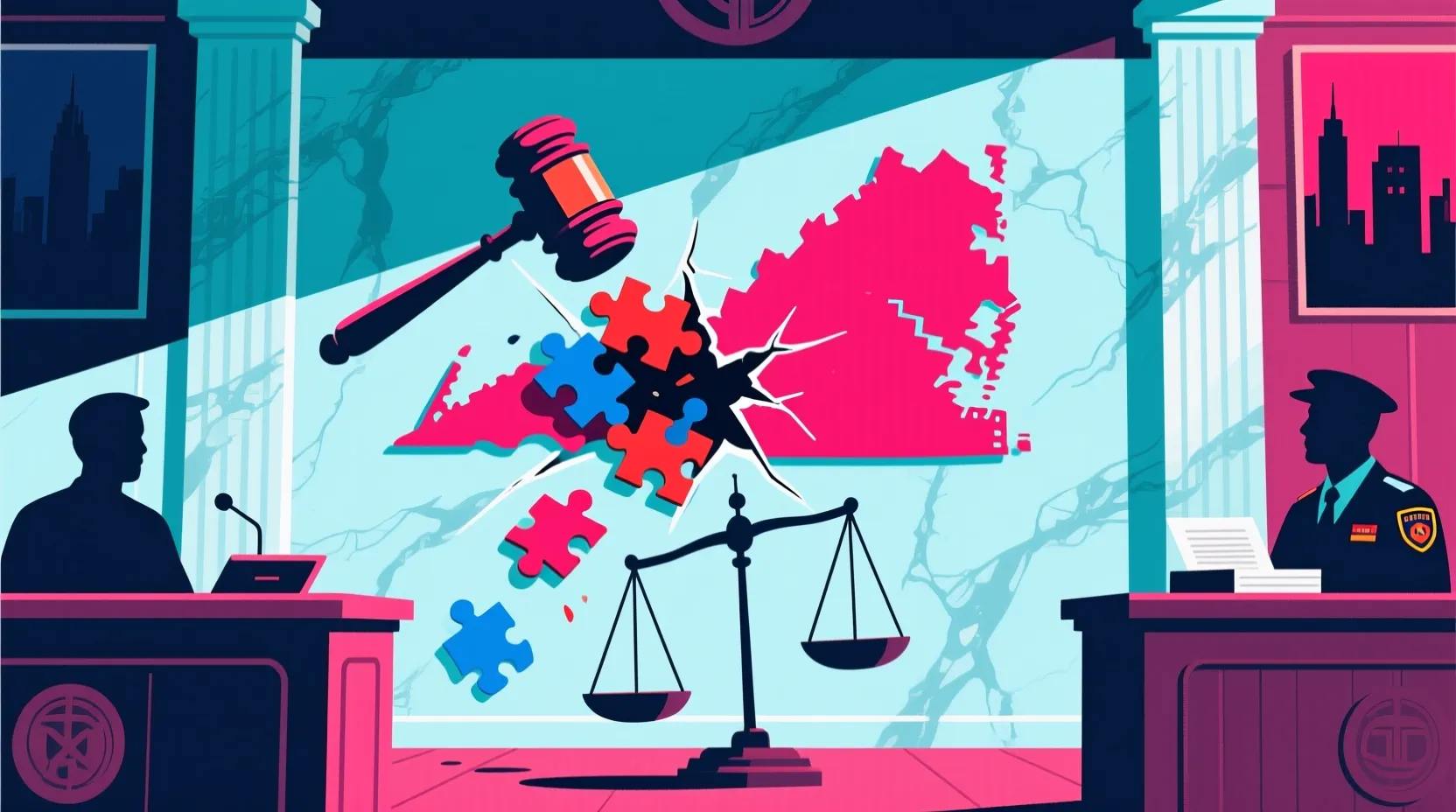
At a glance
What matters most
- The Virginia Supreme Court heard arguments Monday on a Democratic-led redistricting plan that could turn four of Virginia's five Republican-held House seats blue.
- Justices expressed skepticism about the map's fairness and the process behind the referendum, raising doubts about its survival.
- Former Attorney General Ken Cuccinelli argued the plan undermines voter intent and violates constitutional standards for redistricting.
- The case centers on whether the referendum process was properly used or manipulated to achieve partisan advantage.
Across the spectrum
What people are saying
A quick look at how the same story is being framed from different angles.
On the Left
Democrats argue the new map corrects years of Republican gerrymandering and reflects Virginia's increasingly progressive electorate. They see the referendum as a democratic win, giving voters a direct say in fair representation after past maps diluted urban and minority voting power.
In the Center
While redistricting is always political, the process matters. The court must decide whether Virginia's constitution allows such a sweeping change through referendum, especially if procedural rules were bent. The focus should be on fairness, transparency, and adherence to legal standards-not just the outcome.
On the Right
This is a blatant power grab disguised as reform. Using a referendum to push through an aggressively partisan map undermines democratic norms. The court has a duty to block what amounts to an unconstitutional end-run around balanced redistricting principles.
Full coverage
What you should know
Virginia's latest redistricting fight has landed in the hands of its highest court, and the justices don't seem convinced by the Democratic-backed map. On Monday, the Virginia Supreme Court heard oral arguments in a case challenging a recently approved referendum that would redraw congressional lines to heavily favor Democrats-potentially flipping four of the state's five Republican-held U.S. House seats.
The proposed map emerged from a ballot initiative passed last week, championed by Democratic leaders who argued it restores fairness after years of GOP-drawn districts. But critics, including former state Attorney General Ken Cuccinelli, say the new plan goes too far, calling it a transparent attempt at partisan gerrymandering under the cover of a public referendum. During the hearing, several justices questioned whether the process respected constitutional limits and truly reflected voter intent.
Cuccinelli, representing the challengers, argued that the referendum bypassed standard redistricting safeguards and concentrated power in a way that distorts representation. He emphasized that while redistricting is inherently political, the state constitution still requires transparency, public input, and geographic coherence-standards he claims the new map fails.
What stood out during the arguments was the court's apparent unease with how quickly the map was pushed through and how dramatically it shifts the political landscape. One justice noted that the new boundaries split several counties and cities in ways that seemed designed more for partisan outcomes than community continuity. Another questioned whether voters were fully informed about the map's specific effects when they approved the referendum.
The case doesn't just hinge on the map's appearance, but on the process itself. Virginia's constitution allows for redistricting reform via referendum, but only if certain procedural and substantive rules are followed. Opponents argue those rules were sidestepped, turning a tool for accountability into a mechanism for entrenchment.
With the 2026 midterms looming, the stakes are high. If the court strikes down the referendum, the current district lines-already used in recent elections-could remain, preserving Republican incumbents' advantages. But if the map is upheld, Democrats could gain a significant edge in what has become a swing state at the federal level.
A decision is expected within weeks. Whatever the outcome, the ruling will likely shape Virginia's political trajectory for the next decade-and set a precedent for how far redistricting reforms can go before they cross into constitutional overreach.
About this author
Zwely News Staff compiles multi-source reporting into concise, viewpoint-aware coverage for readers who want context without noise.
Source Notes
Former State AG Explains Why Virginia’s Redistricting Plot Won’t Survive the Courts
Editor’s Note: The Supreme Court of Virginia is now weighing the recently passed redistricting referendum that was designed by the Democrat-led state government to swipe four of the five U.S. congressional seats held by Republicans in the p...
Virginia Supreme Court mulls legality of Democratic redistricting referendum
The Virginia Supreme Court on Monday mulled the legality of Democrats’ redistricting referendum that gave the party a more favorable edge ahead of the midterms. The state’s highest court heard oral arguments Monday morning in a case brought...
Virginia Supreme Court seems skeptical about Democratic gerrymandering
Virginia voted last week in favor of a referendum to adopt a gerrymandered congressional map that would all but guarantee that 10 out of the state's 11 congressional seats go to Democrats in the upcoming midterm election. There remains a go...
Supreme Court Signals Support for Police Geofence Warrants
SCOTUS appeared inclined Monday to allow police use of geofence warrants, with Justice Sotomayor pushing back on critics.
The Supreme Court seems a bit nervous about letting the police track you with your phone
If I’d only listened to the first half of the Supreme Court’s Monday argument in Chatrie v. United States, a case asking when police can use cellphone data to determine who was present near the site of a crime, I would be convinced that the...
Previous story
Canada is launching its first sovereign wealth fund and wants regular people to pitch in
Next story