
Trump pushes new Iran talks from Pakistan while Israel's ceasefire violations stir tension
As U.S. envoys prepare for fresh diplomacy, reports of Israeli demolitions in southern Lebanon raise doubts about the truce
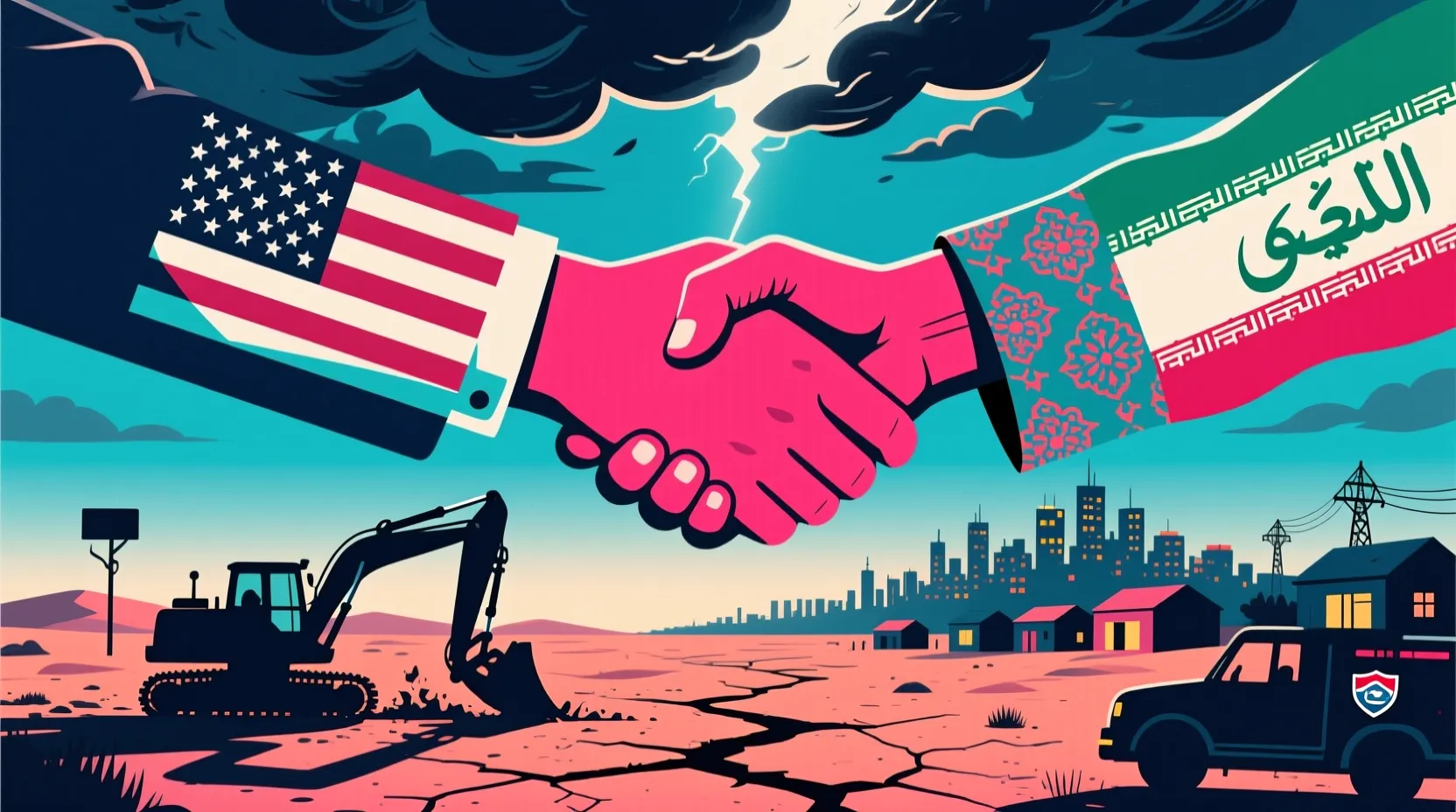
At a glance
What matters most
- Donald Trump announced that U.S. envoys will resume indirect talks with Iran in Pakistan to address regional security threats
- He warned of potential U.S. strikes on Iran's civilian infrastructure if attacks on American forces or allies persist
- Despite a declared ceasefire, Israel has continued military operations in southern Lebanon, including mass demolitions
- Analysts say Israel appears to be negotiating peace while maintaining a military foothold in disputed areas
Across the spectrum
What people are saying
A quick look at how the same story is being framed from different angles.
On the Left
Trump's threat to strike Iran's civilian infrastructure crosses a dangerous line, undermining international norms and risking massive humanitarian consequences. Meanwhile, Israel's ongoing demolitions in Lebanon expose the hollowness of the ceasefire, revealing a pattern of using diplomacy as a smokescreen for expansion. Real peace requires accountability, not more military bluster.
In the Center
While diplomatic engagement with Iran through neutral channels like Pakistan offers a path to de-escalation, Trump's threats against civilian targets raise serious ethical and strategic concerns. At the same time, Israel's actions in southern Lebanon undermine trust in the ceasefire. Lasting stability depends on both sides adhering to agreements, not exploiting pauses in fighting to gain ground.
On the Right
Trump is sending a clear message that America won't stand by while Iran destabilizes the region through proxies. Strong leverage, including the threat of broader strikes, may be necessary to bring Tehran to the table. As for Israel, it has every right to secure its borders and respond to threats, especially when dealing with groups like Hezbollah that exploit truces to rearm.
Full coverage
What you should know
On the 12th day of a shaky ceasefire between Israel and Lebanon, Donald Trump has reentered the diplomatic spotlight, announcing that a U.S. delegation will travel to Pakistan for a new round of indirect talks with Iran. The move, aimed at curbing regional aggression, comes with a sharp warning: if Iran continues to support attacks on American or allied forces, the U.S. could respond with strikes on civilian infrastructure-a threat that has drawn both attention and concern from international observers.
The talks, to be held in Islamabad, mark a continuation of backchannel diplomacy that began earlier this month. Trump, speaking from Florida, emphasized that the U.S. would not tolerate further provocations. 'We're giving them one more chance,' he said. 'But if there's another attack on our people, we won't just hit military sites-we'll hit the things that keep their cities running.'
At the same time, the ceasefire in Lebanon is showing signs of strain. Despite a Washington-brokered agreement meant to halt hostilities, Israeli forces have continued operations in the south, including the widespread demolition of structures. Reports from the region describe entire neighborhoods reduced to rubble, with local officials accusing Israel of using the truce as cover to consolidate control over disputed border areas.
Hussein Ibish, a senior analyst at the Arab Gulf States Institute in Washington, described the situation as a 'double game.' He said Israel appears to be negotiating in good faith at the diplomatic table while advancing its military objectives on the ground. 'They're sending envoys to talks while their bulldozers level villages,' Ibish said. 'It's hard to see this as anything but an effort to change facts before any final deal is signed.'
The U.S. has not publicly condemned the demolitions, and Trump made no mention of them in his remarks. Instead, his focus remained squarely on Iran, which he accused of fueling instability through proxy forces in Lebanon, Yemen, and Iraq. The threat of targeting civilian infrastructure-a departure from traditional military doctrine-has sparked debate about the proportionality and legality of such a response.
Still, the choice of Pakistan as a diplomatic venue adds a layer of complexity. Long a regional mediator, Pakistan has maintained ties with both the U.S. and Iran, making it a neutral ground for indirect talks. Officials say the goal is to de-escalate tensions and prevent a broader conflict, especially as U.S. troops remain stationed across the Middle East.
For now, the ceasefire in Lebanon holds-on paper. But with military actions continuing and rhetoric escalating, the risk of collapse grows by the day. Diplomats warn that without mutual compliance and transparency, even the most carefully negotiated truces can unravel quickly. As one regional official put it, 'You can't build peace with one hand while destroying homes with the other.'
About this author
Zwely News Staff compiles multi-source reporting into concise, viewpoint-aware coverage for readers who want context without noise.
Source Notes
Ceasefire Day 12: Trump Threatens Iran’s Civilian Infrastructure
State of the Union: Israel continued to violate the ceasefire in Lebanon with mass demolitions The post Ceasefire Day 12: Trump Threatens Iran’s Civilian Infrastructure appeared first on The American Conservative.
Trump Says US Delegation to Go to Pakistan for Iran Talks, Threatens New Strikes
WASHINGTON/ISLAMABAD, April 19 (Reuters) – U.S. President Donald Trump said on Sunday his envoys would return to Pakistan for new talks with Iran, while threatening... Read More The post Trump Says US Delegation to Go to Pakistan for Iran T...
Israel's double game between negotiations with Lebanon and occupation in the south
A ceasefire agreement between Israel and Lebanon was reached following a first round of talks in Washington. Hussein Ibish, Senior Resident Scholar at the Arab Gulf States Institute in Washington, analyses Israel’s strategy in Lebanon, whic...
Previous story
Experts say slowing down like your nonna might be the best thing for your health
Next story