
US and Iran sit down for rare talks in Pakistan as tensions ease in the Strait of Hormuz
Delegations meet for the first time since 1979, while American naval ships begin clearing mines from a key waterway
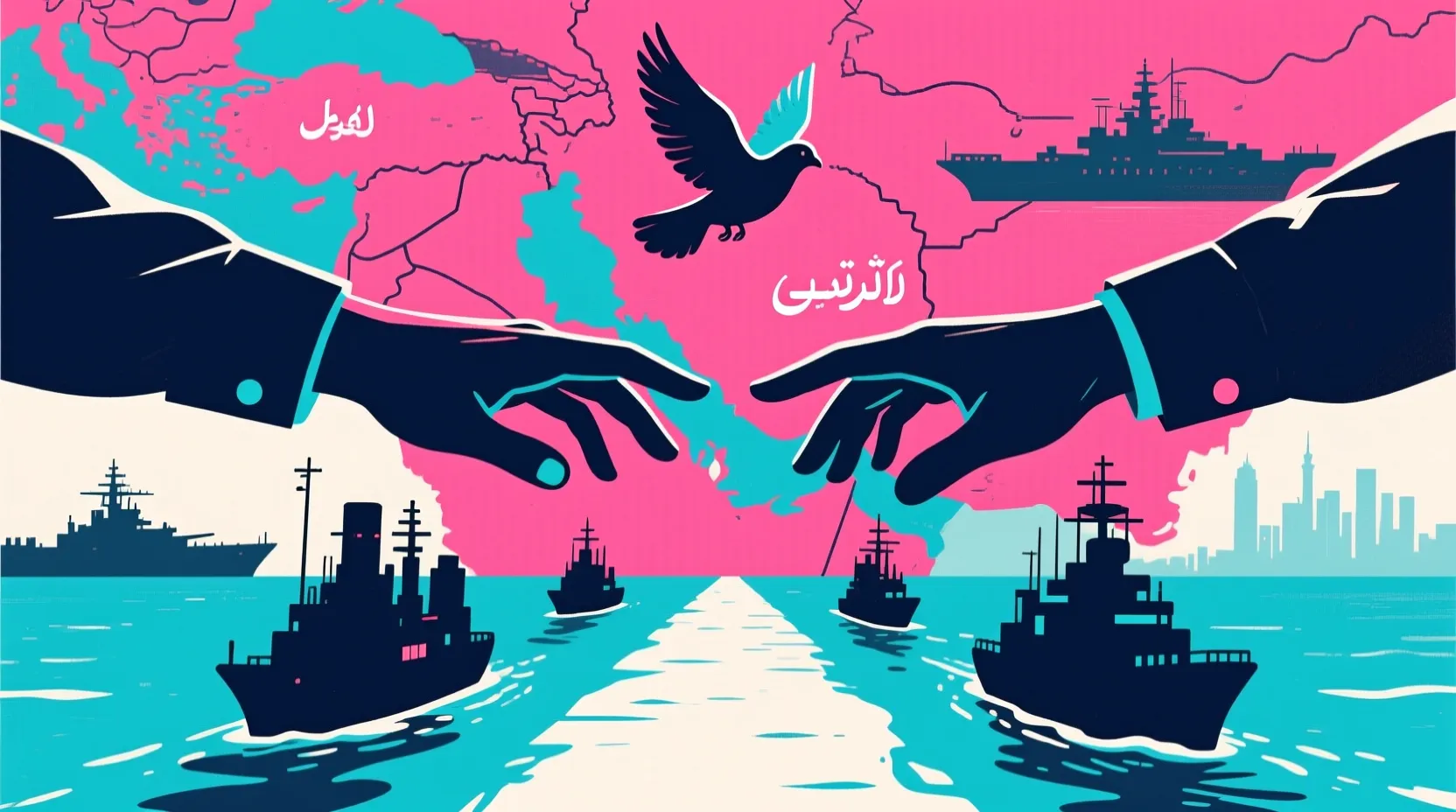
At a glance
What matters most
- The US and Iran are holding direct talks in Pakistan for the first time since 1979, aiming to end a six-week conflict over control of the Strait of Hormuz.
- US naval ships have started clearing mines from the strait, a move seen as a confidence-building gesture during negotiations.
- The American delegation is led by Vice President JD Vance, while Iran's team is headed by parliamentary speaker Mohammad-Bagher Ghalibaf.
- The talks are focused on securing safe passage for commercial shipping and preventing further military escalation in the region.
Across the spectrum
What people are saying
A quick look at how the same story is being framed from different angles.
On the Left
This diplomatic opening offers a chance to end years of militarized brinkmanship and could lead to broader engagement on regional security and human rights. The focus should be on sustainable peace, not just short-term deals that benefit military contractors or oil markets.
In the Center
Direct talks between the US and Iran are a significant development, especially after decades of hostility. The mine-clearing effort and high-level participation suggest both sides are serious about de-escalation, though long-term success will depend on follow-through and verification.
On the Right
Engaging with Iran carries risks, and any deal must include strict enforcement and consequences for noncompliance. The US should prioritize protecting its allies and interests in the region, not make concessions that could be seen as weakness.
Full coverage
What you should know
In a rare diplomatic breakthrough, delegations from the United States and Iran are meeting in Islamabad for direct negotiations-the first such talks between the two nations since 1979. The discussions, which began Saturday, aim to resolve a six-week crisis sparked by disruptions in the Strait of Hormuz, a critical chokepoint for global oil shipments. The meeting marks a significant shift from weeks of military posturing and signals a tentative move toward de-escalation.
As talks unfolded in Pakistan's capital, the US military confirmed that two naval vessels had transited the Strait of Hormuz to begin mine-clearing operations. The move, described by officials as a step to restore safe passage for commercial shipping, is being seen as a goodwill gesture meant to build trust during negotiations. The strait had been partially blocked by naval activity and suspected mine deployments, causing delays and raising insurance costs for international freight.
Leading the US delegation is Vice President JD Vance, whose presence underscores the high stakes of the talks. On the Iranian side, parliamentary speaker Mohammad-Bagher Ghalibaf is heading the team-a notable choice given his hardline background and close ties to Iran's leadership. The fact that both sides sent senior figures suggests a mutual interest in finding a durable solution, even as deep mistrust lingers.
The core issue at the table is control and security in the Strait of Hormuz, through which about 20% of the world's oil passes. Both nations have long claimed influence in the region, and recent confrontations raised fears of a broader conflict. The current negotiations are focused on establishing clear rules for naval conduct, ensuring freedom of navigation, and preventing unilateral military actions that could spark further instability.
Pakistan's role as host adds a diplomatic layer to the talks. By offering a neutral venue, Islamabad is positioning itself as a regional mediator, a role it has sought more actively in recent years. Officials from Pakistan's foreign ministry welcomed the dialogue, calling it "a positive step toward regional stability" and urging both sides to pursue lasting cooperation.
While no formal agreements have been announced, the mere fact that the two countries are speaking directly has drawn cautious optimism from international observers. Diplomats note that even limited progress-such as a temporary corridor for commercial ships or a mutual pause in military drills-could help stabilize the region in the short term.
The road ahead remains uncertain. Decades of hostility, sanctions, and proxy conflicts have created deep skepticism on both sides. Still, the decision to talk at all, backed by visible steps like mine-clearing, suggests that neither side wants a full-blown confrontation. What happens in Islamabad could set the tone for US-Iran relations for years to come.
About this author
Zwely News Staff compiles multi-source reporting into concise, viewpoint-aware coverage for readers who want context without noise.
Source Notes
Iran-US negotiations underway in Pakistan, US says Strait of Hormuz being 'cleared'
Delegations from the United States and Iran held direct negotiations on Saturday for the first time since 1979 in Islamabad,Pakistan, to end a six-week conflict, while US President Donald Trump said that the US military had begun clearing m...
US says two naval ships ‘transited’ Strait of Hormuz for mine-clearing
Negotiations are ongoing between US-Iranian delegations in Islamabad, with control of the strait a key sticking point.
Ahead of peace negotiations, Iran’s delegation arrives in Pakistan
Watch the Iran delegation arrive in Pakistan as they prepare for ‘make-or-break’ talks with the United States. U.S. Vice President JD Vance will lead the U.S. delegation and Iran will be led by parliamentary speaker Mohammad-Bagher Ghalibaf...
Previous story
Jiri Prochazka gets his shot at redemption against Carlos Ulberg at UFC 327
Next story