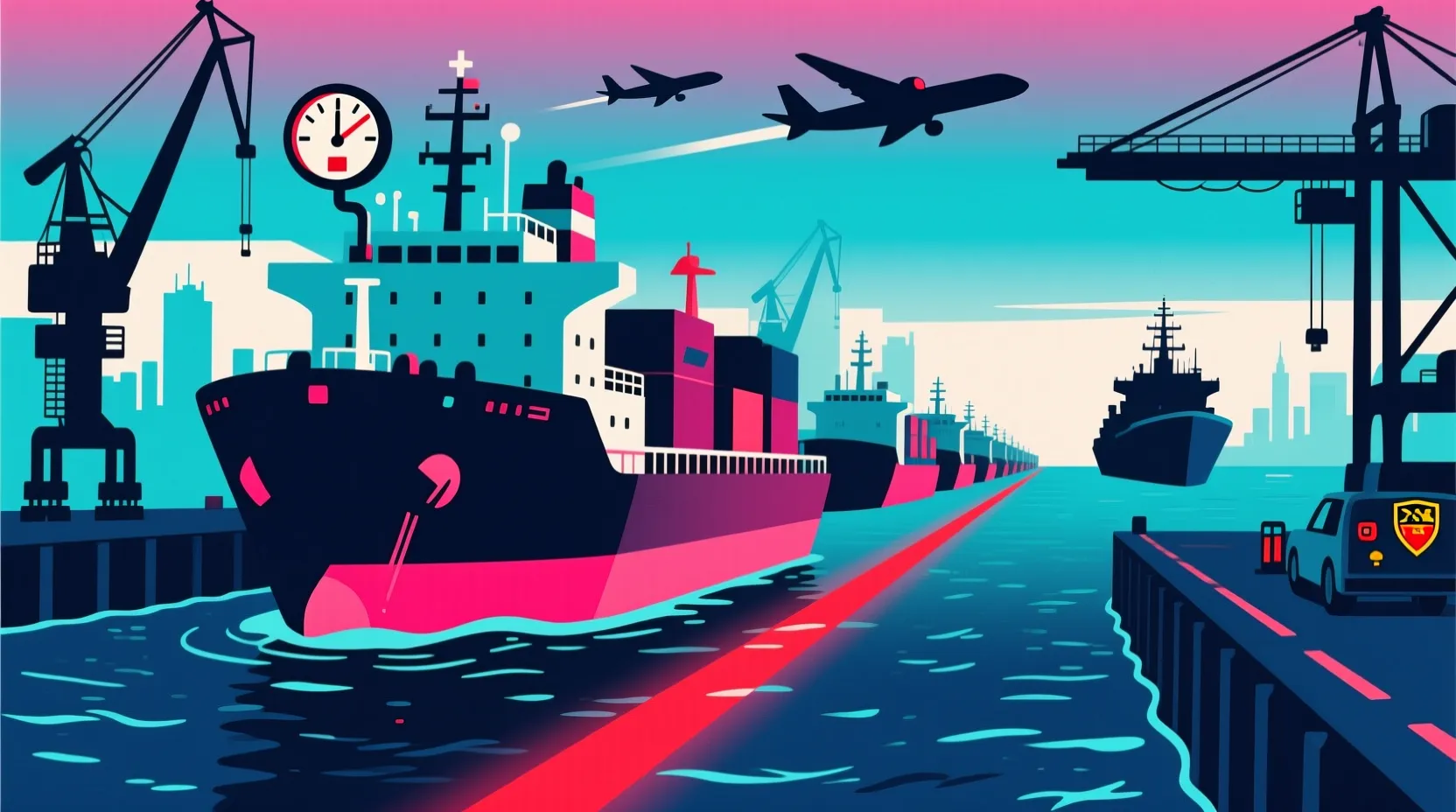
USMCA renewal gets a second look as global trade tensions ease
With the Strait of Hormuz back open and a ceasefire holding in Lebanon, attention is shifting to long-term supply chain resilience-and what that means for North American manufacturing.

At a glance
What matters most
- The Strait of Hormuz has reopened to commercial traffic after a prolonged closure linked to regional conflict, easing immediate energy and shipping concerns.
- A ceasefire between Israel and Hezbollah in Lebanon is holding, contributing to calmer global markets and a rally in equities.
- These developments are refocusing the USMCA renewal debate on the need for resilient North American supply chains and stronger U.S. manufacturing capacity.
- Lawmakers and industry leaders argue that trade policy should prioritize domestic production to avoid future disruptions.
Across the spectrum
What people are saying
A quick look at how the same story is being framed from different angles.
On the Left
The USMCA renewal is a chance to build fairer trade rules that protect workers and the environment, not just corporate supply chains. While stability in the Middle East is welcome, long-term security means investing in domestic industry with strong labor and climate standards-not just reacting to the last crisis.
In the Center
The reopening of the Strait of Hormuz and the Lebanon ceasefire have bought policymakers time to thoughtfully update USMCA. The focus should be on practical improvements-like clearer rules for digital trade and stronger enforcement mechanisms-without derailing a deal that's broadly working for all three countries.
On the Right
The recent crisis proves that America can't afford to outsource its manufacturing base. USMCA renewal must prioritize American production, tighten rules of origin, and reduce dependence on foreign supply chains. National security and economic strength start at home.
Full coverage
What you should know
Global trade is breathing easier this weekend as the Strait of Hormuz has reopened to commercial shipping, following a tense period of closure amid rising hostilities in the Middle East. At the same time, a fragile ceasefire between Israel and Hezbollah in Lebanon appears to be holding, offering a rare moment of stability in a region that's been a flashpoint for months. With oil tankers moving again and shipping lanes clearing, the immediate crisis has passed-but the economic aftershocks are still being felt.
Markets responded quickly. On Friday, risky assets surged as investors welcomed the de-escalation. The S&P 500 extended its rally, and energy prices pulled back from recent highs. Still, the episode left a clear message: global supply chains remain vulnerable to sudden disruptions, especially in strategic chokepoints like the Strait of Hormuz, through which about a fifth of the world's oil passes.
Now, that vulnerability is shaping a broader conversation in Washington about the future of trade. The United States-Mexico-Canada Agreement, or USMCA, is up for its first major review and potential renewal. Originally designed to modernize NAFTA, the pact is now being reevaluated through the lens of national resilience. Lawmakers from across the spectrum are asking whether the agreement does enough to protect American industries from future shocks.
Some argue it doesn't go far enough. With inflation still sensitive to global supply hiccups, there's growing support for tightening rules of origin, especially in sectors like autos and semiconductors. The idea is simple: if more parts are made in North America, the region won't be as exposed when distant conflicts ripple through global markets.
Business leaders are divided. Manufacturers with integrated cross-border operations support maintaining smooth trade flows, but many also acknowledge the need for redundancy and localized production. The recent spike in shipping costs and delivery delays during the Strait's closure hit just as some companies were rebuilding inventory-a reminder of how quickly things can go sideways.
For now, the ceasefire and reopened strait offer a window to act. Officials are expected to begin formal consultations on USMCA updates in the coming weeks. The goal isn't to tear up the agreement, but to adapt it-making North American trade not just efficient, but durable.
As one trade analyst put it, "We can't control what happens in the Gulf, but we can control how prepared we are." That mindset may end up shaping the next chapter of U.S. trade policy.
About this author
Zwely News Staff compiles multi-source reporting into concise, viewpoint-aware coverage for readers who want context without noise.
Source Notes
USMCA renewal: American manufacturing is a nonnegotiable
While the ceasefire holds in Lebanon, the Strait of Hormuz is back open. The disruption caused by its prolonged closure and the increased cost of critical goods have made the importance of domestic manufacturing more clear than ever. In tim...
Stocks Jump in Face of Uncertainty Over Strait of Hormuz
A ceasefire between Israel and Hezbollah in Lebanon and news that Iran allegedly decided to reopen the Strait of Hormuz to commercial shipping sent risky assets surging anew on Friday. This surge extended a rally that pushed the S&P 500 to...
Previous story
Police use pepper spray and rubber bullets to stop protesters from storming Wisconsin beagle lab
Next story