Virginia voters decide today on a redistricting change that could shift power to Democrats
A constitutional amendment on the ballot could redraw the state's congressional map just months before the midterms
At a glance
What matters most
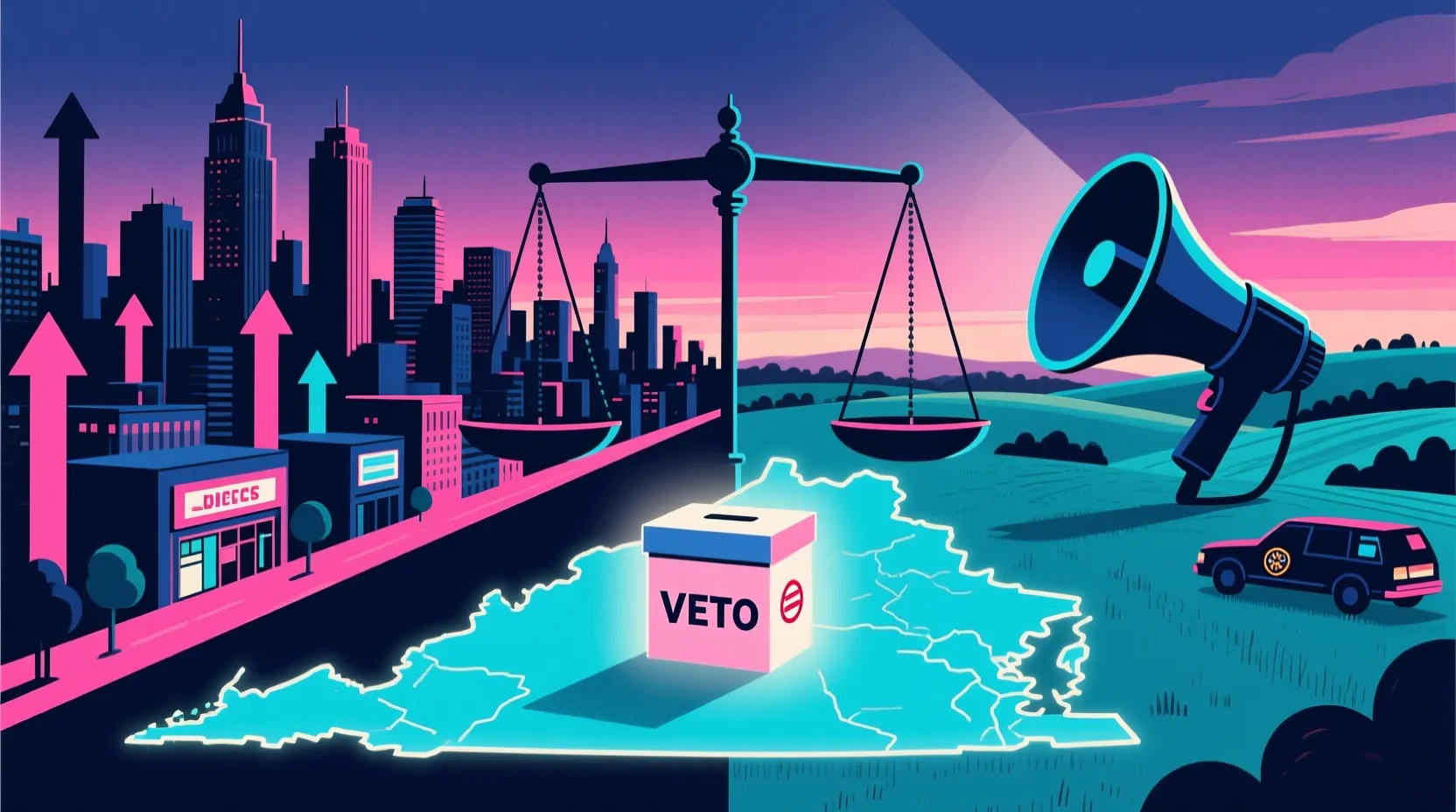
- Virginia voters are deciding on a constitutional amendment that would lock in new congressional district maps drawn by Democrats
- The outcome could give Democrats a better shot at winning more House seats in the upcoming midterms
- Critics say the map unfairly weakens rural representation, while supporters argue it corrects years of GOP gerrymandering
- The vote marks one of the final major redistricting battles ahead of the 2026 elections
Across the spectrum
What people are saying
A quick look at how the same story is being framed from different angles.
On the Left
<p>Progressives see the referendum as a long-overdue correction to decades of Republican gerrymandering that silenced minority communities and urban voters. They argue the new map promotes fair representation and aligns with court-ordered standards for equity. Passing it would affirm voters' right to choose their leaders, not the other way around.</p>
In the Center
<p>While redistricting is inherently political, the referendum offers transparency by letting voters have the final say. The map has already passed legal scrutiny and reflects demographic shifts. Still, concerns about rural representation deserve attention, even as the state becomes more urban and diverse.</p>
On the Right
<p>Conservatives view the measure as a partisan maneuver to erase rural influence and cement Democratic control. They argue that bypassing traditional legislative checks through a ballot amendment undermines democratic process. The map, they say, forces unnatural district shapes to pack Republican voters and weaken their voice.</p>
Full coverage
What you should know
Virginians are heading to the polls Tuesday to vote on a constitutional amendment that could reshape the state's congressional representation just months before the 2026 midterm elections. The referendum asks voters whether to approve new district lines drawn by the state's Democratic-led government - a move that could boost Democratic chances in several competitive House races.
The proposed map was crafted after years of legal and political wrangling over gerrymandering in Virginia. For much of the past decade, Republicans held sway over the redistricting process, drawing maps that favored their candidates. But after Democrats gained control of the General Assembly and the governorship, they moved to redraw the lines, arguing the new version better reflects the state's growing diversity and urban shift.
Supporters say the change brings fairness to a system long tilted in favor of rural, conservative areas. They point to court rulings in previous cycles that struck down old maps as unconstitutional due to racial gerrymandering. Now, they argue, it's time to let voters decide directly through a ballot measure - a rare step in the redistricting process.
But opponents, including many Republicans and some rural advocates, warn the new map dilutes the political voice of less populated parts of the state. They argue that combining distant urban centers with sprawling rural counties undermines local representation. Critics have framed the vote as a power grab, saying Democrats are using their current control to lock in an advantage for years to come.
National eyes are on the outcome. With the House of Representatives expected to be tightly contested in November, even one or two flipped seats in Virginia could make a difference. Both parties have invested in voter outreach ahead of the referendum, and early voting numbers suggest higher-than-usual turnout for an off-year election.
The amendment needs a simple majority to pass. If it fails, the current district lines - already in use - would remain. But if it passes, it would enshrine the new map in the state constitution, making it harder for future legislatures to change without another public vote.
Whatever the result, the debate underscores how redistricting remains one of the most potent tools in American politics. In Virginia, a single ballot question could influence who holds power in Congress - and how fairly that power is distributed - for years to come.
About this author
Zwely News Staff compiles multi-source reporting into concise, viewpoint-aware coverage for readers who want context without noise.
Source Notes
What to know about Tuesday’s redistricting referendum in Virginia
Democrats in Virginia are eyeing one last opportunity to pass new congressional lines ahead of the 2026 midterm elections as the national redistricting war nears its end. Virginia Democrats teed up a Tuesday referendum asking voters if lawm...
Virginia Redistricting Referendum: What to Watch
In the latest gerrymandering clash before the midterm elections, voters in Virginia will decide on Tuesday whether to approve a map that would give Democrats more House seats.
Democrats declare war on rural Virginia
No matter who wins Virginia’s redistricting referendum today, the message Democrats are sending to rural Virginians will last for decades. By backing an amendment to the Virginia Constitution that effectively disenfranchises half the state,...
What to watch as Virginia voters decide high-stakes redistricting referendum
Virginia voters head to the polls Tuesday to decide a closely watched redistricting referendum that could reshape the state’s congressional map and carry national implications, with both parties bracing for a tight result that could hinge o...
Previous story
Kevin Warsh faces Senate spotlight as Fed chair nominee with big questions on wealth and policy
Next story