
Pakistan's army chief heads to Tehran to help restart US-Iran talks
A fragile ceasefire holds as Pakistan steps in to mediate fresh diplomacy between Washington and Tehran.
At a glance
What matters most
- Pakistan's army chief is in Tehran to support efforts to extend a fragile ceasefire and restart US-Iran talks.
- The recent conflict between Iran, the US, and Israel lasted nearly seven weeks and caused widespread casualties and global disruption.
- Pakistan is emerging as a key regional mediator, leveraging its strategic ties with both sides.
- The visit underscores growing international pressure to stabilize the Middle East and prevent further escalation.
Across the spectrum
What people are saying
A quick look at how the same story is being framed from different angles.
On the Left
<p>Many on the left see Pakistan's involvement as a necessary and welcome shift away from US-dominated diplomacy. They argue that long-term military posturing and sanctions have only deepened instability, and that neutral, non-Western mediators are better positioned to foster genuine dialogue. This effort could open the door to more inclusive, region-led solutions that prioritize human security over strategic interests.</p>
In the Center
<p>From a centrist perspective, Pakistan's role is pragmatic and timely. While questions remain about its ability to influence hardline factions, its relationships with both sides offer a rare opening. Success isn't guaranteed, but even maintaining the ceasefire and creating space for talks represents meaningful progress in a situation where few options remain.</p>
On the Right
<p>Some on the right remain cautious, emphasizing that past diplomacy with Iran has often led to broken promises and renewed aggression. While they acknowledge Pakistan's strategic value, they stress that any deal must include strict verification, consequences for violations, and a clear focus on countering Iran's regional influence. Engagement, they argue, should not come at the expense of US security or that of its allies.</p>
Full coverage
What you should know
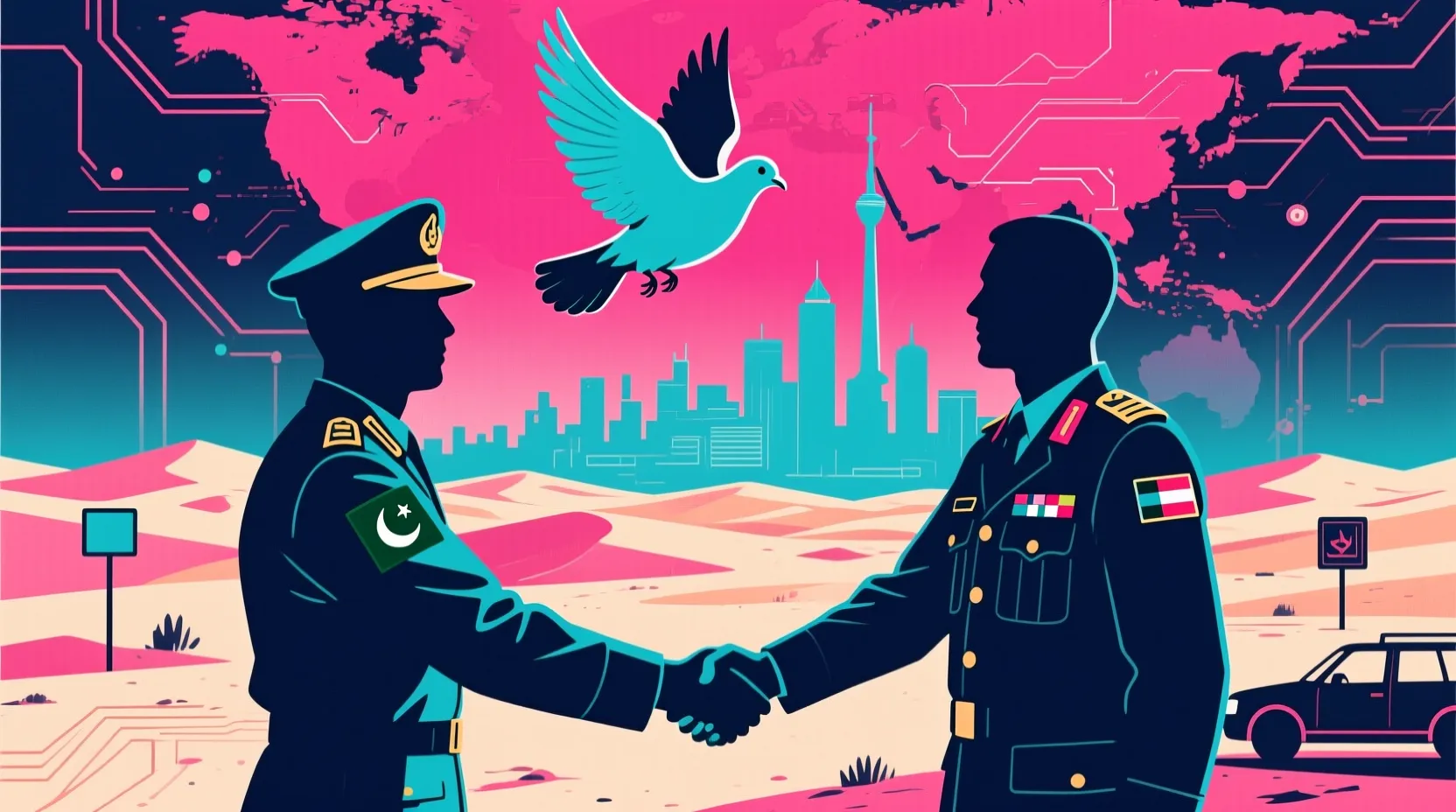
Pakistan's army chief arrived in Tehran Thursday for high-level talks aimed at keeping a tenuous ceasefire on track and laying the groundwork for renewed negotiations between the United States and Iran. The visit comes just days after a pause in hostilities that followed nearly seven weeks of intense conflict involving Iran, the US, and Israel-weeks that saw missile strikes, drone attacks, and a sharp spike in regional tensions.
The fighting, which began over unresolved nuclear and security disputes, quickly escalated into one of the most dangerous confrontations in the Middle East in recent decades. Thousands have been killed, millions displaced, and global oil markets have swung wildly in response. With humanitarian conditions worsening and the risk of wider war still present, diplomatic efforts have taken on new urgency.
Pakistan, while not a direct player in the conflict, has long maintained complex but functional relationships with both Iran and the United States. That positioning-and its influence within regional security circles-has made it a quietly effective backchannel for dialogue. Officials say the army chief's trip is part of a broader push to build trust and create conditions for a second round of formal talks between Washington and Tehran.
Though details of the discussions remain confidential, sources familiar with the talks suggest Pakistan is urging both sides to commit to a longer-term ceasefire and return to negotiations on mutual security guarantees and nuclear inspections. There's also growing emphasis on involving other regional actors to ensure any agreement holds.
The international community has welcomed the move. The United Nations and several European governments have praised Pakistan's role, calling it a stabilizing force at a volatile moment. Even countries with strong alliances to either the US or Iran have refrained from criticizing the mediation, signaling a rare consensus on the need for de-escalation.
Still, challenges remain. Hardliners on both sides have voiced skepticism, and past agreements have collapsed under similar pressure. But with the human and economic costs of war mounting, even cautious steps toward diplomacy are being treated as progress.
What happens next in Tehran could shape the trajectory of the crisis. If Pakistan can help bridge the gap, it may not only prevent further bloodshed but also strengthen its own standing as a diplomatic broker in a region often defined by division.
About this author
Zwely News Staff compiles multi-source reporting into concise, viewpoint-aware coverage for readers who want context without noise.
Source Notes
Pakistani army chief visits Tehran in hopes for renewed talks between US and Iran
Pakistan’s army chief is set to meet with Iranian officials in Tehran on Thursday in a bid to extend the ceasefire which paused almost seven weeks of war between Israel, the US and Iran that have killed thousands of people and upended globa...
Pakistan Army Chief Heads to Tehran to Broker New US-Iran Talks
Pakistan has emerged as a key mediator in the conflict.
Pakistani army chief visits Tehran in bid to broker renewed talks between US and Iran
Pakistan’s army chief is set to meet with Iranian officials in Tehran on Thursday in a bid to ease tensions in the Middle East and arrange a second round of negotiations between the United States and Iran after almost seven weeks of war.
Previous story
Dave Chappelle says he never meant his trans jokes to be used as political ammo
Next story