
Trump says the US will start blocking ships going through the Strait of Hormuz
The move follows tense talks with Iran and has sent oil markets on edge
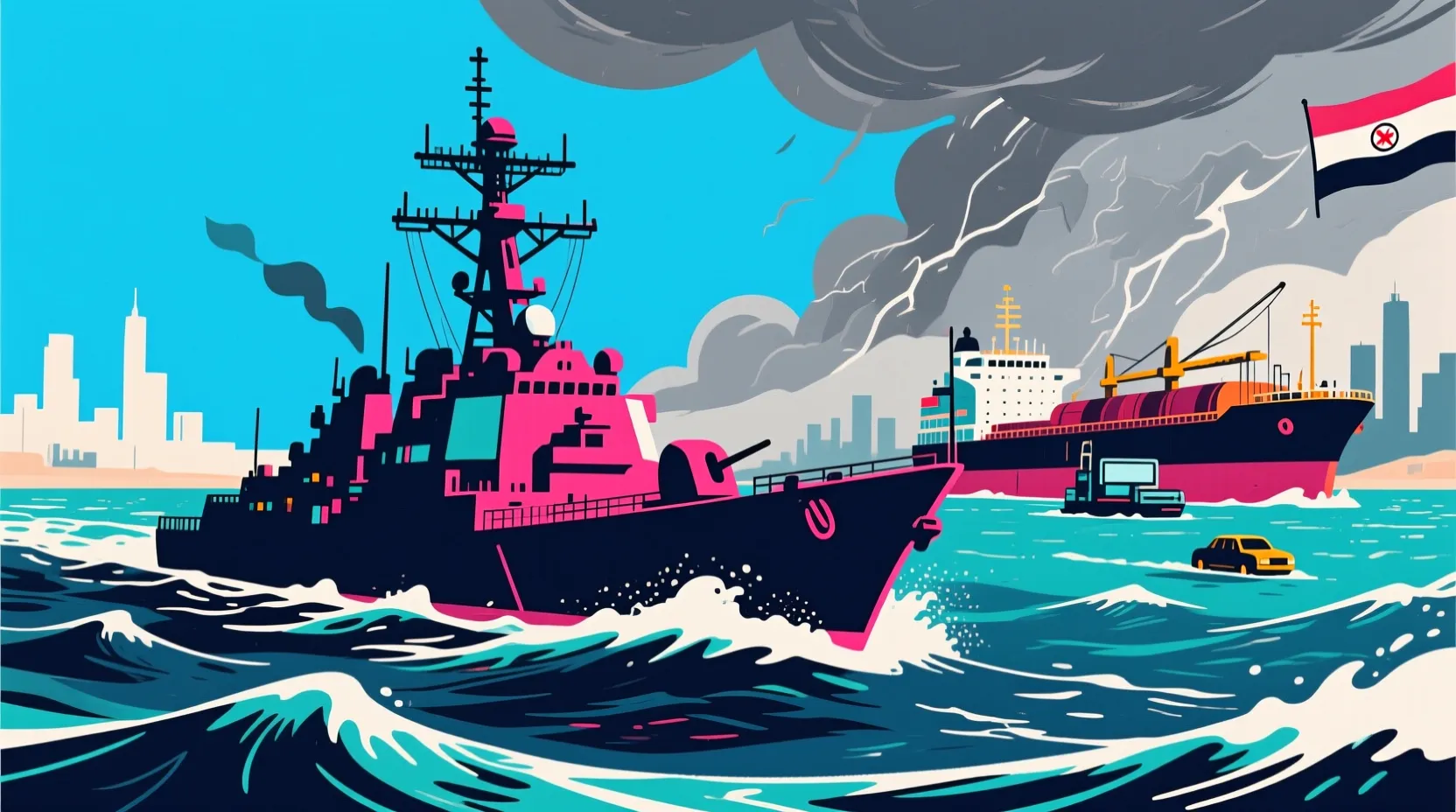
At a glance
What matters most
- President Donald Trump says the US Navy will soon begin blocking ships entering and leaving the Strait of Hormuz.
- The announcement follows the first direct US-Iran talks since 1979, held in Islamabad, focused on securing the waterway.
- Iran has warned against US military action, while oil prices jumped on fears of supply disruption.
- Critics question the legality and wisdom of a blockade, warning it could trigger wider conflict.
Across the spectrum
What people are saying
A quick look at how the same story is being framed from different angles.
On the Left
This blockade is a dangerous overreach that risks dragging the US into another endless war. Trump is using military threats to distract from domestic failures, and the lack of congressional input undermines democratic norms. Past interventions show this approach rarely brings peace and often worsens instability.
In the Center
The administration appears to be using strong leverage to force Iran to the negotiating table, which could lead to real diplomatic progress. But a blockade is a serious act of force that could backfire if not carefully managed and paired with clear diplomatic goals.
On the Right
The US needs to take a hard line to protect global energy supplies and counter Iranian aggression. Sending destroyers and controlling the strait shows strength and deters further destabilizing actions by Tehran, which has long threatened this vital waterway.
Full coverage
What you should know
President Donald Trump announced Saturday that the US Navy will soon begin blocking ships moving through the Strait of Hormuz, a narrow but critical passage for global oil shipments. The move, shared via Truth Social, marks a sharp escalation in US-Iran tensions and comes just days after the two nations held their first direct talks since 1979 in Islamabad.
Those talks, confirmed by Al Jazeera, centered heavily on control and security of the strait, through which about 20% of the world's oil passes. While details remain sparse, sources suggest the US is using the threat of a blockade as leverage to push Iran into concessions on regional behavior and nuclear activities. The Washington Times reported that two US guided missile destroyers had already entered the strait earlier in the week, officially on a mission to demine the area and clear the way for commercial traffic.
Iran has responded with warnings, urging the US to avoid actions that could destabilize the region. According to the Daily Caller, Iranian officials emphasized the need to "encourage the free flow of commerce," a pointed message given the stakes. Analysts say a full blockade would be an act of economic warfare and could provoke retaliatory strikes against shipping or US allies in the Gulf.
Markets reacted quickly. Oil prices jumped more than 4% on Sunday as traders weighed the risk of supply disruption. The move also drew criticism from voices across the political spectrum. On his HBO show, Bill Maher, who initially backed the administration's tough stance on Iran, now says he hopes Trump "cuts and runs" before a full conflict erupts. "It didn't work," Maher said, referencing past US military engagements in the Middle East.
Legal experts are also raising concerns. A naval blockade without congressional authorization or a clear act of self-defense sits on shaky constitutional ground. Some lawmakers, though not yet speaking publicly, are said to be privately uneasy about the speed and unilateral nature of the decision.
For now, the Navy has not confirmed operational details, only that forces are "monitoring the situation closely." But with warships already in place and rhetoric intensifying, the window for diplomacy appears to be narrowing.
The Strait of Hormuz has long been a flashpoint. Any disruption there doesn't just affect Iran or the US-it ripples through global energy markets, shipping lanes, and economies from Asia to Europe. How long the US intends to maintain a blockade, and what happens if Iran resists, are questions with no clear answers-only high stakes.
About this author
Zwely News Staff compiles multi-source reporting into concise, viewpoint-aware coverage for readers who want context without noise.
Source Notes
Trump Says US Will Begin Blockade of Ships To and From Hormuz
The US Navy will “shortly” begin a blockade of ships entering and leaving the Strait of Hormuz, President Donald Trump said in a Truth Social post.
Iran Warns US Navy Ships Entering Strait Of Hormuz
'Encourage the free flow of commerce'
Strait of Hormuz leverage looms over US-Iran talks in Islamabad
US and Iran hold first direct talks since 1979 in Islamabad, with progress hinging on the Strait of Hormuz.
Bill Maher Hopes Trump Will 'Cut And Run' From Iran War: 'It Didn't Work'
The "Real Time" host voiced his support for the war in Iran when it started weeks ago, saying he didn't "hate it."
U.S. sends Navy destroyers through Strait of Hormuz with aim to demine it
The Navy sent two guided missile destroyers through the Strait of Hormuz as the first step in its plan to reopen the critical waterway to commercial ship traffic.
Federal inaction on food additives pushes states to act
Dozens of bills in more than 15 states are targeting harmful additives, many of which have been ignored by the FDA
Previous story
A deadly crush in Haiti and more strikes in Lebanon mark a grim weekend
Next story